Red Cross (disambiguation)
@redcross(disambiguation)Explore the history and key events of the Red Cross. Discover its various meanings and contributions over time. Click to learn more!
Third Additional Protocol creates the Red Crystal emblem
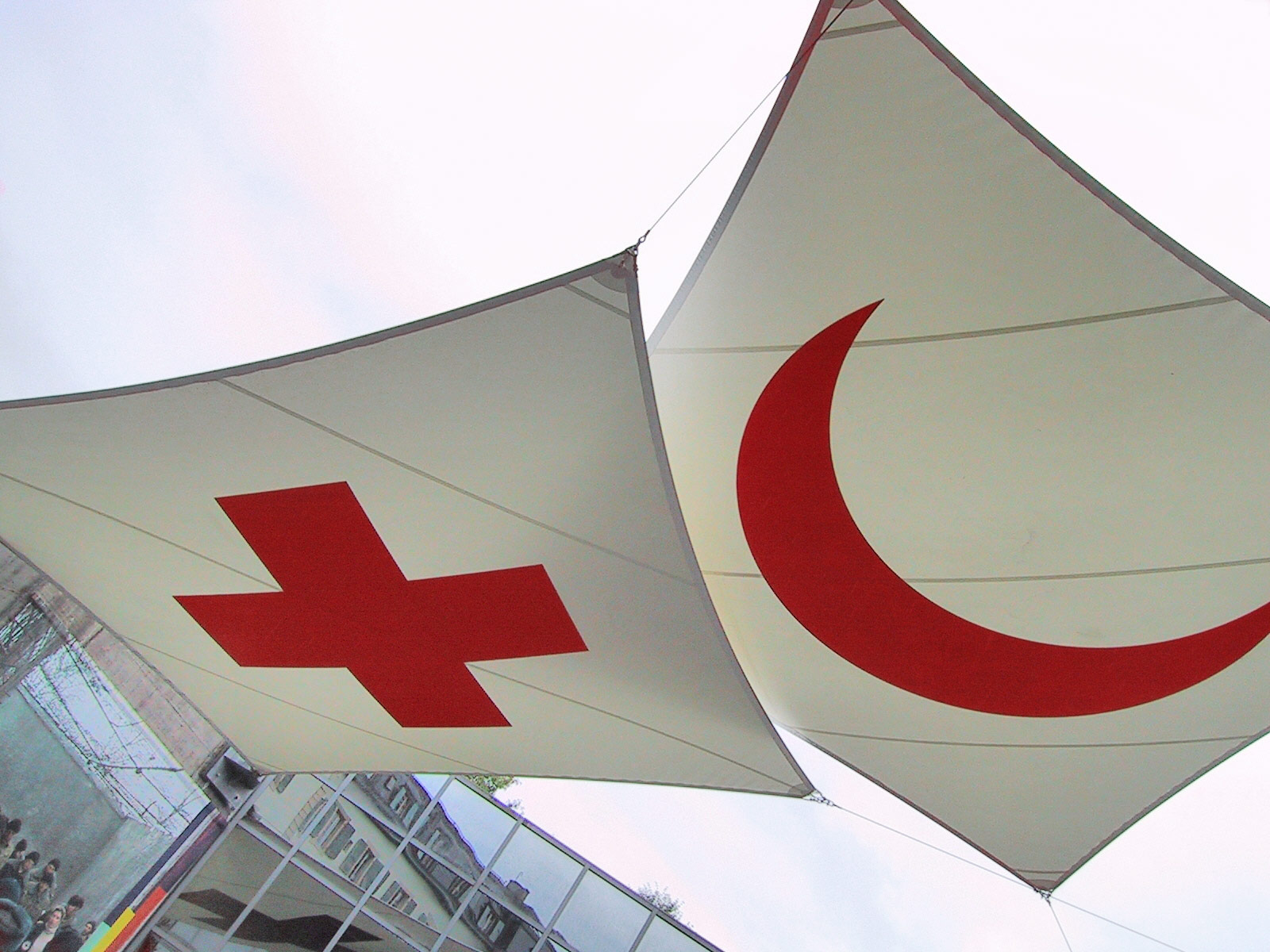
On 8 December 2005, states adopted Additional Protocol III to the Geneva Conventions, establishing the Red Crystal as an additional protective emblem alongside the Red Cross and Red Crescent. The new symbol was designed to provide a neutral option for contexts in which older emblems could be politically or religiously sensitive. This was an important milestone for the broader 'Red Cross' idea because it showed the movement adapting its visual identity in order to preserve universal humanitarian acceptance while respecting the diversity of states and societies.
Additional Protocols broaden humanitarian protections under the Geneva framework
On 8 June 1977, two Additional Protocols to the 1949 Geneva Conventions were adopted, extending and clarifying rules for both international and non-international armed conflicts. The ICRC played a central role in promoting and developing these instruments, which responded to postcolonial wars, civil conflicts, and changing military realities. For the Red Cross movement, the protocols represented a major legal and moral expansion, confirming that humanitarian law had to evolve beyond classic interstate warfare to address the conflicts that increasingly defined the late twentieth century.
Red Cross centenary is marked by a shared Nobel Peace Prize
On 10 December 1963, the Nobel Peace Prize was awarded jointly to the International Committee of the Red Cross and the League of Red Cross Societies during the centenary year of the movement's founding. The award honored one hundred years of humanitarian service while also recognizing the movement's dual structure: the ICRC's role in armed conflict and the League's coordinating work in health and disaster response. This milestone highlighted how the meaning of 'Red Cross' had grown from a single committee into a worldwide network of institutions and national societies.
Four Geneva Conventions are adopted with Red Cross leadership and advocacy
On 12 August 1949, states adopted the four modern Geneva Conventions, a foundational moment in the history associated with the Red Cross. Developed in the aftermath of the Second World War and heavily shaped by ICRC initiative, the treaties updated protections for the wounded and sick on land and sea, prisoners of war, and—most significantly—civilians under enemy control. The 1949 conventions became the cornerstone of modern international humanitarian law and solidified the Red Cross movement's long-term role as both field actor and guardian of humanitarian norms.
ICRC receives a second Nobel Peace Prize during the Second World War
On 10 December 1944, the International Committee of the Red Cross was awarded the Nobel Peace Prize for a second time, this time for its wartime humanitarian work during the Second World War. The award acknowledged the organization's efforts on behalf of prisoners of war and civilians despite the unprecedented brutality and political constraints of the conflict. Although the ICRC's record during the era would later be scrutinized, the prize reflected the centrality of Red Cross operations in maintaining at least some channels of relief and communication amid global war.
Geneva law is revised to strengthen protections for wounded soldiers and prisoners of war
On 27 July 1929, new Geneva Conventions were adopted to revise earlier humanitarian protections and add a convention specifically addressing prisoners of war. These reforms reflected lessons drawn from the First World War and the Red Cross movement's experience dealing with mass captivity, family tracing, and the treatment of detainees. The revisions demonstrated the growing influence of Red Cross practice on international law and showed that the movement was not only delivering aid but also shaping the legal framework governing armed conflict.
League of Red Cross Societies is created in Paris
On 5 May 1919, the League of Red Cross Societies was founded in Paris by the Red Cross societies of several Allied countries. Known today as the International Federation of Red Cross and Red Crescent Societies, it was established to coordinate peacetime cooperation, public health work, and disaster response among national societies. This development expanded the broader Red Cross movement beyond its original battlefield focus and created a second major international institution alongside the ICRC, giving the movement a more global and civilian-oriented structure.
ICRC wins the Nobel Peace Prize during the First World War
On 10 December 1917, the International Committee of the Red Cross received the Nobel Peace Prize for its work during the First World War. The ICRC had become indispensable in tracing prisoners of war, transmitting information to families, and encouraging more humane treatment of captives and wounded soldiers amid industrial-scale conflict. The award recognized the organization's unique neutrality and its ability to operate across enemy lines, reinforcing the Red Cross identity as a protector of human dignity during war rather than a partisan instrument of any state.
Henry Dunant receives the first Nobel Peace Prize
On 10 December 1901, Henry Dunant shared the first Nobel Peace Prize, recognition that also validated the humanitarian vision from which the Red Cross had emerged. Although the award went to Dunant personally rather than to the organization, it signaled broad international acceptance of the movement's principles of neutral aid to war victims. The prize helped cement the Red Cross as one of the defining humanitarian innovations of the modern era and linked its identity with the development of organized peace and relief efforts.
American Red Cross is founded in the United States
On 21 May 1881, Clara Barton and her associates founded the American Red Cross in Washington, D.C., bringing the Red Cross model firmly into the United States. Barton had learned about the movement in Europe and worked to adapt it to American conditions, including both wartime aid and peacetime disaster relief. The founding of the American Red Cross became a major milestone in the global expansion of national societies and helped broaden public understanding of Red Cross work beyond battlefields alone.
First Geneva Convention formally establishes Red Cross principles in international law
On 22 August 1864, representatives of 12 states adopted the first Geneva Convention in Geneva. The treaty committed armies to care for wounded soldiers without discrimination and recognized the neutrality of medical personnel, hospitals, and ambulances. It also gave formal standing to the red cross emblem as a protective sign. This was the first major legal triumph of the movement and marked the point at which Red Cross principles moved from philanthropy into binding international humanitarian law.
Geneva international conference endorses national relief societies and the red cross emblem
In late October 1863, delegates from governments and charitable groups met in Geneva at an international conference organized by the new committee. The meeting endorsed the creation of national relief societies to aid military medical services and advanced the use of a distinctive protective emblem: a red cross on a white background. This conference transformed Dunant's ideas into an organized transnational program and provided the practical blueprint for the spread of Red Cross societies across Europe and beyond.
International Committee for relief of wounded soldiers is founded in Geneva
On 9 February 1863, the Geneva Society for Public Welfare created a five-member committee to examine Dunant's proposals. This body soon evolved into the International Committee of the Red Cross, the oldest component of what is now the International Red Cross and Red Crescent Movement. Founded in Geneva, it established the institutional core of the movement and began organizing diplomatic and practical steps toward neutral medical relief in wartime, setting standards that would shape international humanitarian action for generations.
Publication of 'A Memory of Solferino' spreads the founding vision
In 1862, Dunant published 'A Memory of Solferino', a short but influential book describing the suffering he had seen after the 1859 battle and proposing two major reforms: the creation of voluntary relief societies in every country and an international agreement to protect the wounded and medical personnel in war. The book circulated among political and philanthropic elites in Europe and directly stimulated the discussions that produced the earliest Red Cross institutions and the first Geneva Convention.
Battle of Solferino inspires the idea behind the Red Cross
On 24 June 1859, the Battle of Solferino in northern Italy left tens of thousands of soldiers dead or wounded with inadequate medical care. Swiss businessman Henry Dunant witnessed the aftermath and was deeply affected by the suffering of abandoned casualties. His experience at Solferino became the moral and practical starting point for the future Red Cross movement, because it led him to advocate organized volunteer relief for war victims and international legal protection for the wounded and those caring for them.
Frequently asked questions about Red Cross (disambiguation)
Discover commonly asked questions regarding Red Cross (disambiguation). If there are any questions we may have overlooked, please let us know.
What is the significance of the Red Cross emblem?
What is the legacy of the Red Cross?
What is the Red Cross and what does it do?
How does the Red Cross respond to disasters?
Related Timepaths
Timepaths that crossed paths with Red Cross (disambiguation)