Explore the rich history of the Carnegie Endowment for International Peace, highlighting key events and milestones that shaped global diplomacy.
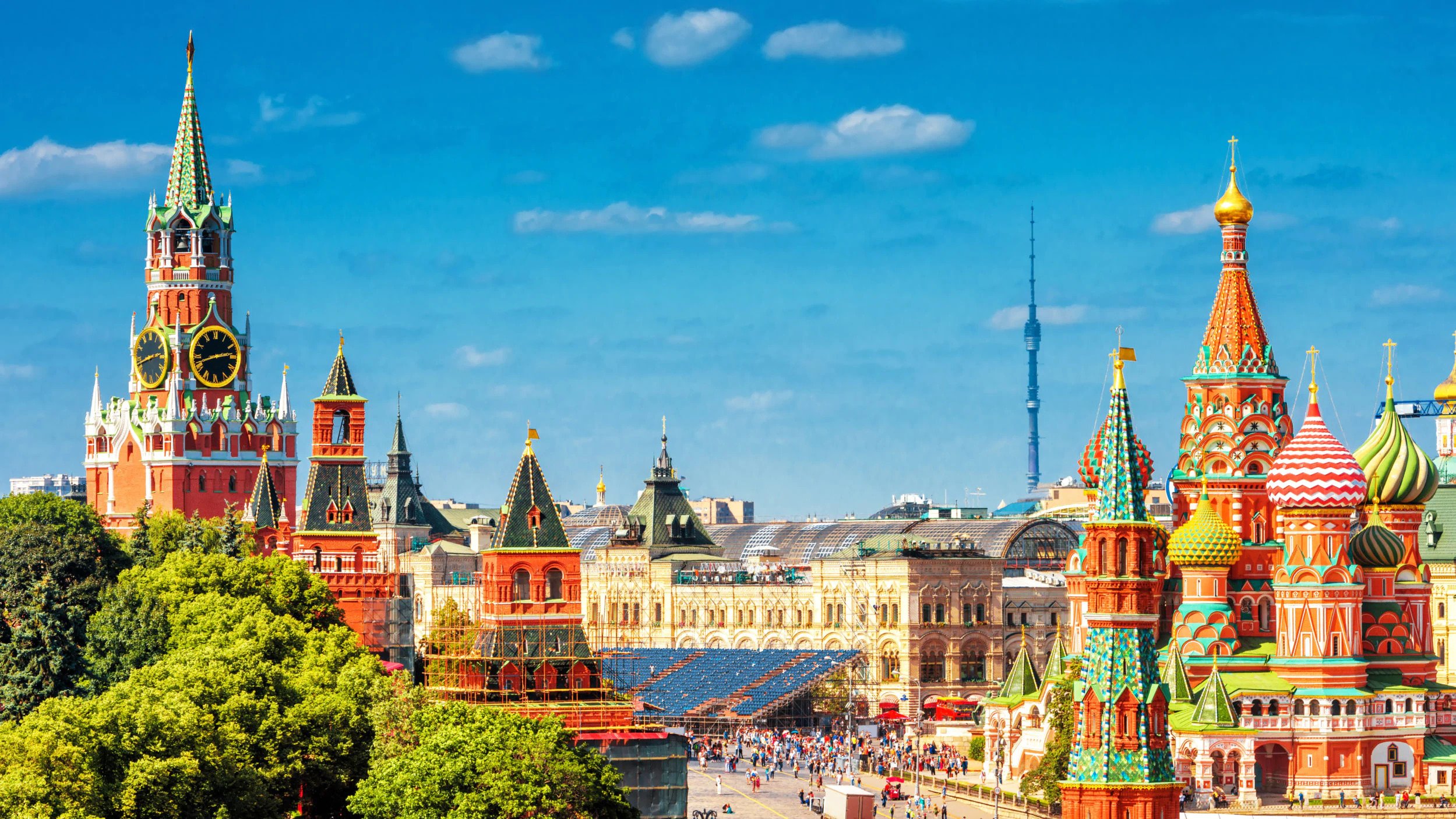
On April 18, 2022, the Carnegie Endowment announced that the Russian government had forced the closure of the Carnegie Moscow Center. The shutdown came amid the severe contraction of independent civic and analytical space in Russia after the full-scale invasion of Ukraine. Ending nearly three decades of on-the-ground work in Moscow, the closure was a major institutional rupture for Carnegie’s global network and a stark illustration of how geopolitical conflict and authoritarian pressure can directly constrain transnational research organizations.
On September 16, 2021, the Carnegie Endowment announced that Mariano-Florentino "Tino" Cuéllar, a justice of the Supreme Court of California and legal scholar, would become its next president. His selection reflected Carnegie’s broadening conception of international affairs as connected to law, technology, governance, and public institutions. Coming after Burns’s diplomatic tenure, the appointment signaled continuity in ambition but also a new emphasis on interdisciplinary leadership at a moment of democratic strain and intensifying global fragmentation.
On April 6, 2016, Carnegie India opened in New Delhi as the sixth international center in the Endowment’s network. The launch acknowledged India’s growing importance in global politics, economics, and technology policy. Establishing a center in New Delhi extended Carnegie’s multinational model into South Asia and created a platform for regionally grounded work on strategic affairs, political economy, and emerging technologies. It also showed the institution’s continuing effort to place expertise closer to the societies shaping the international order.
On February 4, 2015, former U.S. deputy secretary of state William J. Burns became Carnegie’s ninth president. Burns brought high-level diplomatic experience from decades in the Foreign Service and strengthened the Endowment’s profile as both an analytical institution and a venue for practical statecraft. His presidency underscored Carnegie’s longstanding connection to diplomacy and elevated its role in debates over the Middle East, Russia, China, and nuclear issues during a period of mounting geopolitical strain.
On April 14, 2010, the Carnegie Endowment announced the launch of the Carnegie-Tsinghua Center for Global Policy in Beijing, a joint research center based at Tsinghua University. The opening represented a major effort to deepen U.S.-China policy dialogue at a moment when China’s global role was rapidly expanding. By creating a center in Beijing, Carnegie extended its multinational model into East Asia and positioned itself to convene scholars and officials around issues such as nonproliferation, economics, climate, and regional security.
On February 6, 2007, Carnegie launched its "New Vision," later widely described as the Global Vision initiative, formally committing the Endowment to become the world’s first truly global think tank. The strategy expanded operations beyond Washington and Moscow to additional centers in Beirut, Brussels, and later Beijing and New Delhi. This was more than branding: it redefined Carnegie’s institutional identity around multinational collaboration, regionally rooted expertise, and the idea that international problems should be analyzed through multiple local lenses.
In 2007 Carnegie Europe was established in Brussels, giving the Endowment a permanent foothold in the capital of the European Union and NATO. The Brussels office allowed Carnegie to integrate European perspectives directly into its work on security, democracy, enlargement, transatlantic relations, and climate policy. Its creation reinforced the Endowment’s multinational structure by embedding scholarship in one of the world’s major policy centers, where European institutions and diplomatic missions shape debates with global consequences.
In 2006 the Carnegie Endowment established the Carnegie Middle East Center in Beirut, creating a permanent regional base for research on Arab politics, governance, conflict, and reform. Locating the center in Lebanon placed Carnegie in a city long associated with journalism, intellectual exchange, and regional diplomacy. The Beirut center became a key part of the Endowment’s multinational model, enabling analysis led by regionally grounded scholars rather than relying solely on commentary produced in Washington.
In 2000 Carnegie announced the creation of the Migration Policy Institute, headed by Demetrios Papademetriou, as a stand-alone think tank focused on international migration. The step showed Carnegie’s capacity not only to conduct research but also to incubate specialized institutions that could flourish independently. It reflected the Endowment’s adaptation to a changing global agenda in which migration, borders, and citizenship had become central policy issues, and it broadened Carnegie’s institutional legacy beyond its own internal programs.
Jessica T. Mathews took office as president in May 1997 and launched one of the most transformative periods in Carnegie’s history. A veteran analyst of security, climate, and foreign policy, she pushed the institution beyond a traditional Washington think tank model and argued that serious international analysis required durable presences in multiple world regions. Her tenure modernized Carnegie’s structure, public profile, and strategic ambitions, laying the groundwork for the Endowment’s later self-description as the first truly global think tank.
In 1994 the Carnegie Endowment opened the Carnegie Moscow Center, a major step in building a direct institutional presence inside post-Soviet Russia. The center became one of the best-known venues for Russian and international analysis of domestic politics, security policy, and relations with the West. Its creation marked Carnegie’s transition from an American think tank with global interests to a networked organization operating within key world regions, and it gave the Endowment an influential platform during a formative period in Russian political development.
In 1978 the Endowment acquired full ownership of Foreign Policy magazine, extending its influence beyond research papers and elite conferences into broader public debate. Under Carnegie, the publication evolved from a more academic quarterly into a widely read forum for discussion of globalization, diplomacy, and strategy. The magazine gave the Endowment a powerful platform for shaping discourse on international affairs and helped connect its scholarly work to journalists, officials, and educated general readers.
When Thomas L. Hughes became president in 1970, he reorganized the Endowment around Washington, D.C., moving its headquarters back from New York and closing its European center in Geneva. The change reflected the growing importance of direct engagement with U.S. policymakers during the Cold War. It also signaled a shift from older models of elite peace advocacy toward a modern policy-research institution focused on strategy, government briefings, and practical international affairs analysis from the American capital.
In 1947 the Carnegie Endowment shifted its headquarters from Washington to New York City, placing itself closer to the newly established United Nations. The move symbolized the institution’s postwar orientation toward multilateral diplomacy and global governance. By aligning its base with the city that had become a center of international organization, Carnegie sought to remain influential in emerging debates over collective security, international law, and the architecture of the post-1945 order.
At the San Francisco conference that opened on April 25, 1945, James T. Shotwell of the Carnegie Endowment served as chairman of the semiofficial consultants to the U.S. delegation drafting the United Nations Charter. His role connected the Endowment’s long commitment to international organization with the creation of the most ambitious multilateral body of the twentieth century. Shotwell also advocated for what became a permanent UN human rights mechanism, demonstrating Carnegie’s direct influence on postwar institution-building.
In November 1944 the Carnegie Endowment published Raphael Lemkin’s "Axis Rule in Occupied Europe," the book that introduced the term "genocide" into international legal and political discourse. The publication was a landmark in the history of human rights and international criminal law. By giving institutional backing to Lemkin’s work as World War II neared its end, the Endowment helped circulate a concept that would shape postwar legal norms, influence the United Nations Genocide Convention, and transform the vocabulary of atrocity prevention.
In 1925 Nicholas Murray Butler became president of the Carnegie Endowment, marking a major leadership transition from founding president Elihu Root. Butler, a prominent internationalist and president of Columbia University, steered the organization through the interwar years, when hopes for legal restraints on war coexisted with rising authoritarianism. Under his tenure, the Endowment remained deeply involved in international law, arbitration, and peace advocacy, and Butler’s own profile as a transnational public figure reinforced Carnegie’s standing in global policy debates.
In 1918 the Endowment began supporting the International Mind Alcove program, which funded specialized library collections on international affairs in the United States and abroad. The initiative was designed to cultivate a broader public understanding of world politics during and after World War I. Although less visible than elite diplomacy, the program showed the Endowment’s early belief that peace required informed citizens as well as statesmen, and it became an important educational arm of the institution for decades.
On his seventy-fifth birthday, industrialist and philanthropist Andrew Carnegie created the Carnegie Endowment for International Peace with a $10 million gift intended to advance the organized study of war, diplomacy, and international cooperation. The new institution reflected Progressive Era faith in expertise and law as tools for preventing conflict. Its founding charter framed the Endowment’s mission in sweeping moral terms, making it one of the earliest major U.S. institutions devoted specifically to international peace and public policy research.
Discover commonly asked questions regarding Carnegie Endowment for International Peace. If there are any questions we may have overlooked, please let us know.
What is the legacy of the Carnegie Endowment?
What are the main areas of focus for the Carnegie Endowment?
What is the Carnegie Endowment for International Peace?
How does the Carnegie Endowment impact global policy?
Timepaths that crossed paths with Carnegie Endowment for International Peace