Organization · Other

World Economic Forum

@worldeconomicforum

Explore the key events and milestones of the World Economic Forum, highlighting its impact on global economics and policy. Dive in now!

Founded January 1, 1971
18Events
54Years
1965
1970
1975
1980
1985
1990
1995
2000
2005
2010
2015
2020
2025
2030
1966
1967
1968
1969
1971
1972
1973
1974
1976
1977
1978
1979
1981
1982
1983
1984
1986
1987
1988
1989
1991
1992
1993
1994
1996
1997
1998
1999
2001
2002
2003
2004
2006
2007
2008
2009
2011
2012
2013
2014
2016
2017
2018
2019
2021
2022
2023
2024
2026
2027
2028
2029
21april
2025
21 april 2025

Founder Klaus Schwab steps down as chairman

On 21 April 2025, Klaus Schwab retired as chairman of the World Economic Forum, ending a leadership era that began with the organization’s creation in 1971. His departure was one of the most important milestones in the Forum’s institutional history because Schwab had been inseparable from Davos’s growth from a European management gathering into a globally recognized platform for political, business, and civil-society leaders. The transition raised broader questions about succession, legitimacy, and whether the Forum could preserve its influence without the founder who shaped its mission, symbolism, and operational style for more than half a century.

21januari
2025
21 januari 2025

55th Annual Meeting opens amid leadership transition pressures

On 21 January 2025, the Forum opened its 55th annual meeting in Davos under the theme “Collaboration for the Intelligent Age,” with leaders emphasizing geopolitical instability, technological change, and the need for new forms of cooperation. The meeting proved especially significant in retrospect because it was the last annual gathering opened by founder Klaus Schwab before his retirement as chairman later that year. As a result, it marked the closing phase of more than five decades of founder-led stewardship and highlighted the challenge of maintaining the Forum’s influence, brand, and convening authority in a period increasingly skeptical of globalization and elite institutions.

15januari
2024
15 januari 2024

Annual Meeting 2024 opens under the theme 'Rebuilding Trust'

On 15 January 2024, the Forum opened its annual meeting in Davos-Klosters under the theme “Rebuilding Trust,” reflecting growing anxiety over war, political fragmentation, economic uncertainty, climate risk, and the rapid rise of artificial intelligence. The meeting illustrated the contemporary role of the Forum as a stage where elite consensus is tested amid global disorder rather than assumed. It was a notable milestone because it showed the organization responding directly to a more polarized international landscape and trying to reassert its core identity as a convener of dialogue at a time when public trust in institutions, globalization, and expert communities had been sharply eroded.

25januari
2021
25 januari 2021

The Davos Agenda is held virtually during the COVID-19 era

From 25 to 29 January 2021, the Forum convened the Davos Agenda as a virtual event because the COVID-19 pandemic disrupted international travel and large in-person gatherings. This was a major milestone because it forced one of the world’s most famous physical summits to adapt to a fully digital format while trying to preserve its convening power. The change highlighted both the resilience and the limits of the Forum’s model: it remained influential as a platform for discussion, but the absence of the usual in-person diplomacy and networking underscored how much of Davos’s significance had long depended on physical proximity and informal contact.

01januari
2016
01 januari 2016

Fourth Industrial Revolution becomes a defining Davos theme

In 2016, the Forum made the “Fourth Industrial Revolution” the central theme of its annual meeting, popularizing a term associated with sweeping technological change involving artificial intelligence, robotics, digital networks, and automation. This was an important milestone because the concept became one of the Forum’s most globally recognized intellectual frames, shaping discussion in boardrooms, universities, governments, and media around the world. By packaging disparate technological trends into a single narrative, the Forum strengthened its role as an agenda-setting institution that influences how elites understand economic transformation, labour-market disruption, and ethical questions raised by digital systems.

01januari
2008
01 januari 2008

Davos becomes a focal point during the global financial crisis

As financial instability deepened in 2008, the Forum’s annual meeting became an especially prominent venue for discussing the unfolding global financial crisis. Davos gathered heads of state, central figures in international organizations, and corporate leaders confronting collapsing confidence in markets and institutions. The moment was a milestone because it reinforced the Forum’s place as an arena for interpreting systemic risk during emergencies. Although it had no formal decision-making power, the Forum became part of the wider ecosystem of crisis response by framing debate, connecting policymakers with private-sector actors, and publicizing the scale of the challenge facing the global economy.

06september
2007
06 september 2007

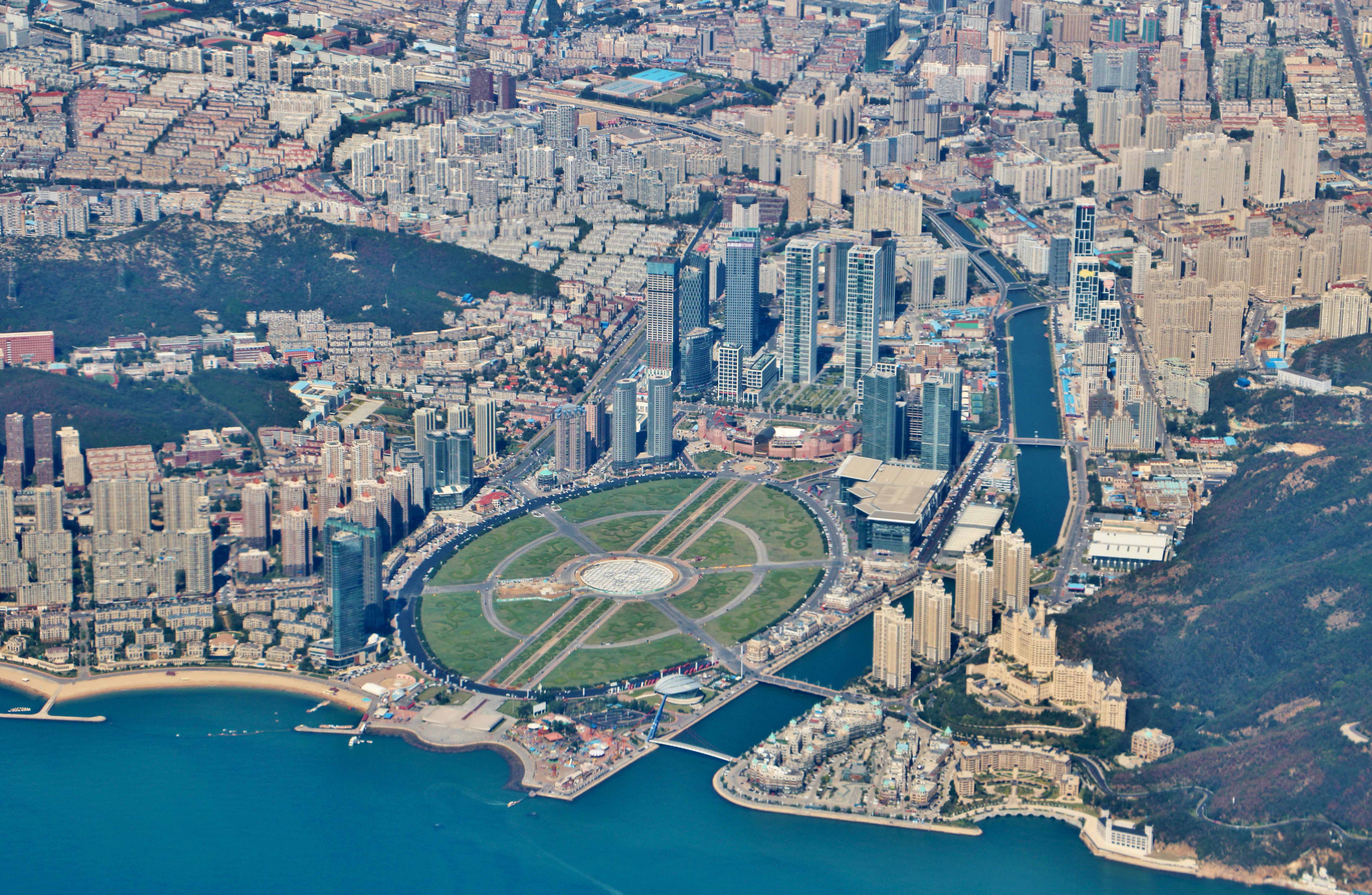
Annual Meeting of the New Champions debuts in Dalian

In September 2007, the Forum inaugurated the Annual Meeting of the New Champions in Dalian, China, creating what became known as “Summer Davos.” The new meeting focused on fast-growing companies, innovation, and emerging economies, especially in Asia. This was a major organizational milestone because it extended the Forum’s geographic and thematic reach beyond its traditional winter gathering in Switzerland. By establishing a recurring flagship event in China, the Forum recognized the growing importance of emerging markets in the world economy and institutionalized a second major convening platform centered on entrepreneurship, technology, and rapid economic transformation.

01januari
2005
01 januari 2005

Forum launches its landmark gender-gap work

In 2005, the Forum launched a major study on women’s empowerment and measuring the global gender gap, work that led directly to the Global Gender Gap Report first issued in 2006. This was a pivotal milestone because it strengthened the organization’s research identity and gave it an influential comparative benchmark used by governments, businesses, academics, and the media. The report moved the Forum beyond event convening into sustained agenda-setting through data and rankings. It also reflected the institution’s expanding interest in social inclusion and long-term structural issues rather than only macroeconomic performance and business strategy.

31januari
2002
31 januari 2002

Annual Meeting moves to New York in solidarity after 9/11

From 31 January to 4 February 2002, the World Economic Forum held its annual meeting in New York City instead of Davos, the only time the flagship gathering took place outside Switzerland. The move was intended as a gesture of solidarity with the United States and New York after the terrorist attacks of 11 September 2001. This relocation was a defining milestone because it tied the Forum’s identity to a moment of global crisis and demonstrated both logistical flexibility and symbolic political positioning. It also broadened public awareness of the organization far beyond its traditional European setting.

01januari
2000
01 januari 2000

Davos meeting helps launch GAVI

At the 2000 annual meeting, the Global Alliance for Vaccines and Immunization, later known as Gavi, emerged from discussions in Davos. This was important because it showed the Forum’s capacity to incubate concrete cross-sector initiatives rather than just host debate. By bringing together political leaders, philanthropists, business figures, and international organizations, Davos provided an environment in which global health financing and vaccine access could be advanced through partnership. The launch became one of the Forum’s most cited examples of tangible institutional impact, extending its influence into public health and development as well as economics.

31januari
1999
31 januari 1999

Kofi Annan launches the UN Global Compact at Davos

On 31 January 1999, United Nations Secretary-General Kofi Annan used the Davos platform to call for a Global Compact between the UN and business, urging companies to align with principles on human rights, labour, and the environment. The speech was a major milestone in the Forum’s evolution because it linked Davos directly to one of the most influential global corporate responsibility initiatives of the late twentieth century. It also cemented the Forum’s role as a convening space where multilateral institutions and private enterprise could jointly shape transnational norms rather than merely discuss market trends.

01februari
1992
01 februari 1992

Mandela and de Klerk make a landmark joint appearance at Davos

In 1992, Nelson Mandela, F.W. de Klerk, and Mangosuthu Buthelezi appeared together at the annual meeting, in what was described as their first joint appearance outside South Africa. Coming during the final phase of apartheid’s collapse, the event symbolized the Forum’s ability to host conversations tied to historic political transitions. For the organization, the moment reinforced the idea that Davos could function as neutral ground where adversaries and rivals confronted shared futures in public view. The meeting became one of the most frequently cited examples of the Forum’s role in high-level political bridge-building.

01januari
1988
01 januari 1988

Davos hosts talks that help avert war between Greece and Türkiye

At the 1988 annual meeting, Greek Prime Minister Andreas Papandreou and Turkish Prime Minister Turgut Özal met in Davos amid severe bilateral tension. Their discussions became associated with a diplomatic thaw often called the “Davos process,” helping reduce the immediate risk of military confrontation between the two NATO members. For the Forum, this was one of the clearest demonstrations that informal meetings on its sidelines could have real geopolitical consequences. The event strengthened Davos’s reputation not only as an elite networking site but also as a discreet venue for practical diplomacy beyond formal international institutions.

01januari
1987
01 januari 1987

European Management Forum is renamed the World Economic Forum

In 1987, the European Management Forum formally adopted the name World Economic Forum, a change that reflected a major expansion in mission and ambition. The new name signaled that the organization no longer saw itself as a primarily European management body but as a global platform for dialogue among business, government, and civil society. This rebranding coincided with a broader agenda that increasingly included geopolitical tensions, international cooperation, and systemic economic risks. It was a foundational institutional milestone that fixed the identity under which the Forum became globally famous.

01januari
1979
01 januari 1979

Chinese delegation attends Davos for the first time

In 1979, a delegation from the People’s Republic of China attended the Davos meeting for the first time, reflecting China’s opening to the world economy after the beginning of reform and opening policies. The appearance was symbolically important for the Forum because it showed that Davos was becoming a bridge between different economic systems and political blocs. It also foreshadowed the Forum’s later role in connecting established industrial powers with emerging economies, especially in Asia, and contributed to its rise as a venue for global rather than merely European exchange.

01januari
1974
01 januari 1974

Political leaders are invited to participate in Davos

In 1974, the Forum invited political leaders to the annual meeting for the first time, marking a decisive transition from a management symposium into a broader arena linking business and public policy. This shift mattered because it redefined Davos as a place where corporate executives, ministers, and heads of government could interact outside formal treaty settings. The widening of participation transformed the institution’s scope, helping it become a recognizable global forum where economics, diplomacy, and governance increasingly overlapped in the same conversations and networks.

01januari
1973
01 januari 1973

Davos Manifesto articulates an early stakeholder model

In 1973, the organization helped frame a wider social purpose for business through the Davos Manifesto, which argued that management should serve not only shareholders but also employees, customers, and society. This was a significant milestone because it moved the forum beyond technical management advice into normative debates about capitalism, corporate responsibility, and the social obligations of business leadership. The ideas associated with the manifesto later became central to the Forum’s identity and informed decades of discussion about stakeholder capitalism and the governance of globalization.

01februari
1971
01 februari 1971

First European Management Symposium convenes in Davos

In February 1971, Klaus Schwab organized the first European Management Symposium in Davos, bringing together hundreds of business leaders from Western Europe to study management practices and competitiveness at a time of growing transatlantic economic rivalry. The gathering became the institutional starting point of what evolved into the World Economic Forum. Its early emphasis was managerial and corporate, but the Davos meeting established the durable format of annual high-level convening in the Swiss Alps that later expanded into a much broader platform for public-private dialogue on world affairs.

Frequently asked questions about World Economic Forum

Discover commonly asked questions regarding World Economic Forum. If there are any questions we may have overlooked, please let us know.

What impact has the World Economic Forum had on global issues?

What is the World Economic Forum?

Why is the World Economic Forum significant?

What are some key facts about the World Economic Forum?