Explore the life and works of Wolfgang Amadeus Mozart through our detailed timeline, highlighting key events and milestones in his musical journey.
Mozart died in Vienna on 5 December 1791 at the age of thirty-five, ending one of the most brilliant and compressed careers in music history. In his final months he had completed major works including The Magic Flute and much of the Requiem, which remained unfinished at his death and was later completed by others associated with his circle. His passing gave rise to legends and speculation, but the historical fact is that he left behind an immense body of music that transformed opera, concerto, chamber music, sacred music, and the symphony. His early death intensified the sense of loss surrounding a genius whose creative powers were still fully active.
The Magic Flute premiered in Vienna on 30 September 1791 and quickly became one of Mozart’s most beloved works. Written for Emanuel Schikaneder’s suburban theater company, the opera blended popular singspiel traditions with fairy-tale spectacle, comic entertainment, and symbolic themes associated with Enlightenment thought and Freemasonry. Its musical world ranges from simple folk-like numbers to profound arias and choral scenes, revealing Mozart’s unmatched ability to unite accessibility with depth. The work’s success in his lifetime was especially meaningful because it connected him with a broad public audience, not just courtly or aristocratic circles, in the final months of his life.
La clemenza di Tito premiered in Prague on 6 September 1791 as part of the festivities surrounding the coronation of Leopold II as king of Bohemia. The commission required Mozart to return to opera seria late in his career, and he responded with music of dignity, emotional intelligence, and dramatic concentration. Although later overshadowed by his other final works, Tito is an important milestone because it shows Mozart still capable of meeting ceremonial demands while reshaping inherited forms with expressive subtlety. Its Prague premiere also illustrates how, even in his last months, he remained a composer sought for major public and dynastic occasions.
Mozart completed his Symphony No. 41 in C major, later known as the Jupiter Symphony, on 10 August 1788. The work crowned an extraordinary burst of symphonic creativity that also produced his final two other symphonies in the same summer. Jupiter stands as a summation of Classical symphonic art, combining grandeur, contrapuntal mastery, melodic invention, and structural command. That Mozart wrote such a monumental score during a period of financial and personal strain underscores the gap between his artistic achievement and his unstable worldly circumstances. The symphony became one of the most admired examples of orchestral composition in Western music.
Don Giovanni premiered in Prague on 29 October 1787 and became one of Mozart’s most celebrated theatrical achievements. Again collaborating with Lorenzo Da Ponte, Mozart created a work that fused comedy, aristocratic elegance, supernatural terror, and moral reckoning in a strikingly original way. Prague audiences responded enthusiastically, confirming the city’s special appreciation for his music at a moment when his fortunes in Vienna were becoming more uneven. The opera’s dramatic complexity and musical depth have made it a central work in the operatic canon, and its Prague success reinforced Mozart’s international prestige during the later years of his life.
The premiere of Le nozze di Figaro in Vienna in 1786 established Mozart as one of Europe’s supreme operatic dramatists. Working with librettist Lorenzo Da Ponte, he transformed a controversial stage comedy into a musically rich opera that balanced wit, social tension, and deep human feeling. The score’s ensembles, character psychology, and dramatic pacing represented a major advance in comic opera. Although its immediate reception in Vienna was mixed in practical terms, the work quickly proved enduring and influential. Figaro demonstrated Mozart’s unparalleled ability to illuminate individual character and social relationships through music.
On 4 August 1782 Mozart married Constanze Weber at St. Stephen’s Cathedral in Vienna after a courtship shaped by family opposition, financial uncertainty, and urgency. The marriage gave Mozart a partner who would remain central to his domestic and emotional life, despite later myths and oversimplifications about their relationship. Their household experienced both affection and strain, including money troubles and the loss of several children in infancy. The union is historically important not only as a personal milestone but also because Constanze later played a major role in preserving Mozart’s legacy, promoting his music, and helping shape his posthumous reputation.
In 1781 Mozart’s relationship with the Salzburg establishment collapsed after escalating tensions with Archbishop Colloredo’s household while in Vienna. His dismissal and separation from court service freed him from a subordinate role but also removed the security of salaried employment. This rupture was a decisive milestone in his life: Mozart chose the uncertain path of a freelance composer and performer in Vienna, where he would build his career through concerts, teaching, publication, and commissions. The break was both risky and liberating, and it laid the groundwork for his greatest achievements in piano concertos, chamber music, and opera.
The premiere of Idomeneo, rè di Creta on 29 January 1781 in Munich marked one of Mozart’s first great operatic triumphs on a serious scale. Commissioned for the carnival season, the work displayed an ambitious blend of Italian opera seria tradition with richer orchestration, dramatic ensembles, and expressive characterization. Its success showed that Mozart could handle large, prestigious commissions and produce music equal to the highest expectations of a major court theater. Idomeneo is often seen as a turning point because it announced the mature dramatic composer who would soon revolutionize opera in Vienna and Prague.
While in Paris in search of employment, Mozart suffered a personal and emotional blow when his mother, Anna Maria Mozart, died on 3 July 1778. Her death came during a difficult period marked by professional disappointment and financial uncertainty. The loss placed Mozart in the painful position of informing his father from afar and added a deep personal dimension to a journey already marked by frustration. Historians often view this episode as one of the formative hardships of his adult life, forcing him to confront grief, responsibility, and the limits of his father’s carefully managed plans for his career.
In 1777 Mozart, increasingly dissatisfied with his limited position in Salzburg, petitioned for release from service and set out with his mother to seek employment elsewhere. The journey took him to Mannheim and then Paris, two important musical centers. In Mannheim he encountered one of Europe’s finest orchestras and absorbed advanced orchestral techniques; he also deepened ties with the Weber family. The trip revealed both his ambition and the precariousness of a freelance musical career in the eighteenth century. Though he did not secure the ideal post he wanted, the experience enlarged his stylistic horizons and intensified his desire for independence from Salzburg’s constraints.
Mozart’s motet Exsultate, Jubilate, composed in 1773, stands as one of the clearest signs of his teenage mastery in sacred vocal music. Written after his Italian experiences and tailored to a brilliant solo singer, the work combines virtuosic display with radiant melodic invention and liturgical character. It helped confirm that Mozart could succeed not only in instrumental composition but also in writing for the human voice with unusual sensitivity and theatrical flair. The piece remains important because it foreshadows the vocal brilliance that later defined his operas while also revealing his command of sacred forms and international style.
In 1769, at only thirteen years old, Mozart was appointed honorary Konzertmeister at the Salzburg court. The appointment reflected both his extraordinary reputation and the support of the courtly environment in which his father worked. Although honorary, the title signaled that Mozart was no longer viewed solely as a curiosity of childhood but as a musician with institutional standing. It also tied him more closely to Salzburg’s service structure, a relationship that would later become a source of frustration as Mozart sought greater artistic independence. The event marks an early formal recognition of his professional identity as a composer and performer.
During the family’s stay in London in 1764, Mozart wrote his first symphonies, an important step from keyboard prodigy to serious composer. In England he encountered the music of Johann Christian Bach, whose elegant melodic style and orchestral clarity left a strong impression on him. Writing symphonies at such a young age demonstrated Mozart’s rapid assimilation of international influences and his ability to handle larger instrumental forms. These early orchestral works were not yet the mature achievements of his later years, but they show how travel and contact with major composers accelerated his growth into a creator of sophisticated concert music.
In 1763 Leopold Mozart began a lengthy tour through major European cultural centers with Wolfgang and Nannerl, presenting them before courts and fashionable audiences. The journey lasted for years and took the family to cities including Paris and London. For the young Mozart, the tour was much more than exhibition: it became a practical education in musical styles, performance customs, languages, and patronage networks. He encountered leading musicians, absorbed different national idioms, and began composing works that reflected this cosmopolitan training. The tour established Mozart’s fame across Europe and broadened his artistic imagination at a formative age.
By 1762, while still a small child, Mozart was already appearing in public as a musical prodigy alongside his sister Maria Anna, known as Nannerl. These early performances revealed not only unusual technical skill but also gifts in improvisation and memory that astonished aristocratic audiences. The year marked the transition from private family training to a public career managed by Leopold Mozart, who recognized that his son’s talents could attract courtly patronage and international attention. This early exposure also introduced Wolfgang to the ceremonial and social worlds in which elite European music-making operated.
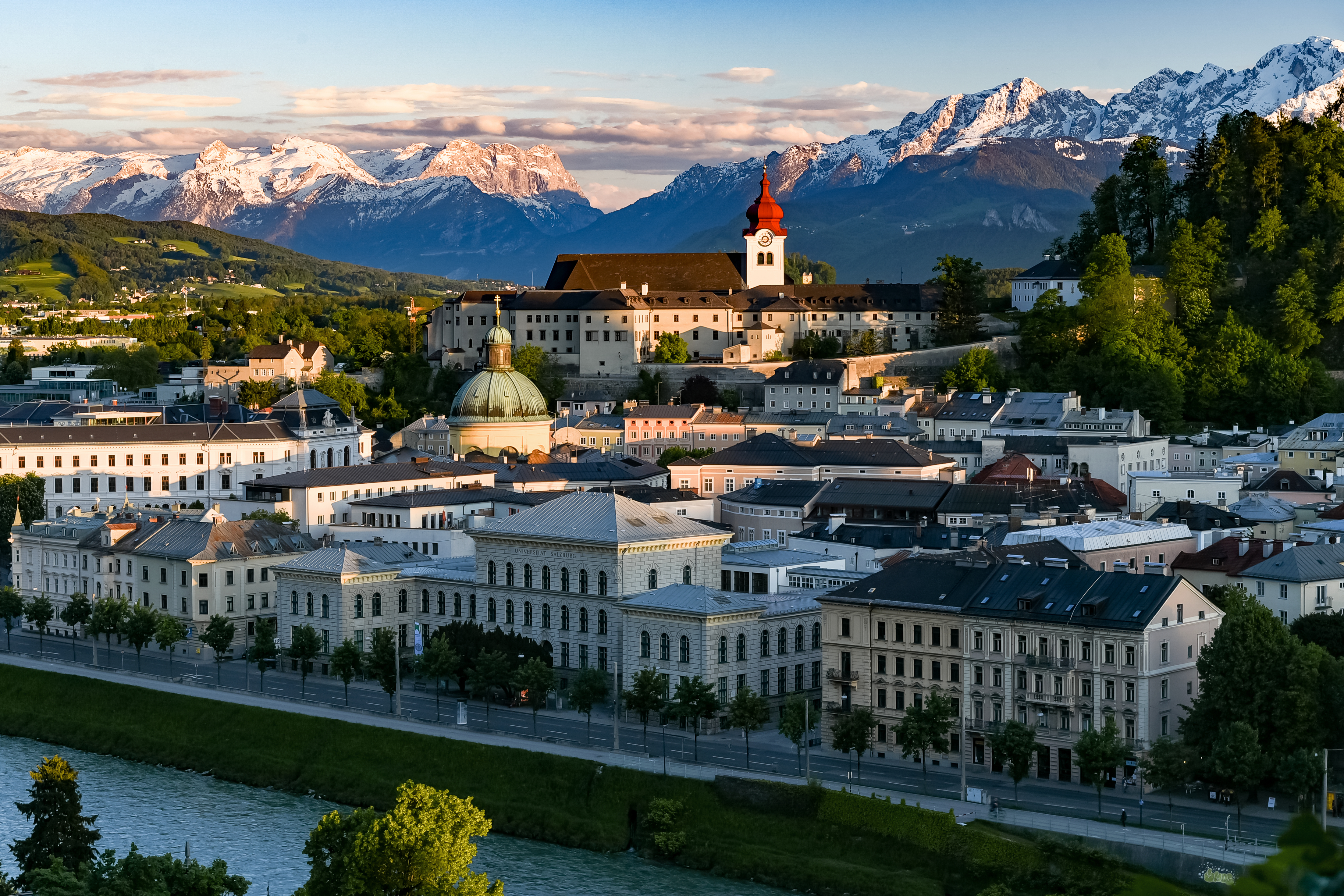
Wolfgang Amadeus Mozart was born on 27 January 1756 in Salzburg, then the capital of the Prince-Archbishopric of Salzburg in the Holy Roman Empire. He was the youngest surviving child of Leopold Mozart, a court musician and pedagogue, and Anna Maria Mozart. His birth placed him in a household deeply connected to professional music, education, and court culture. That family environment, especially Leopold’s disciplined instruction and ambition, helped shape Mozart’s astonishing early development as a keyboard player, violinist, improviser, and eventually composer of exceptional range and originality.
Discover commonly asked questions regarding Wolfgang Amadeus Mozart. If there are any questions we may have overlooked, please let us know.
When and where was Wolfgang Amadeus Mozart born?
What is Mozart's legacy in the world of music?
What were the main contributions of Wolfgang Amadeus Mozart to classical music?
What is the significance of Mozart's operas?