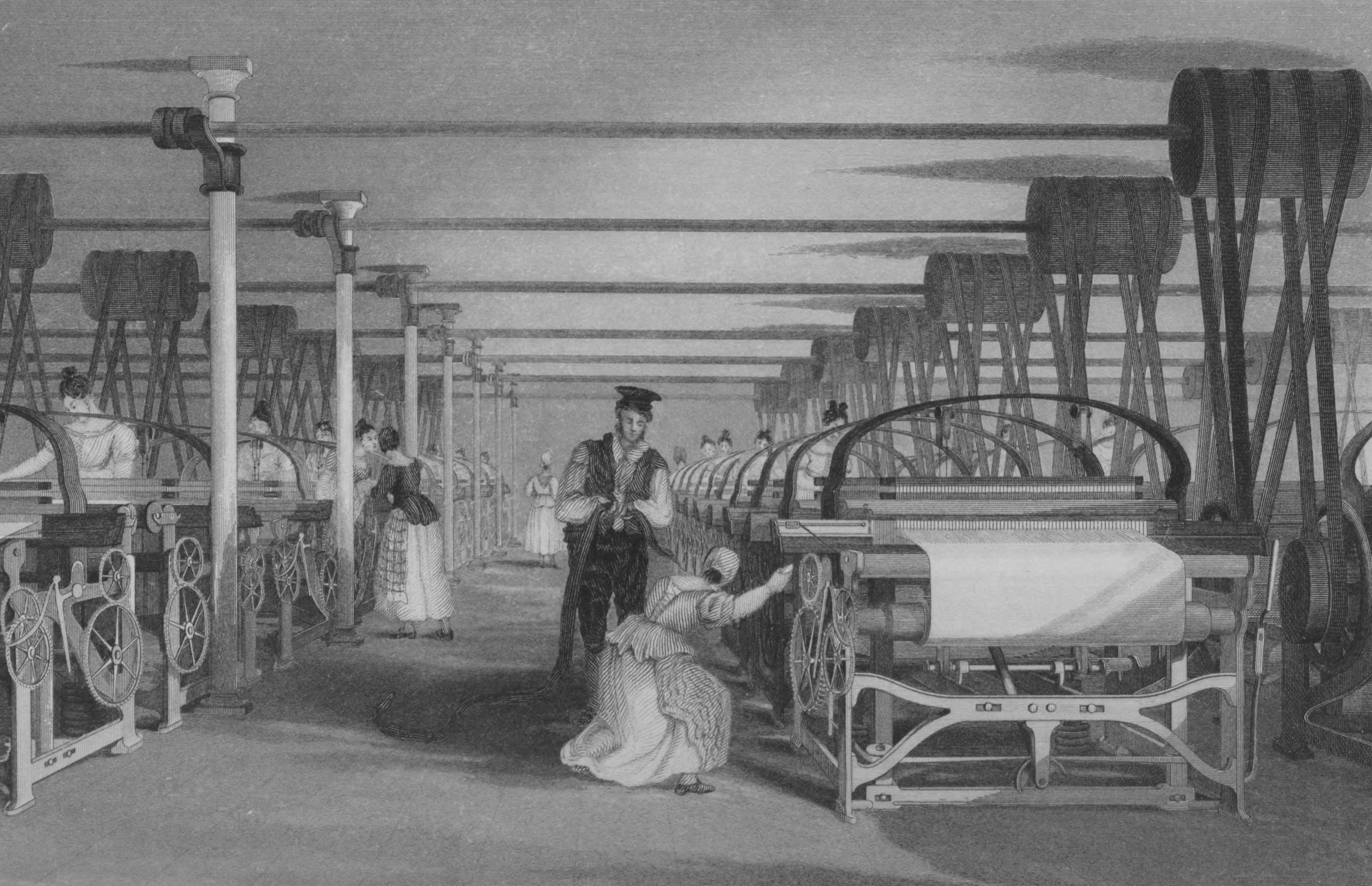
Explore the key events and innovations of the Second Industrial Revolution. Discover how it transformed industries and societies worldwide.
At Ford’s Highland Park plant, the moving assembly line for automobile production dramatically reduced the time needed to build a car and became the iconic manufacturing method of the late Second Industrial Revolution. By breaking work into standardized, repeatable tasks and bringing the product to the worker, Ford multiplied output while cutting costs. This did not merely improve one factory; it reshaped global expectations about productivity, wages, consumer prices, and industrial discipline. The assembly line became a model for twentieth-century mass production, linking steel, machine tools, electricity, oil, and managerial control into one highly influential production system.
The Sherman Antitrust Act, signed in the United States in 1890, reflected the political and social strains produced by the Second Industrial Revolution’s giant corporations. As railroads, steel firms, oil refiners, and financiers built national-scale enterprises, critics warned that monopoly power threatened competition, workers, farmers, and democratic government. The act was the first major federal attempt to curb combinations that restrained trade, even though enforcement would be uneven and often contested. Its passage shows that the era was not only about inventions and growth, but also about new legal and political efforts to govern concentrated industrial power.
In early August 1888, Bertha Benz drove a Patent-Motorwagen from Mannheim to Pforzheim, completing the first long-distance automobile trip in history. The journey did more than publicize one machine: it demonstrated that motor vehicles could operate beyond controlled tests and could be adapted through practical problem solving on real roads. That proof mattered in an era when industrial technologies had to show commercial and social usefulness before attracting wider investment. The trip helped turn the motorcar from an engineering novelty into a plausible transport system tied to fuel supply, repair networks, road improvement, and future mass production.
The electric street railway introduced in Richmond, Virginia, proved that urban mass transit could be powered efficiently by overhead electricity on a large commercial scale. Its success encouraged rapid adoption in cities across the United States and beyond. Electric traction reshaped urban geography by allowing workers and middle-class residents to live farther from factories and central business districts, helping create the modern streetcar suburb. In the broader history of the Second Industrial Revolution, the Richmond system showed how electrification changed not only factories and communications, but also the physical form of cities, commuting patterns, and real-estate development.
In Great Barrington, Massachusetts, William Stanley demonstrated a practical alternating-current distribution system using transformers to step voltage up and down efficiently. This solved one of electrification’s central problems: how to move power over useful distances while still making it usable by customers. The demonstration helped set the stage for the rapid spread of electric networks in factories, businesses, and homes. AC power was essential to the mature phase of the Second Industrial Revolution because it made electricity not just a spectacular invention but a scalable utility, capable of reorganizing production, urban services, and daily life across wide territories.
Karl Benz’s patent for his motorcar marked a decisive step in the emergence of the automobile as a practical machine based on the internal-combustion engine. The car would not immediately replace railways or horse-drawn transport, but it embodied core traits of the Second Industrial Revolution: precision engineering, petroleum use, metalworking advances, and the transition from workshop craft to repeatable machine manufacture. The later commercialization of automobiles would stimulate roads, oil refining, rubber demand, suburban growth, and mass consumer markets. This patent therefore represents an early but crucial milestone in the mechanization of personal and commercial mobility.
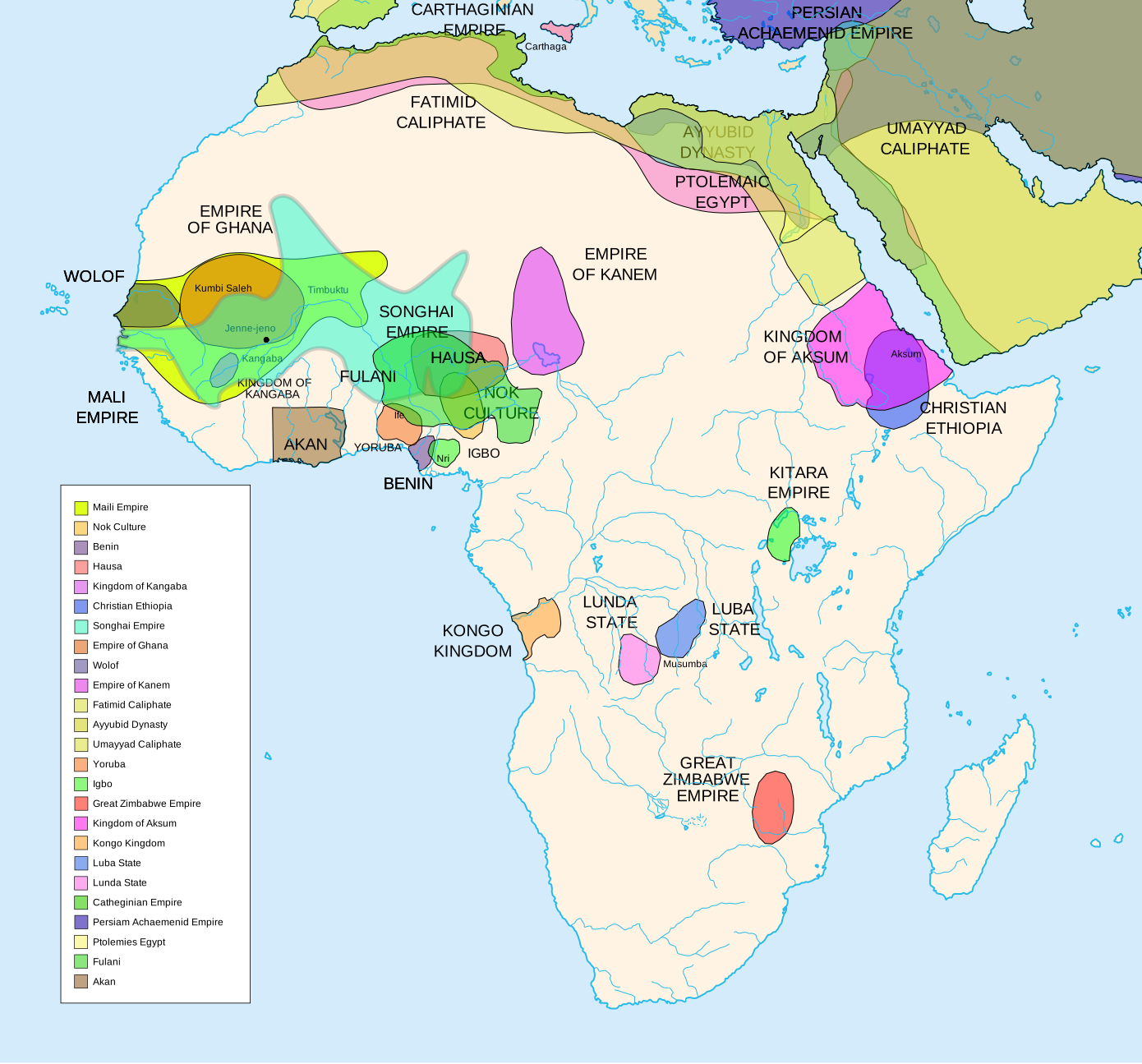
When the Berlin West Africa Conference opened in November 1884, European powers began formal negotiations over claims in Africa that culminated in the General Act of February 1885. Although often treated mainly as diplomatic history, the conference was deeply tied to the Second Industrial Revolution. Industrial economies demanded copper, rubber, palm oil, cotton, and other raw materials, while improved steam transport, firearms, medicine, and telegraphy enabled deeper imperial penetration. The conference demonstrated how new industrial capacity and communications technology intensified colonial expansion, redrew political boundaries, and embedded global inequality into the modern world economy.
Thomas Edison’s team at Menlo Park produced an incandescent lamp that burned long enough to be commercially useful, helping shift electric lighting from laboratory curiosity to viable infrastructure. The importance of this milestone lies less in a single inventor’s claim than in what followed: electric lighting systems, generators, wiring, meters, and power stations became part of a new urban-industrial environment. Factories could run with cleaner and more flexible illumination than gas or oil provided, while streets, offices, and homes were gradually remade by electrification. The event symbolized the fusion of invention, research laboratories, and scalable business systems.
Alexander Graham Bell’s successful telephone transmission in Boston showed that the human voice could be carried electrically with practical clarity. The telephone became a defining communications technology of the Second Industrial Revolution because it allowed managers, railway dispatchers, merchants, newspapers, and governments to coordinate activity in real time across expanding industrial economies. It complemented the telegraph but also went beyond it by making instant spoken communication routine. The spread of telephone networks deepened corporate centralization, sped up markets, and altered everyday social life in both cities and smaller towns.
The opening of the Suez Canal created a direct sea route between the Mediterranean and the Red Sea, dramatically shortening voyages between Europe and Asia. For the Second Industrial Revolution, this mattered because industrialization depended on faster, cheaper circulation of raw materials, manufactured goods, migrants, and imperial power. Steamship traffic, coaling networks, port expansion, and global commodity flows all intensified after 1869. The canal helped bind industrial capitalism into a genuinely global system, reinforcing the link between technological change, finance, empire, and long-distance trade.
At Promontory Summit in Utah Territory, the ceremonial driving of the Golden Spike marked the completion of the first transcontinental railroad in the United States. The line slashed travel times, unified regional markets, accelerated settlement and resource extraction, and created enormous demand for iron, steel, coal, locomotives, and telegraph services. Railways became one of the signature systems of the Second Industrial Revolution: they were not merely transport infrastructure, but giant integrated businesses that reshaped finance, labor, timekeeping, and national economic organization on an unprecedented scale.
Henry Bessemer’s 1856 patent for a converter process transformed steel from an expensive specialty material into a product that could be made in huge volumes at far lower cost. That breakthrough is widely treated as one of the foundational starting points of the Second Industrial Revolution, because modern railways, bridges, machine tools, armored ships, and eventually skyscrapers all depended on abundant steel. The process also linked scientific metallurgy to industrial scale in a new way, encouraging larger plants, heavier capital investment, and closer cooperation between invention, engineering, and mass production.
Discover commonly asked questions regarding Second Industrial Revolution. If there are any questions we may have overlooked, please let us know.
What were the major inventions during the Second Industrial Revolution?
Why is the Second Industrial Revolution significant?
What was the Second Industrial Revolution?
What is the legacy of the Second Industrial Revolution?