World Event · Other

Scramble for Africa

@scrambleforafrica

Explore the pivotal moments of the Scramble for Africa, uncovering the dynamics of colonialism and its lasting impact. Click to learn more!

15Events
41Years
1865
1870
1875
1880
1885
1890
1895
1900
1905
1910
1866
1867
1868
1869
1871
1872
1873
1874
1876
1877
1878
1879
1881
1882
1883
1884
1886
1887
1888
1889
1891
1892
1893
1894
1896
1897
1898
1899
1901
1902
1903
1904
1906
1907
1908
1909
1911
1912
1913
1914
31mei
1910
31 mei 1910

Union of South Africa consolidates British power after conquest

The creation of the Union of South Africa brought together the Cape, Natal, Transvaal, and Orange River colonies into a self-governing dominion within the British Empire. Emerging directly from the aftermath of the South African War, the union represented the political consolidation of British supremacy in southern Africa. It was also a milestone in the legacy of the Scramble because the new state institutionalized a settler-dominated order that marginalized the Black African majority while converting military conquest and colonial rivalry into a durable constitutional framework.

15november
1908
15 november 1908

Belgium annexes the Congo Free State

After years of protest over atrocities committed under Leopold II’s personal regime, the Belgian state formally annexed the Congo Free State and created the Belgian Congo. The change did not end colonial exploitation, but it did mark the collapse of one of the most notorious systems produced by the Scramble for Africa. This annexation is a major milestone because it showed that imperial conquest could generate international scandal as well as profit, and it highlighted the role of humanitarian activism, investigative reporting, and diplomacy in forcing at least limited colonial reform.

31juli
1905
31 juli 1905

Maji Maji uprising erupts against German rule in East Africa

The Maji Maji uprising began in German East Africa as a broad anti-colonial revolt against forced labor, cotton cultivation, taxation, and intrusive administration. Spiritual beliefs about protective water helped unite diverse communities, but the rebellion was answered with brutal military repression and scorched-earth tactics that contributed to famine and mass death. This event is vital to any timeline of the Scramble for Africa because it reveals African resistance on a large scale and exposes the violence required to sustain colonial rule after formal partition had supposedly been completed.

31maart
1905
31 maart 1905

First Moroccan Crisis extends imperial rivalry to North Africa

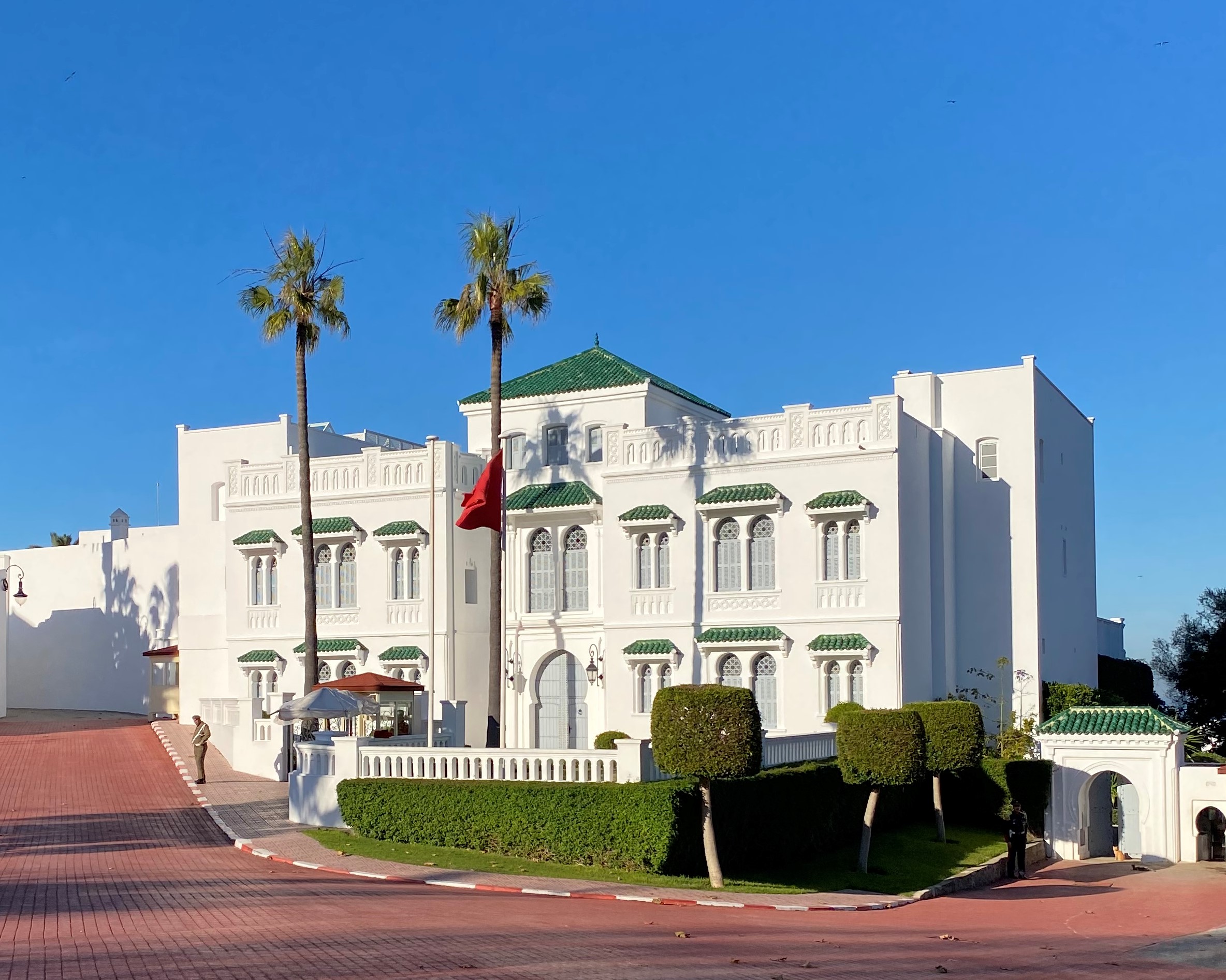
The First Moroccan Crisis began when Kaiser Wilhelm II visited Tangier and publicly backed Moroccan independence against growing French influence. The dispute widened into a European diplomatic confrontation that was eventually addressed at the Algeciras Conference in 1906. Although Morocco remained formally independent for the moment, the crisis showed that the Scramble for Africa had become inseparable from alliance politics in Europe. North Africa was no longer just a zone of colonial bargaining; it had become a testing ground for prestige, deterrence, and the balance of power among the great states.

11oktober
1899
11 oktober 1899

South African War begins over power in southern Africa

The South African War began when tensions between the British Empire and the Boer republics of the Transvaal and Orange Free State escalated into full-scale conflict. Gold, regional hegemony, and imperial strategy all shaped the struggle. The war became a major milestone in the Scramble because it was not simply a conflict between Europeans on African soil; it also transformed labor systems, state power, and racial politics across southern Africa. Britain’s eventual victory enabled a more consolidated imperial order in the region, though at immense human cost to civilians and combatants alike.

18september
1898
18 september 1898

Fashoda Incident brings Britain and France to the brink

When British and French expeditions met at Fashoda in September 1898, years of rivalry over African expansion came to a head. Britain sought a north-south axis from Cairo to the Cape, while France hoped to establish a west-east chain across the continent. The encounter did not erupt into war, but it created a major diplomatic crisis before France eventually backed down. Fashoda was one of the clearest demonstrations that the Scramble for Africa was also a European power struggle, in which African territory served as the arena for wider imperial competition.

02september
1898
02 september 1898

Battle of Omdurman crushes the Mahdist state in Sudan

At Omdurman, Anglo-Egyptian forces under Herbert Kitchener defeated the Mahdist army and destroyed the military power of the Mahdist state that had arisen in Sudan after the fall of Khartoum. The battle showcased the overwhelming technological advantage of modern imperial armies, especially machine guns and artillery, against mass infantry assaults. In the history of the Scramble for Africa, Omdurman was a crucial turning point because it brought Sudan under Anglo-Egyptian control and set the stage for the immediate confrontation with France over the upper Nile.

27augustus
1896
27 augustus 1896

Anglo-Zanzibar War confirms British dominance over Zanzibar

The Anglo-Zanzibar War, fought on a single day in August 1896, ended in a rapid British victory and installed a ruler acceptable to British authorities. Though brief, the conflict symbolized how protectorate politics worked in the mature phase of the Scramble: direct rule was not always necessary when naval power and treaty control could determine succession and policy. British dominance over Zanzibar helped secure influence along the East African coast and sea lanes, illustrating how imperial competition fused diplomacy, coercion, and commercial strategy in one of Africa’s most important coastal entrepôts.

01juli
1890
01 juli 1890

Heligoland-Zanzibar Treaty redraws spheres of influence in East Africa

The Heligoland-Zanzibar Treaty between Britain and Germany clarified competing imperial claims by exchanging territorial concessions in Europe and Africa and defining spheres of influence in East Africa. Britain strengthened its position over Zanzibar and routes toward the upper Nile, while Germany consolidated claims on the mainland in what became German East Africa. The treaty is important because it demonstrates that much of the Scramble proceeded through negotiation among European states rather than direct consultation with Africans, with borders and protectorates arranged to suit imperial strategy, trade, and naval concerns.

26februari
1885
26 februari 1885

General Act of Berlin formalizes the rules of occupation

The conclusion of the Berlin Conference in February 1885 produced the General Act, which laid out procedures by which European states would recognize one another’s new coastal occupations and commercial claims. Its language about free trade, navigation, and anti-slavery measures masked the reality that African sovereignty was being overridden by outside powers. The act gave legal and diplomatic structure to imperial rivalry, making annexation appear orderly and legitimate in European terms while helping unleash a much faster territorial takeover of the African interior in the following decades.

05februari
1885
05 februari 1885

Congo Free State is recognized under Leopold II

The recognition of the Congo Free State placed a vast central African territory under the personal rule of Belgium’s King Leopold II rather than under the Belgian state. Presented internationally as a humanitarian and free-trade project, the regime rapidly became notorious for coercive labor systems, extraction, and extreme violence. Its creation was a milestone of the Scramble because it showed how diplomatic recognition at Berlin could convert private ambition into sovereignty over millions of Africans, with devastating consequences that later fueled one of the first major international human-rights campaigns of the modern era.

15november
1884
15 november 1884

Berlin Conference opens to regulate European expansion in Africa

When the Berlin West Africa Conference opened in Berlin, representatives of European powers and the United States met without African participation to set rules for claiming territory in Africa. The conference did not literally partition every border on the spot, but it formalized principles such as notification and effective occupation, encouraged treaty-making with local rulers, and recognized free navigation on the Congo and Niger rivers. Historians widely treat this meeting as the diplomatic turning point that accelerated the Scramble from competitive intrusion into a continent-wide race for possession.

13september
1882
13 september 1882

British victory at Tel el-Kebir secures occupation of Egypt

Britain's victory at Tel el-Kebir during the Anglo-Egyptian War effectively placed Egypt under British occupation, even though the Ottoman framework formally remained. Control of Egypt mattered far beyond the Nile Valley because it protected the Suez Canal and strengthened Britain’s position in northeastern Africa. The occupation also drew Britain more deeply into Sudan and intensified rivalries with France and other powers. In the wider Scramble for Africa, Egypt became a strategic hinge connecting African conquest with global imperial communications and finance.

22januari
1879
22 januari 1879

Battle of Isandlwana shocks Britain during the Anglo-Zulu War

The Battle of Isandlwana became one of the most famous early clashes of high imperial expansion in southern Africa. A Zulu army overwhelmed a British force after an invasion of Zululand, exposing the risks of colonial conquest and the strength of African states resisting annexation. Even though Britain ultimately prevailed later in 1879, the war marked an important phase of the Scramble by demonstrating that European partition was not peaceful mapping alone but depended on repeated campaigns to break established African polities.

17november
1869
17 november 1869

Opening of the Suez Canal reshapes the strategic value of Africa

The ceremonial opening of the Suez Canal transformed the geopolitical importance of northeastern Africa by linking the Mediterranean and Red seas through Egypt. Although not itself the start of the Scramble for Africa, the canal sharply increased European interest in controlling routes to Asia and protecting imperial trade. In the decades that followed, Britain in particular treated Egypt and the canal zone as vital strategic assets, and this helped push African expansion from coastal enclaves toward deeper political and military domination across the continent.

Frequently asked questions about Scramble for Africa

Discover commonly asked questions regarding Scramble for Africa. If there are any questions we may have overlooked, please let us know.

What were the main motivations behind the Scramble for Africa?

What is the legacy of the Scramble for Africa?

What was the Scramble for Africa?

What were some key events during the Scramble for Africa?