Organization · Other

Roscosmos

@roscosmos

Explore the fascinating timeline of Roscosmos, highlighting key events and milestones in Russia's space exploration history. Click to learn more!

Founded February 25, 1992
15Events
31Years
1985
1990
1995
2000
2005
2010
2015
2020
2025
1991
1992
1993
1994
1996
1997
1998
1999
2001
2002
2003
2004
2006
2007
2008
2009
2011
2012
2013
2014
2016
2017
2018
2019
2021
2022
2023
2024
2026
20augustus
2023
20 augustus 2023

Luna-25 crashes on the Moon

On 20 August 2023, Roscosmos announced that Luna-25 had crashed into the Moon after an abnormal maneuver left the spacecraft in an uncontrolled orbit. The failure was a severe blow to the agency’s efforts to prove that Russia could still conduct cutting-edge planetary exploration. Because Luna-25 had been framed as a return to lunar science after decades of inactivity, its loss highlighted deeper structural problems often identified in the Russian space industry, including technological disruption, sanctions pressure, and the erosion of expertise since the Soviet period. The crash became one of the most consequential setbacks for Roscosmos in the 21st century.

11augustus
2023
11 augustus 2023

Luna-25 launches, beginning Russia’s first lunar attempt in decades

On 11 August 2023, Roscosmos launched Luna-25 from Vostochny Cosmodrome, sending Russia’s first lunar mission since the Soviet era toward the Moon’s south polar region. The project was intended to revive deep-space prestige and demonstrate that Roscosmos could move beyond orbital operations and again conduct ambitious robotic exploration. The mission drew exceptional attention because it was supposed to restore a capability absent for nearly half a century and to show that Russian planetary science had survived years of economic decline, sanctions, and institutional turbulence. Even before its outcome was known, the launch itself was a major milestone in Roscosmos’s post-Soviet history.

15juli
2022
15 juli 2022

Yury Borisov replaces Rogozin as Roscosmos chief

On 15 July 2022, Yury Borisov was appointed head of Roscosmos, replacing Dmitry Rogozin in another major leadership shift. Borisov came from the Russian government’s defense-industrial sphere, and his appointment suggested a renewed focus on discipline, procurement, and strategic recovery for a space sector facing sanctions, technological bottlenecks, and international isolation. The change was significant because Roscosmos was under pressure to prove reliability in launch and exploration while also redefining partnerships after the collapse of several cooperative programs. Borisov inherited an organization that remained central to the ISS but was struggling to sustain the breadth and prestige of earlier eras.

01maart
2022
01 maart 2022

Roscosmos suspends cooperation at Europe’s Kourou spaceport

In early March 2022, Roscosmos suspended participation in operations at Europe’s spaceport in Kourou, French Guiana, as relations with Western partners deteriorated sharply after Russia’s invasion of Ukraine and the resulting sanctions. The move was an important turning point because it disrupted a visible area of international launch cooperation and signaled a broader breakdown in Russian-European space ties. Roscosmos’s actions also extended to threats affecting engine supply and other partnerships, underscoring how geopolitical conflict was reshaping the agency’s external relationships. The episode marked the end of a long period when commercial and scientific cooperation had partially insulated space activity from wider political confrontation.

29juli
2021
29 juli 2021

Nauka module launches and expands the Russian ISS segment

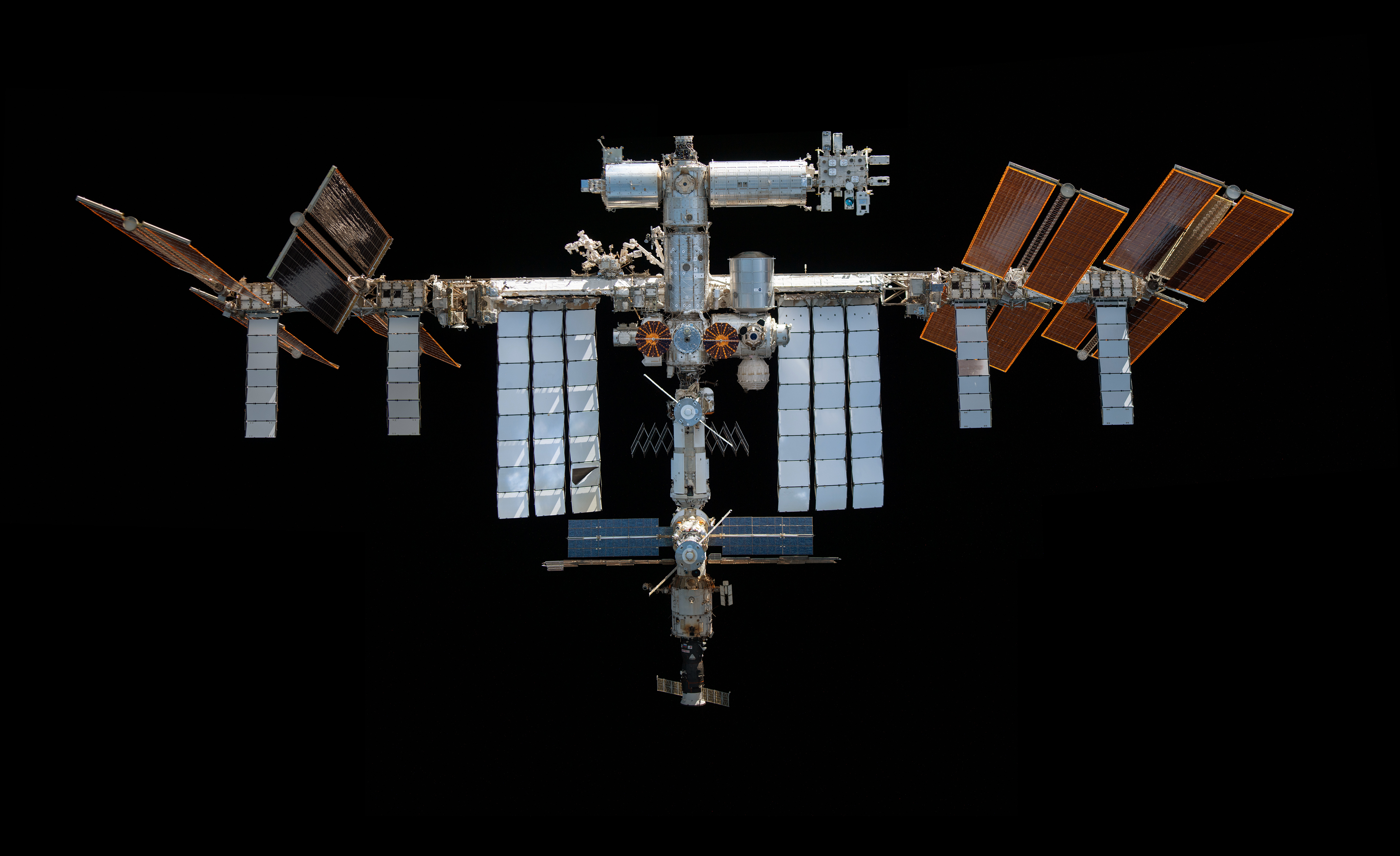
On 29 July 2021, the long-delayed Nauka multipurpose laboratory module successfully docked with the International Space Station after launching days earlier from Baikonur. For Roscosmos, this was a major technical and political milestone because Nauka had been postponed for years and had come to symbolize the difficulties of Russia’s post-Soviet space industry. Its arrival expanded research capacity, added living and work space, and enabled future reconfiguration of the Russian segment. NASA described Nauka and the later Prichal module as important additions that increased the station’s Russian research capability, making the event one of Roscosmos’s most significant ISS achievements of the 2020s.

24mei
2018
24 mei 2018

Dmitry Rogozin becomes head of Roscosmos

On 24 May 2018, Dmitry Rogozin was appointed to lead Roscosmos, marking a politically important leadership change at a time of strategic strain for the agency. Rogozin, a prominent and outspoken senior official, took over as Roscosmos faced aging infrastructure, pressure to modernize launch systems, and the challenge of preserving Russia’s role in human spaceflight while commercial competitors expanded. His tenure became associated with sharper rhetoric, repeated disputes with Western partners, and continued efforts to consolidate the industry. The appointment mattered because it signaled the Kremlin’s desire for tighter political control over the space sector and its public image.

28april
2016
28 april 2016

First rocket launches from Vostochny Cosmodrome

On 28 April 2016, a Soyuz-2.1a rocket made the first launch from Vostochny Cosmodrome, giving Roscosmos a major symbolic and operational achievement. The launch demonstrated that Russia could begin shifting some missions from leased Baikonur facilities to a new domestic spaceport in the Far East. Although the program had been marred by delays and scandal, the successful inaugural launch showed that years of construction had produced a working launch base. For Roscosmos, Vostochny represented both strategic independence and national prestige, tying infrastructure policy directly to the agency’s long-term lunar and orbital plans.

13juli
2015
13 juli 2015

Law creates the Roscosmos state corporation

On 13 July 2015, President Vladimir Putin signed the law establishing Roscosmos as a state corporation, replacing the earlier federal-agency model and merging it with the broader industry-consolidation framework. This was one of the biggest institutional changes in the history of the Russian space program. The reform was designed to re-nationalize and centralize management of the space sector, bringing policy oversight and industrial production under a single corporate-state umbrella. It reflected persistent concerns about inefficiency, failed missions, and weak coordination, and it created the legal structure that defines Roscosmos today.

01augustus
2013
01 augustus 2013

United Rocket and Space Corporation is formed to consolidate industry

In August 2013, the Russian government created the United Rocket and Space Corporation, a major restructuring vehicle meant to consolidate and discipline the troubled space manufacturing sector that Roscosmos depended upon. The move followed a series of launch failures and reflected concern that the industry had become inefficient, fragmented, and vulnerable to quality-control problems. This mattered greatly for Roscosmos because the agency relied on a sprawling network of design bureaus and factories to build launchers, spacecraft, and station hardware. The 2013 consolidation effort laid the groundwork for the much larger 2015–2016 merger that transformed Roscosmos into its present state-corporation form.

01augustus
2011
01 augustus 2011

Construction era begins for Vostochny Cosmodrome

In August 2011, work formally advanced on Vostochny Cosmodrome in Russia’s Amur region, launching one of Roscosmos’s most important strategic infrastructure projects. Vostochny was intended to reduce dependence on the Baikonur Cosmodrome in Kazakhstan and to anchor a modern civilian launch complex on Russian territory. The project was ambitious and politically significant, but it was also troubled by delays, labor disputes, and corruption investigations. Even with those problems, Vostochny became central to Roscosmos’s long-term plans for sovereign launch capability, new lunar missions, and a symbolic revival of Russian space power in the Far East.

09maart
2004
09 maart 2004

Federal Space Agency form of Roscosmos is established

On 9 March 2004, Russia reorganized its space administration again, creating the Federal Space Agency, widely known as Roscosmos. This structure gave the agency the name that became internationally familiar and clarified its role as the central civilian authority for Russian spaceflight, exploration, and aerospace research. The 2004 reform came at a time when Russia was trying to rebuild state capacity after the instability of the 1990s. Under this form, Roscosmos managed launch operations, ISS commitments, planetary ambitions, and industrial coordination, setting the stage for later state-led consolidation of the entire space sector.

25juli
2000
25 juli 2000

Zvezda service module docks with the ISS

On 25 July 2000, the Zvezda service module automatically docked to the International Space Station, establishing the core living and control functions of the Russian segment. For Roscosmos and its predecessor institutions, this was a foundational engineering success because Zvezda provided life-support systems, guidance, communications, and docking capability for Soyuz and Progress spacecraft. The event demonstrated that Russia remained indispensable to long-duration human spaceflight after the Soviet collapse and gave the agency a lasting operational role aboard the ISS. Zvezda’s successful addition helped transform the station into a continuously habitable orbital complex.

25mei
1999
25 mei 1999

Agency is reorganized as the Russian Aviation and Space Agency

In 1999, the Russian Space Agency was reorganized and renamed the Russian Aviation and Space Agency, often called Rosaviakosmos. The change reflected Moscow’s attempt to consolidate oversight of aerospace sectors and stabilize space administration during a turbulent decade for the industry. Although the organization still carried forward the legacy of the earlier 1992 agency, the renaming signaled a new phase in which Russia tried to preserve strategic launch, satellite, and crewed-spaceflight capabilities despite budget pressures and industrial fragmentation. This reorganization is an important milestone in the institutional evolution that eventually produced modern Roscosmos.

02september
1993
02 september 1993

Russia joins the International Space Station program

In 1993, Russia joined the multinational project that became the International Space Station, a decision that profoundly shaped Roscosmos for decades. Participation preserved Russia’s human-spaceflight role during a financially difficult era and redirected major engineering effort toward station modules, Soyuz crew transport, and Progress cargo support. The partnership also linked Roscosmos closely with NASA, ESA, JAXA, and CSA, turning the Russian program from a largely national effort into a central pillar of a permanently crewed international outpost. This cooperation became one of the agency’s defining activities in the post-Soviet period.

25februari
1992
25 februari 1992

Russian Space Agency is created after the Soviet breakup

On 25 February 1992, the Russian government established the Russian Space Agency, creating the civilian body that would evolve into today’s Roscosmos. The new organization became the institutional successor to much of the Soviet space program after the USSR’s dissolution in late 1991. Its creation was a major administrative milestone because Russia needed a central authority to manage launch systems, cosmonaut training, scientific missions, and international partnerships during a period of severe political and economic disruption. This date marks the beginning of Roscosmos as a post-Soviet organization, even though its name and legal form changed several times afterward.

Frequently asked questions about Roscosmos

Discover commonly asked questions regarding Roscosmos. If there are any questions we may have overlooked, please let us know.

What is the legacy of Roscosmos in space exploration?

What are the key achievements of Roscosmos?

What is Roscosmos?

How does Roscosmos contribute to international space efforts?