Raymond Davis Jr.
@raymonddavisjr.1914 — 2006
Explore the timeline of Raymond Davis Jr., an influential American chemist and physicist. Delve into his early life, groundbreaking work in radiochemistry, and his notable achievements, including the Nobel Prize in Physics for his pioneering contributions to solar neutrino research. Discover the key milestones that shaped his illustrious career and legacy in the field of science.
Frequently asked questions about Raymond Davis Jr.
Discover commonly asked questions regarding Raymond Davis Jr.. If there are any questions we may have overlooked, please let us know.
What is Raymond Davis Jr. famous for?
Who was Raymond Davis Jr.?
When did Raymond Davis Jr. pass away?
When was Raymond Davis Jr. born?
Related Timepaths
People, places and organizations that appear in Raymond Davis Jr.’s events

Yale University
Explore the rich timeline of Yale University, tracing its origins from its founding in 1701 to its development into a prestigious Ivy League institution. Delve into key historical milestones, notable events, and influential leaders that have shaped Yale’s legacy in higher education and research.
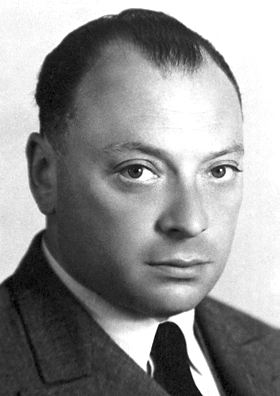
Wolfgang Pauli
Explore the timeline of Wolfgang Pauli, the influential theoretical physicist known for his contributions to quantum mechanics, including the Pauli exclusion principle. This timeline covers significant milestones in Pauli's life, from his early education and groundbreaking scientific achievements to his influence on modern physics.

Masatoshi Koshiba
Explore the timeline of Masatoshi Koshiba's life and career, highlighting his groundbreaking contributions to the field of neutrino astronomy. From his early education in Japan to his Nobel Prize-winning work on detecting cosmic neutrinos, this timeline captures the key moments and achievements of the renowned physicist.