Organization · Other

Mossad

@mossad

Explore the pivotal moments in Mossad's history. Discover key operations, milestones, and the evolution of Israel's intelligence agency.

Founded January 1, 1949
13Events
69Years
1940
1950
1960
1970
1980
1990
2000
2010
2020
1944
1946
1948
1952
1954
1956
1958
1962
1964
1966
1968
1972
1974
1976
1978
1982
1984
1986
1988
1992
1994
1996
1998
2002
2004
2006
2008
2012
2014
2016
2018
2022
2024
31januari
2018
31 januari 2018

Agents steal Iran’s nuclear archive from a warehouse in Tehran

On January 31, 2018, Mossad agents infiltrated a warehouse in the Kahrizak area of southern Tehran and removed a vast archive of Iranian nuclear documents and files. The trove was later presented publicly by Israel as evidence of extensive past weapons-related research. This operation became one of Mossad’s signature modern achievements because it blended classic clandestine planning with strategic intelligence impact, producing not just a secret gain but a document haul with international political consequences. The raid reinforced Mossad’s reputation for deep-penetration operations inside hostile states and played into global debate over Iran’s nuclear intentions, verification, and compliance with prior agreements.

19januari
2010
19 januari 2010

Killing of Mahmoud al-Mabhouh in Dubai sparks international backlash

On January 19, 2010, Mahmoud al-Mabhouh, a Hamas commander, was killed in a Dubai hotel room in an assassination widely attributed by Dubai authorities to Mossad. The case drew global attention after investigators released extensive surveillance footage and alleged that the hit team used forged or fraudulently obtained foreign passports. Several governments responded angrily, and the incident became one of the most publicized intelligence scandals associated with Israel in decades. For Mossad’s history, the operation is important not only because of the killing itself, but because modern surveillance systems, passport tracing, and international media exposure made secrecy far harder to preserve than in earlier eras of clandestine action.

25september
1997
25 september 1997

Attempted assassination of Khaled Meshal in Amman fails and causes a diplomatic crisis

On September 25, 1997, Mossad agents attempted to assassinate Hamas leader Khaled Meshal in Amman, Jordan, by using poison, but the operation failed when the agents were caught after a struggle. Under pressure from King Hussein, Israel provided the antidote that saved Meshal’s life and later released Sheikh Ahmed Yassin and other prisoners to secure the agents’ return. The affair badly damaged Mossad’s standing and exposed poor planning and deficient intelligence, according to later reporting. It became a major milestone because it demonstrated how a covert action gone wrong could rapidly become a regional diplomatic crisis and undermine both operational credibility and state policy.

01januari
1990
01 januari 1990

Aliza Magen becomes Mossad’s deputy director, the highest-ranking woman in its history

In 1990, Aliza Magen was appointed deputy director of Mossad, becoming the highest-ranking woman in the agency’s history. She had already served for decades in intelligence and taken part in numerous operations, but her elevation marked an important institutional milestone because it reflected the expanding role of women in leadership within one of the world’s most secretive services. Her appointment also signaled continuity between Mossad’s older generation of field-driven clandestine work and its more modern managerial and analytical structure. Though less dramatic than famous operations, the promotion matters historically as a rare visible marker of internal organizational change within a service that usually keeps its senior personnel hidden.

22januari
1979
22 januari 1979

Ali Hassan Salameh is killed in Beirut after years of pursuit

On January 22, 1979, Ali Hassan Salameh was killed in Beirut in a car-bomb attack widely attributed to Mossad. Salameh had long been pursued by Israel because of his alleged connection to Black September and the Munich attack. His death was seen by many observers as a delayed culmination of the post-Munich assassination campaign, especially after Mossad’s earlier mistake in Lillehammer. The operation highlighted the agency’s persistence, transnational reach, and preference for covert lethal action against perceived architects of attacks on Israelis. At the same time, it renewed debate over civilian risk, legality, and the strategic consequences of assassination as an instrument of state policy.

04juli
1976
04 juli 1976

Mossad intelligence helps make the Entebbe hostage rescue possible

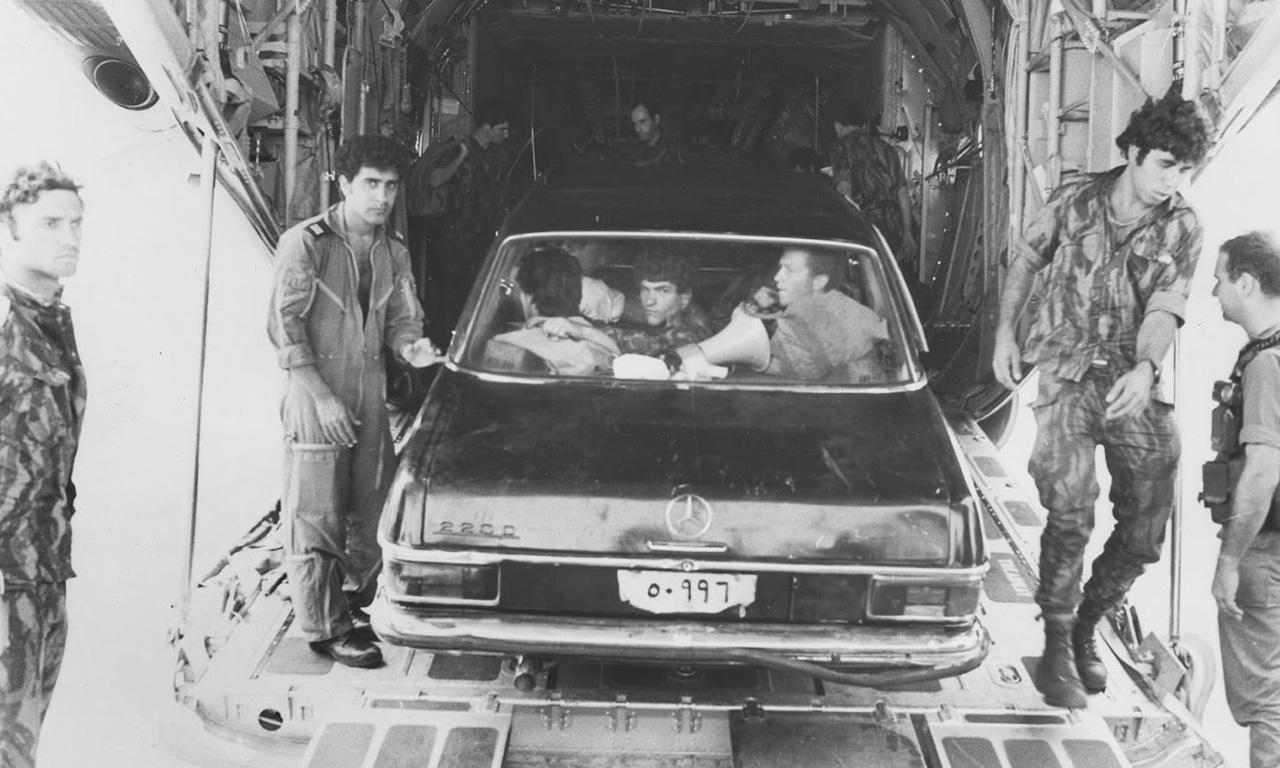
On July 4, 1976, Israeli commandos carried out the Entebbe raid in Uganda, rescuing more than 100 hostages from a hijacked Air France flight. Although the operation itself was executed by the military, accounts of the raid note that the decision and planning relied heavily on intelligence provided by Mossad. That contribution made the episode a key milestone in the organization’s history, showing how intelligence collection, source handling, and rapid analysis could shape a high-risk rescue mission far from Israel. Entebbe became one of the best-known examples of Israeli counterterrorism, and Mossad’s role reinforced the agency’s image as central to overseas crisis response and strategic operations.

21juli
1973
21 juli 1973

The Lillehammer affair becomes a major operational scandal

On July 21, 1973, Mossad operatives in Lillehammer, Norway, killed Ahmed Bouchiki, a Moroccan-born waiter, after mistakenly identifying him as Ali Hassan Salameh, a Palestinian figure linked to Black September. The failed operation became one of the agency’s most damaging scandals. Norwegian authorities arrested several members of the team, exposing methods, safe houses, and aspects of Mossad tradecraft. Historically, the Lillehammer affair is important because it revealed the risks of targeted killing based on flawed intelligence and generated serious diplomatic fallout. It also interrupted the broader post-Munich campaign and remains one of the clearest examples of the costs of operational overconfidence.

05september
1972
05 september 1972

Munich massacre triggers a long covert campaign against Black September operatives

After Palestinian militants murdered 11 Israeli athletes at the Munich Olympics on September 5, 1972, Israel launched a sustained covert response widely associated with Mossad and often referred to as Operation Wrath of God. The campaign sought to identify and kill individuals believed responsible for planning or supporting the attack. This was a turning point in the agency’s history because it intensified Mossad’s role in global counterterrorism and targeted killings. It also shaped international perceptions of the organization as one willing to conduct lethal clandestine actions across multiple countries, even as the morality, legality, and intelligence reliability of such operations remained deeply contested.

18mei
1965
18 mei 1965

Syrian authorities execute Eli Cohen after his intelligence work for Israel is uncovered

On May 18, 1965, Syria publicly executed Eli Cohen in Damascus after uncovering his espionage activities. Though Cohen himself was the operative, the case became one of the defining milestones in Mossad lore because it highlighted both the extraordinary depth and the extreme risk of long-term human penetration operations. Posing as a businessman, he had cultivated ties at the highest levels of Syrian political and military life and provided intelligence that later became highly valuable to Israel. His exposure and execution underscored the peril of deep-cover espionage while reinforcing Mossad’s reputation for bold human intelligence operations in hostile neighboring states.

01januari
1962
01 januari 1962

Operation Damocles targets foreign scientists aiding Egypt’s missile program

In 1962, Mossad launched Operation Damocles against German scientists assisting Egypt’s missile development efforts. The campaign reportedly combined intimidation, surveillance, letter bombs, and other covert pressure designed to disrupt the project and deter foreign expertise from strengthening an Arab military threat to Israel. Although controversial, the operation illustrated a major expansion in Mossad’s mission set: not merely collecting intelligence, but actively intervening to delay strategic weapons programs considered dangerous to Israel’s security. The episode also reflected the agency’s readiness, during the Cold War, to operate across Europe and the Middle East in pursuit of long-term strategic denial rather than only immediate tactical gains.

11mei
1960
11 mei 1960

Mossad captures Adolf Eichmann in Argentina

On May 11, 1960, Mossad agents seized former Nazi official Adolf Eichmann in Buenos Aires, Argentina, and secretly exfiltrated him to Israel. Eichmann had played a central role in organizing the deportation of Jews to extermination camps during the Holocaust. His capture became one of Mossad’s most famous operations because it demonstrated the agency’s ability to identify, surveil, abduct, and transport a high-value fugitive from another continent. The operation had legal and diplomatic consequences, especially with Argentina, but it also carried enormous symbolic weight for Israel and Holocaust survivors by bringing a major perpetrator to public trial.

01januari
1952
01 januari 1952

Isser Harel takes over and professionalizes the organization

In 1952, Reuven Shiloah retired and Isser Harel took over leadership of Mossad. Under Harel, the agency evolved from a troubled coordinating office into a far more disciplined and capable professional service with an international operational reach. Britannica credits his 1952–1963 tenure with building Mossad into an organization able to conduct complex missions around the world. This period established many of the institutional habits that came to define Mossad’s reputation: tight operational security, emphasis on human intelligence, willingness to act abroad, and a strategic focus on threats to Israel that extended well beyond its immediate borders.

13december
1949
13 december 1949

Mossad is formally established as Israel’s central foreign intelligence coordinator

Mossad was formally established on December 13, 1949, as the Institute for Co-ordination, creating a central body to organize Israel’s foreign intelligence work after independence. It succeeded earlier underground intelligence structures tied to the Haganah and was intended to improve cooperation across the young state’s fragmented security apparatus. Reuven Shiloah became its first director, and the new agency’s mandate centered on foreign intelligence collection, analysis, and covert operations beyond Israel’s borders. This founding moment is the essential institutional milestone in Mossad’s history because it marked the transition from improvised pre-state networks to a permanent national intelligence service.

Frequently asked questions about Mossad

Discover commonly asked questions regarding Mossad. If there are any questions we may have overlooked, please let us know.

How does Mossad contribute to Israel's national security?

What are some notable operations conducted by Mossad?

What is the legacy of Mossad in global intelligence?

What is Mossad?