World Event · Other

Mongol invasion of Europe

@mongolinvasionofeurope

Explore the key events of the Mongol invasion of Europe, detailing battles, strategies, and impacts on the continent's history.

13Events
7Years
1234
1235
1236
1237
1238
1239
1240
1241
1242
Nov 1234
Dec
Feb
Mar
Apr
May
Jun
Jul
Aug
Sep
Oct
Nov
Dec
Feb
Mar
Apr
May
Jun
Jul
Aug
Sep
Oct
Nov
Dec
Feb
Mar
Apr
May
Jun
Jul
Aug
Sep
Oct
Nov
Dec
Feb
Mar
Apr
May
Jun
Jul
Aug
Sep
Oct
Nov
Dec
Feb
Mar
Apr
May
Jun
Jul
Aug
Sep
Oct
Nov
Dec
Feb
Mar
Apr
May
Jun
Jul
Aug
Sep
Oct
Nov
Dec
Feb
Mar
Apr
May
Jun
Jul
Aug
Sep
Oct
Nov
Dec
Feb
Mar
Apr
01maart
1242
01 maart 1242

The Mongols withdraw from Hungary and Central Europe

By the spring of 1242, the Mongols began pulling out of Hungary and retreating from Central Europe. Their withdrawal ended the most dangerous phase of the invasion and spared lands farther west from an immediate follow-on conquest. The reasons remain debated, with imperial succession after Ögedei's death, logistical pressures, environmental conditions, and strategic recalculation all cited by historians. Whatever the mix of causes, the retreat was one of medieval Europe's most consequential escapes. It left devastation behind but prevented the temporary collapse of Central Europe's remaining kingdoms from becoming a permanent Mongol occupation.

01januari
1242
01 januari 1242

The Mongols fail to reduce key fortresses such as Esztergom

During the winter campaign of 1241-1242, Mongol forces continued ravaging Hungary but encountered stronger resistance at a number of major fortified places, including Esztergom. These failures did not reverse the occupation, yet they revealed limits to Mongol operations in a landscape where marshes, rivers, supply constraints, and stone defenses could complicate rapid conquest. The experience was historically important because it demonstrated that while the Mongols were devastating in open battle and against weakly defended settlements, they did not simply sweep away every strongpoint. This lesson would directly inform Hungarian rebuilding after the invasion.

01januari
1242
01 januari 1242

Béla IV begins rebuilding Hungary after the invasion

After returning from refuge, Béla IV launched a reconstruction program that became one of the most important legacies of the Mongol invasion. Recognizing that timber fortifications and old military arrangements had failed, he encouraged the building of stone castles, reorganized defenses, and invited settlers to repopulate devastated regions. Because so much of Hungary had been ruined, these reforms reshaped the kingdom's political geography and military culture for generations. The rebuilding effort turned the trauma of 1241-1242 into a catalyst for state transformation, and later memory would regard Béla as a kind of second founder of the kingdom.

11december
1241
11 december 1241

The death of Ögedei Khan creates a succession crisis in the Mongol Empire

News that Great Khan Ögedei had died in December 1241 changed the political context of the European campaign. Although historians debate exactly how decisive this was in operational terms, the death of the supreme ruler forced senior princes to weigh imperial politics against continued western expansion. Batu, who had reached a position from which further advances into Central Europe seemed possible, now had reason to reconsider his next move. The event did not instantly end the invasion, but it was a major turning point that helped redirect Mongol attention from conquest in Europe to succession and power struggles within the empire.

11april
1241
11 april 1241

Hungary is shattered at the Battle of Mohi

Two days after Legnica, Batu Khan and Subutai crushed King Béla IV's army at Mohi on the Sajó River. This was the decisive military turning point of the Mongol invasion of Europe. The Hungarian kingdom, one of the strongest powers in the region, lost its principal field army in a catastrophic defeat brought about by Mongol coordination, mobility, and tactical flexibility. With organized resistance broken, the invaders were able to overrun much of the country. Mohi convinced observers across Europe that the Mongols were not merely raiders but a power capable of dismantling major kingdoms.

09april
1241
09 april 1241

The Mongols win the Battle of Legnica

Near Legnica, a Mongol force defeated a coalition of Polish, Silesian, and allied Christian troops led by Duke Henry II the Pious. The battle became one of the most famous clashes of the invasion because it shattered hopes that a regional coalition in Poland could stop the advance. Henry's death deprived the Polish lands of a major leader at a critical moment. Strategically, Legnica fulfilled its purpose as a diversionary and screening victory: it prevented northern forces from uniting effectively while the main Mongol army prepared to strike Hungary with overwhelming force.

01april
1241
01 april 1241

King Béla IV flees as Hungary collapses under occupation

In the aftermath of Mohi, King Béla IV escaped the battlefield and began a desperate flight westward and then southward, eventually seeking refuge along the Adriatic. His survival preserved the Hungarian monarchy, but his flight also symbolized the near-total breakdown of royal authority in the kingdom's core territories. Mongol detachments swept through towns and countryside, and the inability of Hungary's traditional defenses to stop them became painfully clear. This phase of the invasion mattered because it exposed weaknesses in frontier defense, castle networks, and military organization that would shape postwar reforms.

24maart
1241
24 maart 1241

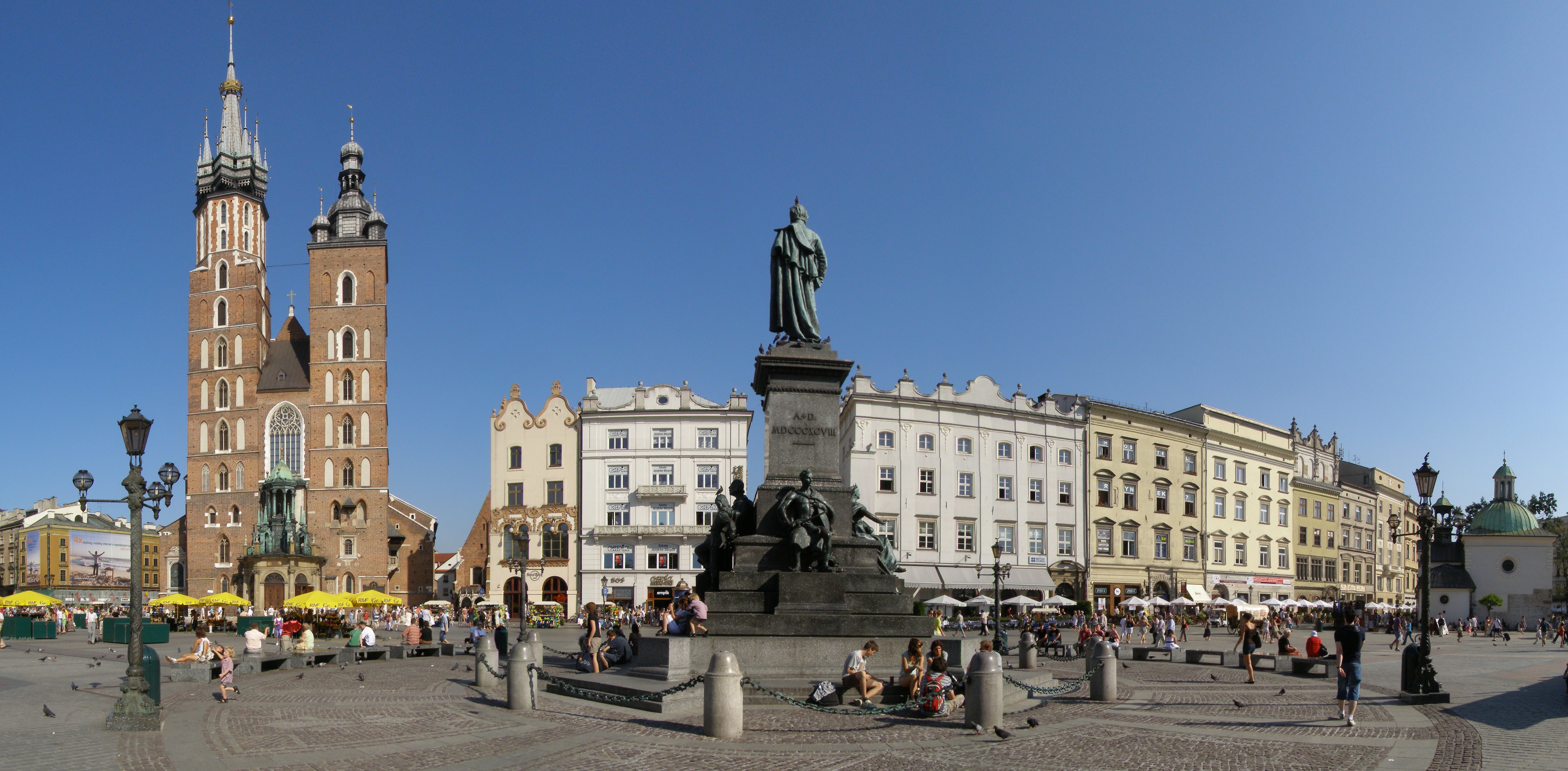
Kraków is seized and burned

Following the defeats of Polish field forces, the Mongols entered Kraków and burned one of the most important urban centers in the Polish lands. Although some inhabitants had fled, the city's destruction sent a powerful message about the invaders' reach and the inability of divided rulers to shield major settlements. The fall of Kraków deepened panic across Central Europe and helped clear the way toward Silesia. It also fit the invasion's larger logic: devastate secondary theaters so that no coherent northern coalition could interfere with the decisive campaign against Hungary.

18maart
1241
18 maart 1241

Polish forces are defeated at the Battle of Chmielnik

At Chmielnik, the Mongols defeated an important Polish force and killed several leading nobles. The engagement showed how difficult it was for European heavy cavalry and regionally assembled levies to cope with Mongol mobility, feigned retreat tactics, and disciplined missile fire. The battle further weakened Lesser Poland's capacity to resist and accelerated political dislocation just as the invaders were driving toward Kraków and Silesia. In the wider invasion, Chmielnik was a key escalation point because it broke organized resistance before the decisive confrontation at Legnica.

13februari
1241
13 februari 1241

The Mongols sack Sandomierz during the invasion of Poland

As the European phase of the campaign opened, a northern Mongol force advanced into fragmented Poland and stormed Sandomierz. The sack illustrated the Mongols' method of rapid penetration, intimidation, and destruction aimed at preventing local rulers from concentrating their armies. The fall of Sandomierz also served the larger operational design: Poland was not the principal target, but devastation there tied down regional forces and distracted potential allies who might otherwise have reinforced Hungary, where the main Mongol blow was being prepared.

06december
1240
06 december 1240

Kyiv falls after a Mongol siege

The capture of Kyiv marked the collapse of one of eastern Europe's great medieval centers and signaled that the Mongol westward offensive had broken through the Rus' defensive world. The city's fall was militarily and psychologically decisive, because it cleared the way for Batu's armies to move toward Central Europe while demonstrating the Mongols' skill at siege warfare as well as mobile operations. News of Kyiv's destruction spread alarm across Christian Europe, where rulers increasingly understood that the threat was no longer confined to the steppe borderlands.

01januari
1236
01 januari 1236

Mongol forces destroy Volga Bulgaria and open the route into Europe

The western campaign began in earnest with the defeat of Volga Bulgaria, a polity controlling an important gateway between the Eurasian steppe and the forest zones to the northwest. Its destruction removed a major obstacle on the approach to the Rus' lands and the European frontier. In strategic terms, this was one of the invasion's essential preparatory milestones: by crushing Volga Bulgaria, the Mongols secured their flank, gained access to river routes and pasturelands, and established momentum for the deeper drive that would later reach Poland and Hungary.

01januari
1235
01 januari 1235

Batu is appointed to command the western campaign

At a great imperial council of the Mongol Empire, Batu, a grandson of Chinggis Khan, was chosen to lead the western expedition that would carry Mongol power into the lands of the Volga Bulgars, the Rus' principalities, and eventually Central Europe. This decision mattered because it transformed earlier frontier raids into a coordinated imperial project. With the veteran strategist Subutai helping to plan operations, the campaign was designed not as a single raid but as a sequence of conquests that would open the road toward Poland, Hungary, and the Danube basin.

Frequently asked questions about Mongol invasion of Europe

Discover commonly asked questions regarding Mongol invasion of Europe. If there are any questions we may have overlooked, please let us know.

What was the legacy of the Mongol invasion on European societies?

What was the significance of the Mongol invasion for Europe?

What were the key events during the Mongol invasion of Europe?

What were the main reasons for the Mongol invasion of Europe?