World Event · Other

Ming dynasty

@mingdynasty

Explore the fascinating timeline of the Ming Dynasty, covering major events, rulers, and cultural achievements. Discover history today!

13Events
281Years
1300
1400
1500
1600
1340
25april
1644
25 april 1644

Beijing falls and the Ming dynasty collapses

In April 1644, rebel forces led by Li Zicheng captured Beijing, and the Chongzhen Emperor, the last Ming ruler to govern from the capital, took his own life on Jingshan Hill. The fall of Beijing marked the effective collapse of the Ming dynasty after years of rebellion, fiscal breakdown, military exhaustion, and pressure from Manchu forces to the northeast. Although Southern Ming claimants continued resistance for years, the seizure of the capital ended the dynasty as the ruling power of China proper. This event stands as the decisive conclusion of nearly three centuries of Ming rule and the opening of the Qing conquest era.

18augustus
1620
18 augustus 1620

Death of the Wanli Emperor deepens late-Ming instability

The Wanli Emperor died in Beijing on 18 August 1620 after a reign of nearly half a century. His long rule had begun in relative strength but ended amid severe administrative paralysis, factional conflict, and mounting fiscal problems. The emperor’s prolonged disengagement from routine government allowed bureaucratic rivalries and court dysfunction to harden, weakening the dynasty’s ability to manage military threats, tax burdens, and social unrest. His death was significant because it was followed by rapid turnovers on the throne and continued deterioration in central authority, accelerating the crisis that would overtake the Ming in less than a generation.

01januari
1592
01 januari 1592

Ming intervenes in Korea against Japanese invasion

In 1592, after Japanese armies invaded Korea, the Ming court committed major forces to defend its tributary partner, the Choson kingdom. The war lasted for years and required enormous military expenditure, repeated campaigning, and difficult cooperation with Korean allies amid a complex maritime and land struggle. Ming intervention demonstrated that the dynasty remained capable of projecting power beyond its borders, but the conflict also drained treasure, manpower, and administrative energy. The Korean war is widely regarded as one of the great late-Ming turning points because it intensified fiscal stress at exactly the moment when internal strains and frontier threats were growing more severe.

19juli
1572
19 juli 1572

The Wanli reign begins, inaugurating the last great phase of Ming power

When the Wanli Emperor came to the throne in 1572, the Ming entered what would become its last long reign. In the opening decade, governance was heavily shaped by Zhang Juzheng, whose reforms strengthened revenue collection, curbed some bureaucratic inefficiency, and helped preserve frontier security. This period is often remembered as a final high point because the dynasty still commanded enormous resources and could respond forcefully to major crises. At the same time, the reign’s later stagnation, factionalism, and imperial withdrawal from routine governance would become emblematic of late-Ming structural weakness, making 1572 both a renewal and the beginning of a long unraveling.

01januari
1567
01 januari 1567

Longqing-era stabilization begins a short late-Ming recovery

The accession of the Longqing Emperor in 1567 opened a brief but important period of stabilization after the troubled Jiajing years. During this phase, leading officials, above all the rising statesman Zhang Juzheng, helped restore administrative discipline and improve the effectiveness of central government. Historians often view the late 1560s and early Wanli years as a recovery moment in which the dynasty regained a measure of fiscal order and political coherence. This mattered because it delayed deeper crisis, supported frontier diplomacy and defense, and demonstrated that the Ming state still possessed substantial institutional capacity despite mounting long-term pressures.

01januari
1550
01 januari 1550

Altan Khan’s raid reaches the suburbs of Beijing

In 1550, the Mongol leader Altan Khan raided so deeply into Ming territory that his forces reached the suburbs of Beijing. The incursion dramatized the continuing danger on the northern frontier a century after the founding of the dynasty. Although the Ming state survived the immediate crisis, the raid underscored the limits of existing frontier policy and intensified efforts to strengthen defenses, including renewed attention to walls, garrisons, and logistics around the capital region. The event also revealed how external military pressure could interact with internal fiscal and administrative strains, a recurring pattern in late Ming history.

01september
1449
01 september 1449

The Tumu Crisis shatters confidence in Ming military leadership

In 1449, Ming forces suffered a catastrophic defeat during the Tumu Crisis, and the Zhengtong Emperor was captured by Oirat Mongol forces. The disaster exposed severe weaknesses in court decision-making, especially the influence of the eunuch Wang Zhen, and showed that the dynasty’s northern defenses could still be dangerously vulnerable. Yet the crisis also had a paradoxical effect: Beijing held, a new emperor was installed, and the state reorganized its military and political structures to survive the shock. Tumu became one of the defining traumas of mid-Ming history, shaping frontier strategy, court politics, and later perceptions of dynastic decline and resilience.

01januari
1420
01 januari 1420

The Forbidden City is completed and Beijing becomes the effective imperial center

By 1420, the vast palace complex now known as the Forbidden City had been completed under the Yongle Emperor, and the Ming court soon occupied it as the seat of imperial government. This was a monumental statement of dynastic authority. The transfer of the political center from Nanjing to Beijing reflected Yongle’s priorities: closer supervision of the northern frontier, more direct control over military affairs, and a reorientation of imperial ritual and administration. The palace’s scale, symmetry, and ceremonial design embodied Ming ideals of cosmic order and sovereign power, and for the remainder of the dynasty Beijing served as the main stage of Ming politics.

01januari
1405
01 januari 1405

Zheng He begins the Ming treasure voyages

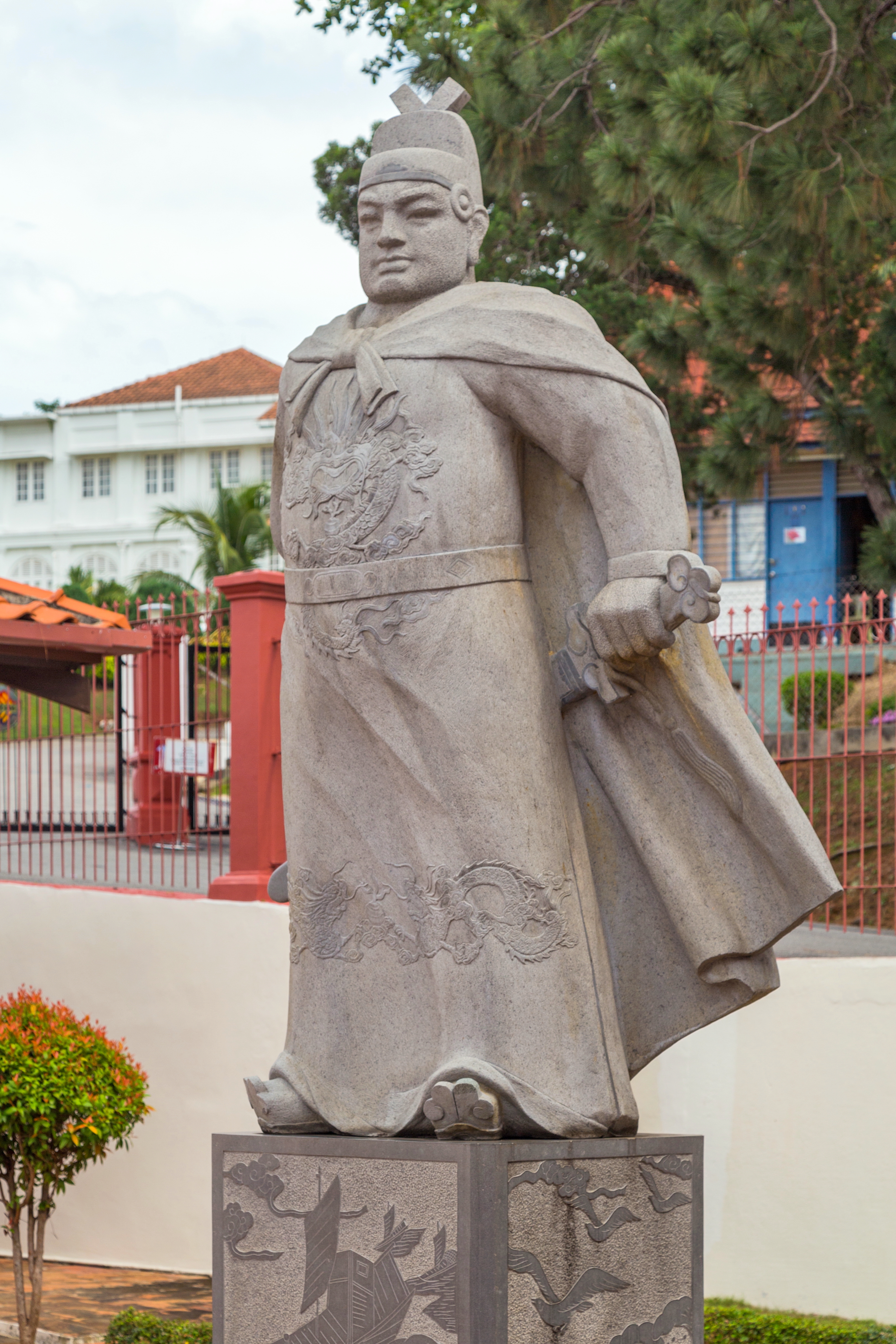
In 1405, under the patronage of the Yongle Emperor, the admiral Zheng He set sail on the first of seven great maritime expeditions. These voyages projected Ming prestige across Southeast Asia and the Indian Ocean, reaching South Asia, Arabia, and the East African coast over the following decades. The expeditions combined diplomacy, military display, trade, and tributary politics, demonstrating the logistical capacity of the early Ming state. Their importance lies not in colonization but in the scale of state-directed seafaring and the way they linked the dynasty to a broad Afro-Eurasian maritime world before later court priorities shifted back toward continental defense.

13juli
1402
13 juli 1402

Yongle seizes the throne after the Jingnan civil war

In July 1402, Zhu Di captured Nanjing and emerged victorious from the Jingnan campaign, the civil war he had launched against his nephew, the Jianwen Emperor. He soon took the throne as the Yongle Emperor, becoming the third Ming ruler. His victory was more than a palace coup: it redirected the dynasty’s political geography and imperial style. Yongle expanded court activism, strengthened the military frontier, sponsored vast construction and literary projects, and asserted Ming power abroad. Many historians describe his accession as a kind of “second founding,” because the institutional and symbolic order of the dynasty was substantially recast under his rule.

24juni
1398
24 juni 1398

Death of the Hongwu Emperor triggers a succession crisis

The Hongwu Emperor died in Nanjing on 24 June 1398 after three decades on the throne. His reign had created the institutional foundations of Ming rule, but his death exposed unresolved tensions within the imperial family. Instead of passing power to a surviving son, the throne went to his grandson, the Jianwen Emperor. That succession sharpened conflict between the center and powerful princely domains, especially the northern military base held by Zhu Di, prince of Yan. The crisis mattered because it quickly escalated into civil war, testing whether the young dynasty could survive its founder and revealing the risks built into Hongwu’s own political design.

12januari
1368
12 januari 1368

Zhu Yuanzhang proclaims the Ming dynasty

On 12 January 1368, Zhu Yuanzhang declared himself emperor and founded the Ming dynasty, taking the reign title Hongwu and establishing his court at Nanjing. The announcement marked the restoration of native Chinese rule after nearly a century of Mongol-led Yuan control. From this base, Ming armies expanded north and west to eliminate remaining rivals and consolidate imperial power. The founding was significant not only as a dynastic change but as the start of a major state-building project: tax reform, military reorganization, revived Confucian governance, and an enduring imperial structure that would shape China until 1644.

30augustus
1363
30 augustus 1363

Battle of Lake Poyang gives Zhu Yuanzhang a decisive advantage

During the Red Turban era that shattered late Yuan authority, Zhu Yuanzhang won a crucial naval victory over his rival Chen Youliang at Lake Poyang. Fought from late August into early October 1363, the battle destroyed one of the strongest competing rebel regimes in the Yangzi valley. Its importance reaches beyond military tactics: by eliminating a major opponent, Zhu gained the political and strategic room needed to unify much of south China, gather elite support, and move from regional warlord to dynastic founder. Historians commonly treat Lake Poyang as the decisive turning point on the road to the Ming dynasty’s creation five years later.

Frequently asked questions about Ming dynasty

Discover commonly asked questions regarding Ming dynasty. If there are any questions we may have overlooked, please let us know.

Why is the Ming dynasty considered significant in Chinese history?

What were the key achievements of the Ming dynasty?

What was the Ming dynasty?

What is the legacy of the Ming dynasty?