Explore the key events in Leo Tolstoy's life, from his early years to literary achievements. Discover the journey of this literary giant!
Leo Tolstoy died on November 20, 1910, at the age of 82. He passed away at the Astapovo railway station after leaving his home in search of a simpler life. His death marked the end of an era in Russian literature, but his works and ideas continue to influence writers and thinkers worldwide.
In 1901, the Russian Orthodox Church excommunicated Tolstoy due to his radical religious views and criticisms of the church. This event highlighted the growing rift between Tolstoy and religious authorities. Despite the excommunication, Tolstoy continued to attract followers who were inspired by his teachings.
In 1899, Tolstoy published 'Resurrection', his last major novel. The book critiques the injustices of the Russian legal system and explores themes of redemption and spiritual awakening. 'Resurrection' reflects Tolstoy's mature philosophical and religious beliefs, emphasizing the need for moral and social reform.
By 1884, Tolstoy had undergone a profound spiritual transformation, embracing Christian anarchism. He rejected the Russian Orthodox Church and state institutions, advocating for a return to the teachings of Jesus as a moral guide. This shift influenced his later writings and led to conflicts with religious authorities.
In 1877, Tolstoy published 'Anna Karenina', another masterpiece that delves into themes of love, family, and society. The novel is praised for its complex characters and its exploration of the moral dilemmas faced by individuals in 19th-century Russia. It remains a staple in the canon of world literature.
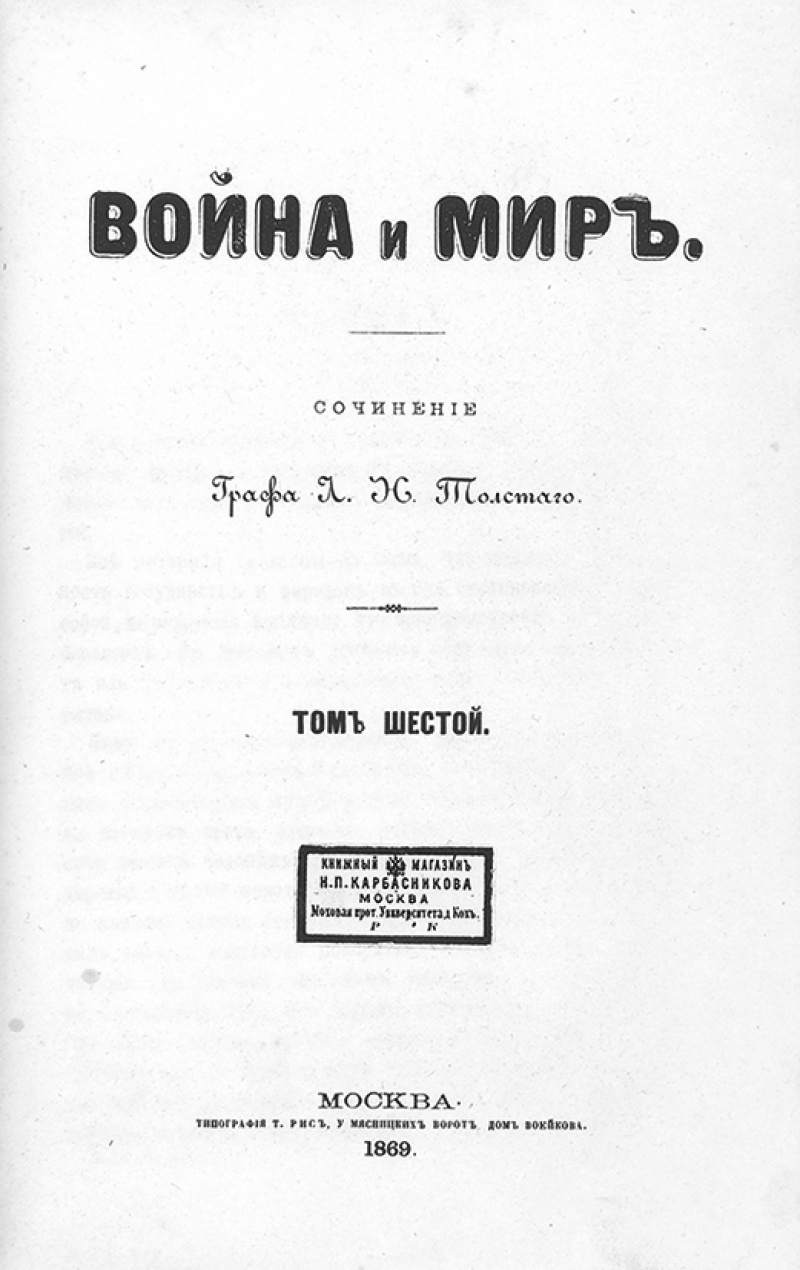
In 1869, Tolstoy published 'War and Peace', a monumental novel that is considered one of the greatest works of world literature. The novel explores the impact of the Napoleonic Wars on Russian society through the lives of several aristocratic families. It is renowned for its intricate narrative and deep philosophical insights.
On September 23, 1862, Leo Tolstoy married Sophia Behrs, the daughter of a court physician. Their marriage was initially happy and productive, with Sophia acting as Tolstoy's secretary, editor, and financial manager. The couple had 13 children, though their relationship later became strained due to Tolstoy's changing beliefs.
In 1851, Tolstoy joined the Russian Army and was stationed in the Caucasus region. His experiences during this time inspired some of his early works, including the semi-autobiographical novel 'The Cossacks'. This period also exposed him to the harsh realities of military life, influencing his later pacifist beliefs.
In 1844, Leo Tolstoy enrolled at the University of Kazan to study Oriental languages. However, he found the academic environment uninspiring and eventually left without completing a degree. This period was crucial in shaping his views on education and self-directed learning, which he later advocated.
Leo Tolstoy was born on September 9, 1828, at the family estate of Yasnaya Polyana in Tula Province, Russia. He was born into an aristocratic family, which provided him with a privileged upbringing. His birth marked the beginning of a life that would profoundly influence Russian literature and philosophy.
Discover commonly asked questions regarding Leo Tolstoy. If there are any questions we may have overlooked, please let us know.
What are the main themes in Tolstoy's works?
Who was Leo Tolstoy?
What impact did Tolstoy have on literature and philosophy?
What is Tolstoy's legacy?
Timepaths that crossed paths with Leo Tolstoy