OrganizationOther

Jet Propulsion Laboratory

@jetpropulsionlaboratory

Explore the key milestones and innovations of the Jet Propulsion Laboratory. Discover its journey in space exploration and technology advancements.

Founded January 1, 1936
13Defining moments
90Years
1940
1950
1960
1970
1980
1990
2000
2010
2020
1936
1938
1942
1944
1946
1948
1952
1954
1956
1958
1962
1964
1966
1968
1972
1974
1976
1978
1982
1984
1986
1988
1992
1994
1996
1998
2002
2004
2006
2008
2012
2014
2016
2018
2022
2024
2026
2028
FRI · 22 MAY 2026

NASA Opens Competition for JPL Management

On May 22, 2026, NASA announced plans to open competition for the management contract of JPL, which since its founding has been operated by Caltech. Caltech’s agreement concludes in September 2028, marking a potential historic shift in JPL’s administration.

THU · 30 JUL 2020

Launch of Perseverance Rover and Ingenuity Helicopter

On July 30, 2020, JPL launched the Mars 2020 mission, deploying the Perseverance rover along with the Ingenuity helicopter. Perseverance aims to seek signs of ancient life and collect samples for future return, while Ingenuity performed the first powered flight on another planet—advancing planetary aviation.

WED · 06 AUG 2003

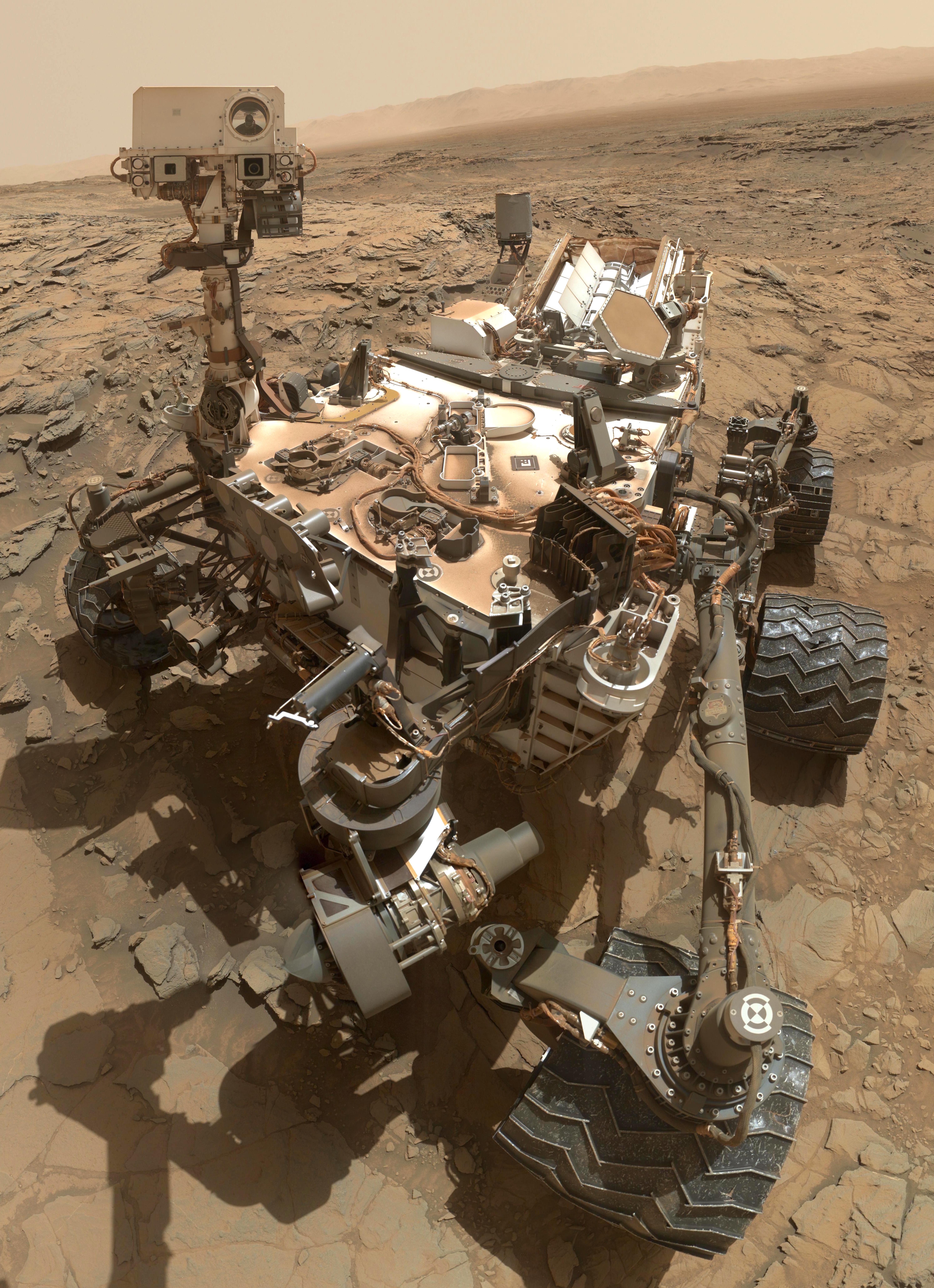
Mars Science Laboratory 'Curiosity' Lands on Mars

On August 6, 2003, JPL’s Mars Science Laboratory mission, featuring the Curiosity rover, landed successfully on Mars. Curiosity began exploring Gale Crater, conducting detailed analysis of the planet’s geology and climate, and searching for signs of past habitability.

MON · 05 SEP 1977

Launch of Voyager 1 and Voyager 2

In September 1977, JPL launched the twin Voyager spacecraft—Voyager 2 on August 20 and Voyager 1 on September 5—initiating a Grand Tour of the outer planets. These missions revolutionized knowledge of the solar system and remain the farthest human-made objects in space.

SUN · 14 NOV 1971

Mariner 9 Becomes First Planetary Orbiter

On November 14, 1971, JPL’s Mariner 9 spacecraft became the first artificial satellite to orbit another planet—Mars. It successfully imaged nearly the entire Martian surface, vastly improving understanding of Martian geography, geology, and previously unseen features.

MON · 27 AUG 1962

Mariner 2, First Successful Planetary Flyby

On August 27, 1962, JPL’s Mariner 2 spacecraft conducted the first successful flyby of another planet—Venus. This groundbreaking mission marked JPL’s entry into interplanetary exploration, providing critical data on Venus’ atmosphere and temperature and demonstrating its growing prowess in deep‑space missions.

WED · 03 DEC 1958

Transfer of JPL to NASA

On December 3, 1958, JPL was officially transferred from U.S. Army jurisdiction to the newly formed National Aeronautics and Space Administration (NASA), becoming the agency’s premier center for robotic spacecraft and planetary exploration conducted by Caltech under NASA sponsorship.

FRI · 31 JAN 1958

Launch of Explorer 1, First U.S. Satellite

On January 31, 1958, JPL launched Explorer 1—the United States’ first successful satellite—using a modified Juno I rocket. The mission featured a Geiger counter payload that discovered the Van Allen radiation belts, propelling the U.S. into the Space Age and highlighting JPL’s emergence as a spacecraft‑building organization.

THU · 22 MAY 1947

Launch of Corporal Missile at White Sands

On May 22, 1947, JPL successfully launched the Corporal E Round 31 guided missile at the U.S. Army's White Sands Proving Ground, reaching new milestones in range and control. This launch demonstrated JPL’s growing technical sophistication in missile technology and systems testing.

FRI · 01 DEC 1944

Development of First U.S. Guided Ballistic Missile 'Corporal'

In December 1944, JPL developed the U.S.’s first guided ballistic missile, the “Corporal.” This milestone represented a critical advance in rocketry, showcasing guidance, propulsion, and systems engineering capabilities that would underpin future space exploration efforts.

MON · 01 NOV 1943

Name 'Jet Propulsion Laboratory' First Adopted

In November 1943, the group began referring to itself as the “Jet Propulsion Laboratory” in documents and communications, formalizing the name that would become synonymous with U.S. rocket and spacecraft development. At this point, JPL became an Army‑contracted facility managed by Caltech, cementing its institutional identity.

SUN · 01 JAN 1939

GALCIT Rocket Project Begins Army‑Sponsored JATO Work

In early 1939, the GALCIT Rocket Project began its first U.S. Army contract to develop Jet‑Assisted Take‑Off (JATO) rockets. Under von Kármán’s leadership, Caltech transformed its research into practical powered flight aids, marking JPL’s initial transition from academic experiments to government‑funded rocketry development.

SAT · 31 OCT 1936

First Rocket Tests in Arroyo Seco by Caltech Enthusiasts

On October 31, 1936, Caltech graduate students and amateur rocket enthusiasts including Frank Malina conducted the first tests of an alcohol‑fueled rocket motor in the Arroyo Seco riverbed, marking the experimental origins of what would become the Jet Propulsion Laboratory. This daring—and dangerous—test initiated organized rocket experimentation under the Guggenheim Aeronautical Laboratory (GALCIT) at Caltech, laying the foundation for early U.S. rocketry research.

That's every defining moment so far. New events are added only when the reporting warrants it.

Frequently asked questions about Jet Propulsion Laboratory

Discover commonly asked questions regarding Jet Propulsion Laboratory. If there are any questions we may have overlooked, please let us know.

How does JPL contribute to space exploration?

What are some significant missions conducted by JPL?

What is the legacy of JPL in the field of science and technology?

What is the Jet Propulsion Laboratory (JPL)?