OrganizationOther

JAXA

@jaxa

Explore JAXA's journey through significant milestones and achievements in space exploration. Discover the future of space with us!

Founded October 1, 2003
12Defining moments
21Years
2005
2010
2015
2020
2025
2003
2004
2006
2007
2008
2009
2011
2012
2013
2014
2016
2017
2018
2019
2021
2022
2023
2024
SAT · 17 FEB 2024

The H3 rocket reaches orbit successfully on its second test flight

After a failed debut in 2023, JAXA’s next-generation H3 launch vehicle successfully lifted off and reached orbit on February 17, 2024. The success was crucial for Japan’s access-to-space strategy because H3 was designed as a more flexible and cost-effective successor to earlier launch systems, with hopes of serving both government and commercial missions. The flight demonstrated that JAXA and its industrial partners could recover from a high-profile failure and validate the core performance of the new rocket. In institutional terms, this was one of the agency’s most important recent milestones because launch capability underpins almost every part of a national space program.

SAT · 20 JAN 2024

SLIM makes Japan’s first successful soft landing on the Moon

JAXA’s Smart Lander for Investigating Moon, or SLIM, landed on the lunar surface on January 20, 2024, giving Japan its first successful soft landing on the Moon. The mission was designed as a technology demonstrator emphasizing high-precision or "pinpoint" landing capability, an ability considered crucial for future exploration of scientifically valuable but hazardous terrain. Although the spacecraft experienced power complications after touchdown, the landing itself was a historic success and showed that JAXA could execute a highly demanding autonomous descent profile. The achievement placed Japan among the small number of nations to land softly on the Moon.

THU · 07 SEP 2023

JAXA launches XRISM, restoring high-priority X-ray astronomy capability

In September 2023, JAXA launched the X-Ray Imaging and Spectroscopy Mission, or XRISM, in collaboration with NASA and with contributions from other partners. The observatory was designed to study hot gas in galaxy clusters, black holes, supernova remnants, and the large-scale structure of the universe using high-resolution X-ray spectroscopy. The mission was especially important because it restored scientific capability lost after the short-lived Hitomi observatory. XRISM therefore represented both recovery and renewal: JAXA returned to the front rank of space astronomy with a mission that combined advanced instrumentation, international cooperation, and lessons learned from a painful earlier setback.

SUN · 06 DEC 2020

Hayabusa2 returns Ryugu samples to Earth

Hayabusa2’s re-entry capsule landed in Australia on December 6, 2020, completing one of JAXA’s most celebrated missions. The capsule carried material collected from asteroid Ryugu, including samples associated with both surface and subsurface operations. This was a landmark not just because of the technical challenge of traveling to an asteroid and returning material safely, but because the samples promised insights into primitive Solar System matter, water-bearing minerals, and the chemical ingredients relevant to planetary formation. The mission cemented JAXA’s status as a world leader in sample-return exploration and built directly on lessons from the earlier Hayabusa mission.

MON · 07 DEC 2015

Akatsuki successfully enters Venus orbit on a second attempt

JAXA’s Venus Climate Orbiter Akatsuki had originally failed to enter orbit around Venus in 2010, a major disappointment for the agency’s planetary program. Engineers then spent years redesigning the mission profile and planning a second attempt using a different propulsion strategy. On December 7, 2015, Akatsuki finally entered orbit around Venus, turning a near-loss into an extraordinary recovery. The achievement highlighted JAXA’s deep mission-operations expertise and restored momentum to Japanese planetary science by enabling atmospheric observations of Earth’s nearest planetary neighbor after a prolonged and uncertain rescue effort.

WED · 03 DEC 2014

Hayabusa2 launches to continue Japan’s asteroid sample-return program

JAXA launched Hayabusa2 in December 2014 as the direct successor to the original Hayabusa mission. The spacecraft targeted asteroid Ryugu and carried upgraded sampling systems, improved guidance capability, and small landers and rovers designed to study the asteroid’s surface. The mission showed that JAXA was not treating asteroid exploration as a one-off success, but as a sustained scientific and engineering program. Hayabusa2 also reflected a broader institutional shift inside JAXA toward repeatable deep-space mission architectures, international collaboration, and the use of returned samples to study the early Solar System and organic chemistry.

SUN · 13 JUN 2010

Hayabusa returns to Earth after its pioneering asteroid mission

After years of technical problems, including reaction wheel failures, communications difficulties, and challenges during the asteroid sampling attempt, Hayabusa returned to Earth in June 2010. Its re-entry capsule reached Australia while the main spacecraft burned up in the atmosphere. Even though the mission had faced repeated setbacks, it became a historic success because it delivered tiny particles from asteroid Itokawa and proved that deep-space sample return was achievable. For JAXA, the mission transformed a troubled spacecraft into a national and international symbol of persistence, engineering resilience, and scientific innovation.

FRI · 11 SEP 2009

HTV-1 and the first H-IIB launch demonstrate Japan’s cargo capability

JAXA launched the H-II Transfer Vehicle Demonstration Flight aboard the first H-IIB rocket in September 2009 from Tanegashima. The mission proved that Japan could independently send large uncrewed cargo craft to the International Space Station, expanding its role in human spaceflight beyond astronaut participation and laboratory operations. HTV, later nicknamed Kounotori, carried supplies, experiment hardware, and spare parts, while the heavy-lift H-IIB showed that JAXA could field a powerful launcher tailored to ISS logistics. Together, they marked a major increase in Japan’s technical and operational reach in orbit.

TUE · 11 MAR 2008

Assembly of the Kibo laboratory begins at the International Space Station

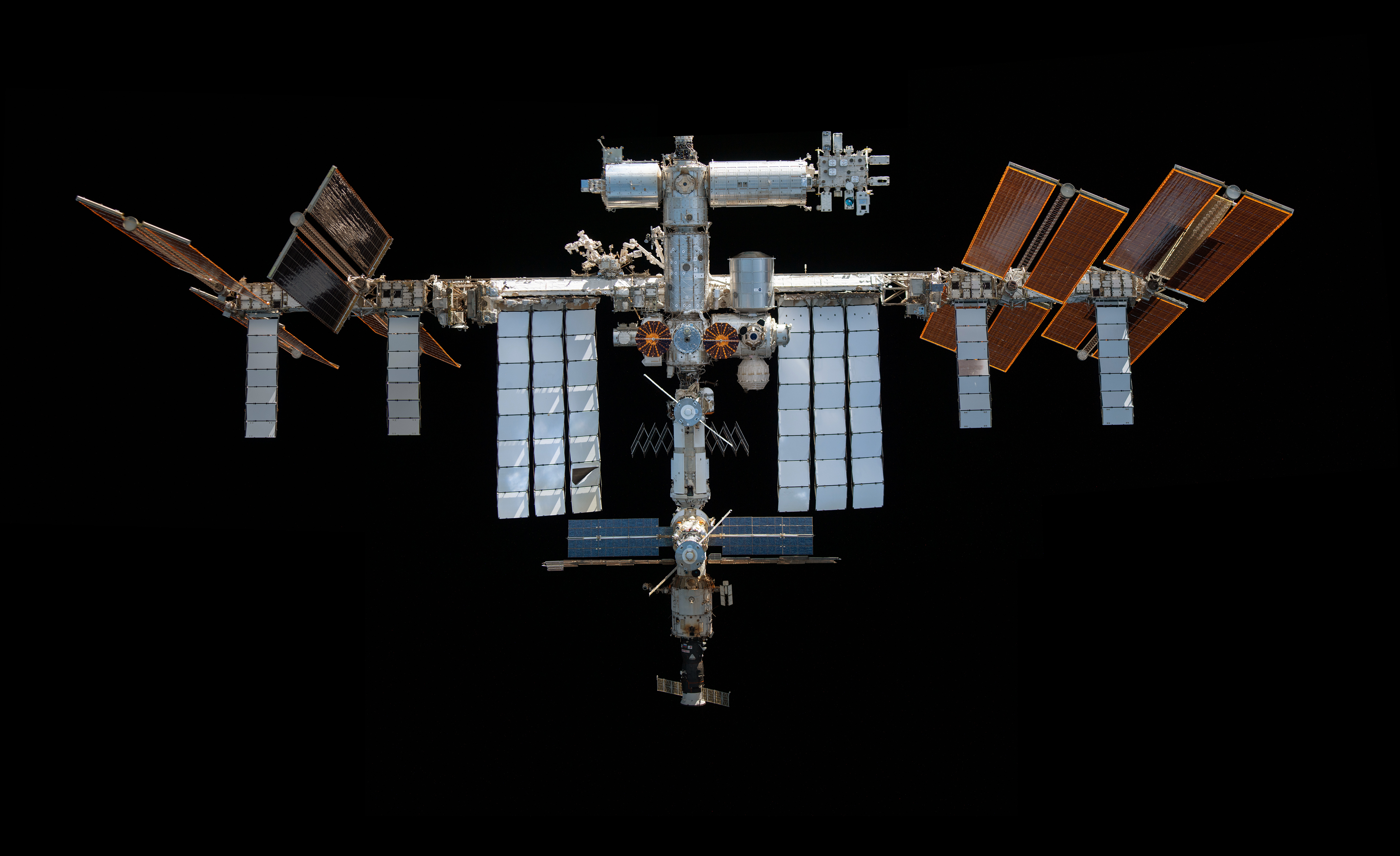
The first element of Japan’s Kibo laboratory was launched to the International Space Station in March 2008, beginning assembly of Japan’s largest contribution to human spaceflight infrastructure. Kibo gave Japan a permanent orbital research facility where experiments in life sciences, materials science, fluid physics, Earth observation, and technology demonstration could be conducted in microgravity. For JAXA, Kibo symbolized the agency’s maturity as an international partner: it was not only flying astronauts, but operating a sophisticated long-term research complex as part of the ISS program.

WED · 01 OCT 2003

Japan Aerospace Exploration Agency officially begins operations

JAXA was formally established as an independent administrative institution on October 1, 2003, through the integration of the Institute of Space and Astronautical Science, the National Space Development Agency of Japan, and the National Aerospace Laboratory of Japan. The merger created a single organization responsible for Japan’s civil space development and aeronautics research. This restructuring was a major milestone because it unified scientific exploration, engineering development, launch systems, and aviation technology under one national framework, shaping Japanese space policy for the decades that followed.

TUE · 20 MAY 2003

JAXA name and identity are announced ahead of the merger

Before the agency legally began operations, Japan’s three major aerospace bodies—ISAS, NASDA, and NAL—publicly introduced the English name "Japan Aerospace Exploration Agency," the acronym "JAXA," and the organization’s logo. This announcement marked the practical start of a new national space and aeronautics identity, signaling that Japan intended to consolidate space science, launch operations, satellite development, and aviation research into one integrated institution with a clearer public profile and stronger international presence.

FRI · 09 MAY 2003

Hayabusa launches as JAXA’s first asteroid sample-return mission

The Hayabusa spacecraft, also known as MUSES-C, launched in 2003 and became one of the first emblematic missions associated with the newly forming JAXA era. Its goal was to travel to the near-Earth asteroid Itokawa, test advanced ion propulsion and autonomous navigation, and attempt a sample return to Earth. The mission represented a bold step for Japan’s planetary exploration program because it combined technological demonstration with scientific ambition, laying the groundwork for later sample-return missions and establishing JAXA as a leader in small-body exploration.

That's every defining moment so far. New events are added only when the reporting warrants it.

Frequently asked questions about JAXA

Discover commonly asked questions regarding JAXA. If there are any questions we may have overlooked, please let us know.

What are some significant missions conducted by JAXA?

How does JAXA contribute to international space collaboration?

What is the legacy of JAXA in space exploration?

What is JAXA and what does it stand for?