Person · Other

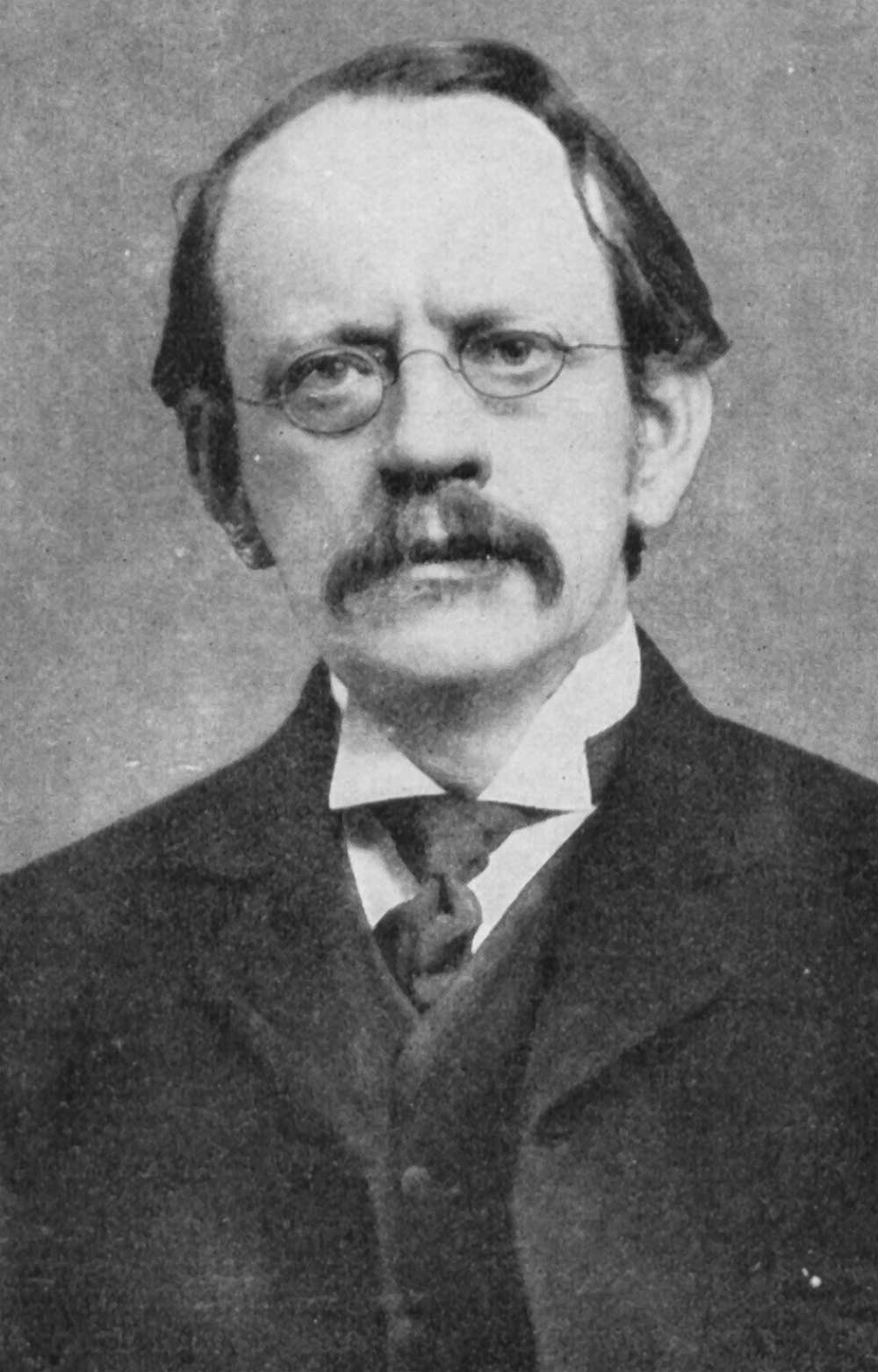
James Clerk Maxwell

@jamesclerkmaxwell

Explore the life and discoveries of James Clerk Maxwell, the father of modern physics. Dive into his key milestones and contributions.

Born June 13, 1831
Known as Physicist and Mathematician
Edinburgh, Scotland
Education
U
University of Edinburgh
University of CambridgeUniversity of Cambridge
17Events
48Years
1831
1832
1833
1834
1835
1836
1837
1838
1839
1840
1841
1842
1843
1844
1845
1846
1847
1848
1849
1850
1851
1852
1853
1854
1855
1856
1857
1858
1859
1860
1861
1862
1863
1864
1865
1866
1867
1868
1869
1870
1871
1872
1873
1874
1875
1876
1877
1878
1879
1880
Apr 1831
May
Jun
Jul
Aug
Sep
Oct
Nov
Dec
Feb
Mar
Apr
May
Jun
Jul
Aug
Sep
Oct
Nov
Dec
Feb
Mar
Apr
May
Jun
Jul
Aug
Sep
Oct
Nov
Dec
Feb
Mar
Apr
May
Jun
Jul
Aug
Sep
Oct
Nov
Dec
Feb
Mar
Apr
May
Jun
Jul
Aug
Sep
Oct
Nov
Dec
Feb
Mar
Apr
May
Jun
Jul
Aug
Sep
Oct
Nov
Dec
Feb
Mar
Apr
May
Jun
Jul
Aug
Sep
Oct
Nov
Dec
Feb
Mar
Apr
May
Jun
Jul
Aug
Sep
Oct
Nov
Dec
Feb
Mar
Apr
May
Jun
Jul
Aug
Sep
Oct
Nov
Dec
Feb
Mar
Apr
May
Jun
Jul
Aug
Sep
Oct
Nov
Dec
Feb
Mar
Apr
May
Jun
Jul
Aug
Sep
Oct
Nov
Dec
Feb
Mar
Apr
May
Jun
Jul
Aug
Sep
Oct
Nov
Dec
Feb
Mar
Apr
May
Jun
Jul
Aug
Sep
Oct
Nov
Dec
Feb
Mar
Apr
May
Jun
Jul
Aug
Sep
Oct
Nov
Dec
Feb
Mar
Apr
May
Jun
Jul
Aug
Sep
Oct
Nov
Dec
Feb
Mar
Apr
May
Jun
Jul
Aug
Sep
Oct
Nov
Dec
Feb
Mar
Apr
May
Jun
Jul
Aug
Sep
Oct
Nov
Dec
Feb
Mar
Apr
May
Jun
Jul
Aug
Sep
Oct
Nov
Dec
Feb
Mar
Apr
May
Jun
Jul
Aug
Sep
Oct
Nov
Dec
Feb
Mar
Apr
May
Jun
Jul
Aug
Sep
Oct
Nov
Dec
Feb
Mar
Apr
May
Jun
Jul
Aug
Sep
Oct
Nov
Dec
Feb
Mar
Apr
May
Jun
Jul
Aug
Sep
Oct
Nov
Dec
Feb
Mar
Apr
May
Jun
Jul
Aug
Sep
Oct
Nov
Dec
Feb
Mar
Apr
May
Jun
Jul
Aug
Sep
Oct
Nov
Dec
Feb
Mar
Apr
May
Jun
Jul
Aug
Sep
Oct
Nov
Dec
Feb
Mar
Apr
May
Jun
Jul
Aug
Sep
Oct
Nov
Dec
Feb
Mar
Apr
May
Jun
Jul
Aug
Sep
Oct
Nov
Dec
Feb
Mar
Apr
May
Jun
Jul
Aug
Sep
Oct
Nov
Dec
Feb
Mar
Apr
May
Jun
Jul
Aug
Sep
Oct
Nov
Dec
Feb
Mar
Apr
May
Jun
Jul
Aug
Sep
Oct
Nov
Dec
Feb
Mar
Apr
May
Jun
Jul
Aug
Sep
Oct
Nov
Dec
Feb
Mar
Apr
May
Jun
Jul
Aug
Sep
Oct
Nov
Dec
Feb
Mar
Apr
May
Jun
Jul
Aug
Sep
Oct
Nov
Dec
Feb
Mar
Apr
May
Jun
Jul
Aug
Sep
Oct
Nov
Dec
Feb
Mar
Apr
May
Jun
Jul
Aug
Sep
Oct
Nov
Dec
Feb
Mar
Apr
May
Jun
Jul
Aug
Sep
Oct
Nov
Dec
Feb
Mar
Apr
May
Jun
Jul
Aug
Sep
Oct
Nov
Dec
Feb
Mar
Apr
May
Jun
Jul
Aug
Sep
Oct
Nov
Dec
Feb
Mar
Apr
May
Jun
Jul
Aug
Sep
Oct
Nov
Dec
Feb
Mar
Apr
May
Jun
Jul
Aug
Sep
Oct
Nov
Dec
Feb
Mar
Apr
May
Jun
Jul
Aug
Sep
Oct
Nov
Dec
Feb
Mar
Apr
May
Jun
Jul
Aug
Sep
Oct
Nov
Dec
Feb
Mar
Apr
May
Jun
Jul
Aug
Sep
Oct
Nov
Dec
Feb
Mar
Apr
May
Jun
Jul
Aug
Sep
Oct
Nov
Dec
Feb
Mar
Apr
May
Jun
Jul
Aug
Sep
Oct
Nov
Dec
Feb
Mar
Apr
May
Jun
Jul
Aug
Sep
Oct
Nov
Dec
Feb
Mar
Apr
May
Jun
Jul
Aug
Sep
Oct
Nov
Dec
Feb
Mar
Apr
May
Jun
Jul
Aug
Sep
Oct
Nov
Dec
Feb
Mar
Apr
May
Jun
Jul
Aug
Sep
Oct
Nov
Dec
05november
1879
05 november 1879

Death in Cambridge

James Clerk Maxwell died in Cambridge on 5 November 1879 at the age of forty-eight after an illness that proved to be abdominal cancer. His early death cut short one of the most creative scientific careers of the nineteenth century. By that point he had already transformed the understanding of light, electricity, magnetism, and gases, and had helped create the Cavendish Laboratory. The loss was deeply felt by contemporaries because his ideas were still being digested and extended. In the decades after his death, experimental confirmation of electromagnetic waves and the rise of relativity made clear just how foundational his work had been.

01januari
1874
01 januari 1874

Oversees the opening of the Cavendish Laboratory

By 1874 Maxwell had supervised the development of the Cavendish Laboratory, which became one of the world’s great centers of physical science. His role in its creation is an important milestone because it linked his intellectual achievements to the building of scientific institutions. The laboratory embodied a new model of physics based on organized experimentation, precision measurement, and formal training. Under later leaders it would produce discoveries central to atomic and nuclear physics, but Maxwell’s early guidance established its character. The event therefore forms part of his legacy as both a theoretician and an architect of modern research culture.

01januari
1873
01 januari 1873

Publishes 'A Treatise on Electricity and Magnetism'

In 1873 Maxwell published the two-volume 'A Treatise on Electricity and Magnetism,' the monumental book that presented his electromagnetic theory in its fullest form. Although demanding and mathematically challenging, the Treatise became one of the foundational works of modern physics. It gathered together years of research into a systematic framework and presented the set of relations that later evolved into the compact vector form now called Maxwell’s equations. The book’s long-term influence was immense: it shaped electrical science, guided later experimenters, and provided a theoretical starting point for developments ranging from radio waves to relativity.

08maart
1871
08 maart 1871

Becomes first Cavendish Professor at Cambridge

On 8 March 1871 Maxwell’s appointment as the first Cavendish Professor of Physics at Cambridge was announced. The new professorship, linked to the planned Cavendish Laboratory, placed him at the center of efforts to institutionalize experimental physics in Britain. Maxwell was no longer only a theorist producing brilliant papers; he now helped shape the infrastructure of modern scientific research by planning equipment, space, and teaching for a new generation of physicists. His return to Cambridge symbolized national recognition of his stature and gave him the platform from which he would oversee one of the century’s most important laboratories.

01januari
1867
01 januari 1867

Advances kinetic theory of gases

In 1867 Maxwell published important work on the dynamical theory of gases, helping to establish statistical mechanics as a major branch of physics. His treatment of gas molecules introduced what became known as the Maxwell distribution of molecular speeds, showing that the behavior of large collections of particles could be described statistically rather than purely by tracking individual motions. This was a conceptual breakthrough because it connected microscopic motion with macroscopic properties such as temperature and pressure. Maxwell’s achievements in kinetic theory demonstrate that his importance extends beyond electromagnetism into the foundations of modern thermal physics.

01januari
1865
01 januari 1865

Retires from King’s College and returns to Glenlair

In 1865 Maxwell resigned from King’s College London and retired to the family estate at Glenlair in Kirkcudbrightshire. This was not a withdrawal from science but a change in setting. At Glenlair he continued to work intensely on electromagnetic theory, molecular physics, and scientific writing. The relative quiet of rural life allowed him to consolidate ideas that would soon appear in his major books and papers. This period is important because many of the lasting formulations associated with Maxwell were refined outside the urban institutions where they are often assumed to have been produced.

01januari
1865
01 januari 1865

Publishes 'A Dynamical Theory of the Electromagnetic Field'

In 1865 Maxwell published 'A Dynamical Theory of the Electromagnetic Field,' the paper that most clearly established his mature electromagnetic theory. In it he showed that electric and magnetic disturbances could propagate as waves with a speed close to the measured speed of light, leading to the profound conclusion that light itself is an electromagnetic phenomenon. This was one of the great unifications in the history of science, bringing together optics, electricity, and magnetism in a single theoretical structure. The paper laid the foundations for modern electrodynamics and later influenced both radio science and Einstein’s work on relativity.

17mei
1861
17 mei 1861

Public demonstration of color photography

On 17 May 1861, during a Royal Institution lecture on color theory, Maxwell presented what is widely regarded as the first public demonstration of color photography based on three-color analysis and synthesis. Using images of a tartan ribbon photographed through colored filters, the demonstration showed how full-color representation could be reconstructed from red, green, and blue components. Although the practical result was limited by the photographic materials of the time, the event was historically important because it linked his theoretical understanding of color vision to a striking experimental display. It also illustrated the remarkable breadth of Maxwell’s scientific imagination beyond electromagnetism alone.

01januari
1861
01 januari 1861

Publishes 'On Physical Lines of Force'

In 1861 Maxwell published 'On Physical Lines of Force,' a landmark paper that advanced his mathematical treatment of electricity and magnetism. Building on Faraday’s concept of lines of force, Maxwell introduced a mechanical model to express field behavior and developed equations that moved physics toward a field-based understanding of nature. This work was especially significant because it included the conceptual groundwork for displacement current, a crucial step in making electromagnetic theory internally consistent. The paper did not yet present the final unified theory, but it marked the decisive transition from suggestive analogy to a mathematically powerful framework.

01januari
1860
01 januari 1860

Takes the chair at King’s College London

In 1860 Maxwell moved to London to become professor of natural philosophy at King’s College. This transition placed him in a leading scientific center and proved decisive for the most revolutionary phase of his career. At King’s he worked on color vision, thermodynamics, elasticity, and above all electricity and magnetism. The London period gave him access to prominent scientific institutions and audiences, including the Royal Society and the Royal Institution. It was in this intellectually fertile setting that he transformed Michael Faraday’s qualitative field ideas into a mathematical theory capable of unifying previously separate branches of physical science.

01januari
1859
01 januari 1859

Wins the Adams Prize for work on Saturn’s rings

In 1859 Maxwell won the Adams Prize for his essay on the stability of Saturn’s rings, solving a famous problem in celestial mechanics. He demonstrated that the rings could not be solid or uniformly fluid if they were to remain stable; instead, they must consist of many small particles orbiting independently. This conclusion was later confirmed and remains one of the most striking examples of mathematical physics successfully revealing the hidden structure of a natural system. The prize brought Maxwell substantial recognition and showed that he could use advanced mathematics to answer longstanding physical questions of great elegance and importance.

02juni
1858
02 juni 1858

Marriage to Katherine Mary Dewar

In June 1858 Maxwell married Katherine Mary Dewar, the daughter of the principal of Marischal College. Their marriage became one of the defining personal relationships of his life. Contemporary accounts and later biographers describe the union as deeply devoted, and Katherine often assisted him in laboratory work and supported him during periods of intense research and illness. Although they had no children, the partnership was important in understanding Maxwell’s domestic life and emotional stability. For a timeline of his life, the marriage marks a significant personal milestone intertwined with his years of rising scientific prominence.

01januari
1856
01 januari 1856

Appointed professor at Marischal College, Aberdeen

In 1856 Maxwell was appointed professor of natural philosophy at Marischal College in Aberdeen. This was his first major academic post and the beginning of his professional scientific career. The position gave him both teaching responsibilities and the independence to pursue ambitious research. During his Aberdeen years he deepened his work in optics and mechanics and began investigating the stability of Saturn’s rings, a problem that had resisted simple explanation. The appointment was therefore a milestone not only in his career advancement but also in the maturation of his research style, which combined mathematical rigor with physical imagination.

01januari
1850
01 januari 1850

Moves to Cambridge for advanced mathematical study

In 1850 Maxwell entered the University of Cambridge, where he studied mathematics and immersed himself in the demanding tradition of the Mathematical Tripos. Cambridge gave him access to the highest levels of British mathematical training and connected him with intellectual networks that shaped his career. He completed his studies in 1854 with distinction, becoming second wrangler and first Smith’s prizeman. The move mattered far beyond academic honors: Cambridge refined Maxwell’s analytical powers and placed him on the path toward the theoretical breakthroughs that would later redefine physics.

01januari
1846
01 januari 1846

Enters the University of Edinburgh

In 1846 Maxwell began studying at the University of Edinburgh, where he remained until 1850. This period was crucial because it allowed him to develop broad interests in mathematics, natural philosophy, and experimental work before moving into the more competitive environment of Cambridge. At Edinburgh he pursued independent investigations with unusual seriousness for an undergraduate, deepening his fascination with optics, mechanics, and mathematical reasoning. The university years helped transform a gifted schoolboy into a disciplined young scientist prepared to engage with the leading physical questions of the nineteenth century.

01januari
1841
01 januari 1841

First scientific paper as a teenager

While still a schoolboy, Maxwell produced his first scientific paper, on the geometry of oval curves, and it was communicated to the Royal Society of Edinburgh when he was only fourteen. The event marked the extraordinary beginning of his public scientific life. It showed not only precocious mathematical talent but also an early ability to turn visual and geometric intuition into formal analysis, a style that remained central to his later work. Historians often note this episode because it established Maxwell as an unusual prodigy whose scientific maturity appeared well before university training.

13juni
1831
13 juni 1831

Birth in Edinburgh

James Clerk Maxwell was born on 13 June 1831 at 14 India Street in Edinburgh, into a family of the Scottish gentry. His father, John Clerk Maxwell of Middlebie, and mother, Frances Cay, provided the social and intellectual environment that shaped his early curiosity. Although he would later be closely associated with rural Glenlair and with Cambridge, his birth in Edinburgh placed him in one of Britain’s major intellectual centers at a time when natural philosophy was rapidly advancing. This beginning is important because Maxwell’s later work would transform physics by unifying electricity, magnetism, and light into a single theoretical framework.

Frequently asked questions about James Clerk Maxwell

Discover commonly asked questions regarding James Clerk Maxwell. If there are any questions we may have overlooked, please let us know.

Who was James Clerk Maxwell?

What is Maxwell's legacy in science?

What are some key achievements of James Clerk Maxwell?

What is the significance of Maxwell's equations?