Person · Other

Guillaume Apollinaire

@guillaumeapollinaire

Explore the key events in the life of Guillaume Apollinaire, a pioneer of modern poetry. Discover his influence on literature and art.

Born August 26, 1880
Known as Poet, playwright, and art critic
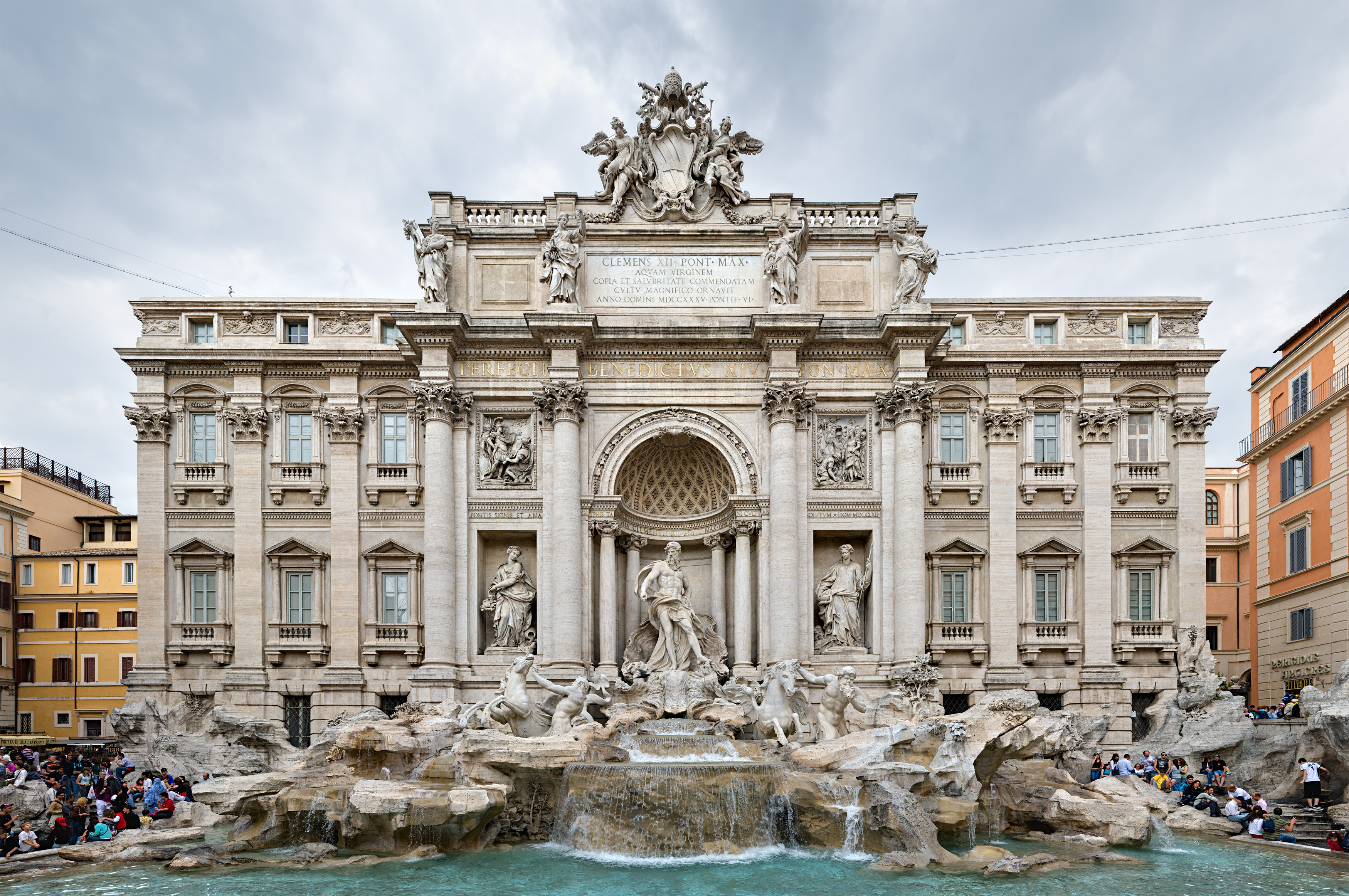
Rome, Italy
Education
U
University of Paris
18Events
38Years
1880
1881
1882
1883
1884
1885
1886
1887
1888
1889
1890
1891
1892
1893
1894
1895
1896
1897
1898
1899
1900
1901
1902
1903
1904
1905
1906
1907
1908
1909
1910
1911
1912
1913
1914
1915
1916
1917
1918
1919
Jun 1880
Jul
Aug
Sep
Oct
Nov
Dec
Feb
Mar
Apr
May
Jun
Jul
Aug
Sep
Oct
Nov
Dec
Feb
Mar
Apr
May
Jun
Jul
Aug
Sep
Oct
Nov
Dec
Feb
Mar
Apr
May
Jun
Jul
Aug
Sep
Oct
Nov
Dec
Feb
Mar
Apr
May
Jun
Jul
Aug
Sep
Oct
Nov
Dec
Feb
Mar
Apr
May
Jun
Jul
Aug
Sep
Oct
Nov
Dec
Feb
Mar
Apr
May
Jun
Jul
Aug
Sep
Oct
Nov
Dec
Feb
Mar
Apr
May
Jun
Jul
Aug
Sep
Oct
Nov
Dec
Feb
Mar
Apr
May
Jun
Jul
Aug
Sep
Oct
Nov
Dec
Feb
Mar
Apr
May
Jun
Jul
Aug
Sep
Oct
Nov
Dec
Feb
Mar
Apr
May
Jun
Jul
Aug
Sep
Oct
Nov
Dec
Feb
Mar
Apr
May
Jun
Jul
Aug
Sep
Oct
Nov
Dec
Feb
Mar
Apr
May
Jun
Jul
Aug
Sep
Oct
Nov
Dec
Feb
Mar
Apr
May
Jun
Jul
Aug
Sep
Oct
Nov
Dec
Feb
Mar
Apr
May
Jun
Jul
Aug
Sep
Oct
Nov
Dec
Feb
Mar
Apr
May
Jun
Jul
Aug
Sep
Oct
Nov
Dec
Feb
Mar
Apr
May
Jun
Jul
Aug
Sep
Oct
Nov
Dec
Feb
Mar
Apr
May
Jun
Jul
Aug
Sep
Oct
Nov
Dec
Feb
Mar
Apr
May
Jun
Jul
Aug
Sep
Oct
Nov
Dec
Feb
Mar
Apr
May
Jun
Jul
Aug
Sep
Oct
Nov
Dec
Feb
Mar
Apr
May
Jun
Jul
Aug
Sep
Oct
Nov
Dec
Feb
Mar
Apr
May
Jun
Jul
Aug
Sep
Oct
Nov
Dec
Feb
Mar
Apr
May
Jun
Jul
Aug
Sep
Oct
Nov
Dec
Feb
Mar
Apr
May
Jun
Jul
Aug
Sep
Oct
Nov
Dec
Feb
Mar
Apr
May
Jun
Jul
Aug
Sep
Oct
Nov
Dec
Feb
Mar
Apr
May
Jun
Jul
Aug
Sep
Oct
Nov
Dec
Feb
Mar
Apr
May
Jun
Jul
Aug
Sep
Oct
Nov
Dec
Feb
Mar
Apr
May
Jun
Jul
Aug
Sep
Oct
Nov
Dec
Feb
Mar
Apr
May
Jun
Jul
Aug
Sep
Oct
Nov
Dec
Feb
Mar
Apr
May
Jun
Jul
Aug
Sep
Oct
Nov
Dec
Feb
Mar
Apr
May
Jun
Jul
Aug
Sep
Oct
Nov
Dec
Feb
Mar
Apr
May
Jun
Jul
Aug
Sep
Oct
Nov
Dec
Feb
Mar
Apr
May
Jun
Jul
Aug
Sep
Oct
Nov
Dec
Feb
Mar
Apr
May
Jun
Jul
Aug
Sep
Oct
Nov
Dec
Feb
Mar
Apr
May
Jun
Jul
Aug
Sep
Oct
Nov
Dec
Feb
Mar
Apr
May
Jun
Jul
Aug
Sep
Oct
Nov
Dec
Feb
Mar
Apr
May
Jun
Jul
Aug
Sep
Oct
Nov
Dec
Feb
Mar
Apr
May
Jun
Jul
Aug
Sep
Oct
Nov
Dec
Feb
Mar
Apr
May
Jun
Jul
Aug
Sep
Oct
Nov
Dec
09november
1918
09 november 1918

Death in Paris during the influenza pandemic ended a foundational modernist career

Apollinaire died in Paris on November 9, 1918, weakened by his wartime head wound and struck by the influenza pandemic that swept Europe at the end of the First World War. He was only thirty-eight, and his death came just two days before the Armistice. The timing gave his passing extraordinary symbolic force: a poet who had embodied artistic modernity and wartime patriotism disappeared at the threshold of peace. France later recognized him as having died for the nation, and posterity increasingly viewed him as a precursor to Surrealism, a champion of Cubism, and one of the essential voices of literary modernism.

02mei
1918
02 mei 1918

Marriage to Jacqueline Kolb brought a brief period of personal stability

In 1918 Apollinaire married Jacqueline Kolb, a union that seemed to promise a calmer final chapter after years marked by unstable finances, romantic turbulence, war service, and declining health. Friends in the avant-garde circle witnessed the marriage as part of his continued social centrality in Paris even while he was physically weakened. The event is important less for literary output than for what it reveals about his late life: he was still building a future and consolidating personal commitments at the very moment when war injuries and epidemic disease were closing in. That contrast deepens the tragedy of his last months.

01januari
1918
01 januari 1918

Calligrammes crowned his experiments in visual poetry

Published in 1918, Calligrammes: Poèmes de la paix et de la guerre 1913-1916 became the work most closely associated with Apollinaire's invention of visually arranged poems. In these pieces, typography and spatial layout contribute directly to meaning, turning the poem into both text and image. The book gathered wartime experience, love poems, modern imagery, and formal innovation into a single landmark volume. Its importance lies in how clearly it extended poetry beyond the linear page, influencing later experiments in concrete and visual literature while also preserving the emotional intensity of his wartime and postwar imagination.

24juni
1917
24 juni 1917

Les Mamelles de Tirésias introduced his 'surrealist' theater

On June 24, 1917, Apollinaire's play Les Mamelles de Tirésias was premiered, and he used the term 'surrealist' in connection with the work. This moment is historically significant because it linked his theatrical experimentation with a word that would later define one of the most influential artistic movements of the twentieth century. The play's deliberate absurdity, gender inversion, and imaginative freedom challenged realism and ordinary dramatic conventions. Although Surrealism would later be systematized by others, Apollinaire's usage showed that he was already searching for a language adequate to forms of art that moved beyond direct representation.

17maart
1916
17 maart 1916

He became a French citizen and soon after suffered a severe war wound

In 1916 Apollinaire finally obtained French nationality, formalizing a belonging he had long pursued through language, criticism, and military service. That same year, while serving at the front, he suffered a serious head wound that forced his return to Paris and left lasting physical consequences. The conjunction of citizenship and injury is one of the most revealing moments of his life: the poet who had struggled for legal inclusion was marked almost immediately by the war he had chosen to join. His later work, public image, and premature death were all shaped by the aftermath of this wound.

01december
1914
01 december 1914

He enlisted in the French army during the First World War

After war began in 1914, Apollinaire sought to enlist in the French army even though he was not yet a French citizen. His first attempt in August was delayed because of his nationality, but by December he had been accepted, beginning both his military service and the process leading to naturalization. The decision reflected genuine patriotic commitment as well as his desire to belong fully to France, the culture he had already served through literature and criticism. The war would profoundly alter his health, his emotional life, and his writing, turning his poetry toward direct confrontation with violence and historical crisis.

01april
1913
01 april 1913

Alcools established him as a major modern poet

The publication of Alcools in 1913 made Apollinaire famous and secured his standing as one of the leading poets of early twentieth-century France. Gathering poems written over many years, the volume fused memory, urban life, myth, religious imagery, erotic feeling, and formal innovation. Its famously reduced punctuation reinforced the sense that poetic rhythm and juxtaposition could replace conventional order. Alcools mattered historically because it demonstrated that modern experience could be represented without abandoning lyrical power. For many readers and critics, it was the decisive proof that Apollinaire had transformed inherited French verse into something unmistakably new.

01januari
1913
01 januari 1913

His defense of Cubism culminated in Les Peintres cubistes

In 1913 Apollinaire published Les Peintres cubistes, a major statement of modern art criticism that helped explain and legitimize Cubism for a broader public. He had already championed the movement in articles and catalog texts, but this book consolidated his role as one of its most articulate defenders. By interpreting new painting as a serious, elevated transformation of art rather than a passing scandal, he gave intellectual coherence to experimental practices that many viewers still found baffling. The book remains a key document because it shows how poetry, criticism, and visual theory converged in Apollinaire's understanding of modernity.

01februari
1912
01 februari 1912

He co-founded Les Soirées de Paris and became a central avant-garde organizer

In February 1912 Apollinaire helped launch Les Soirées de Paris, an artistic and literary review that became an important platform for the prewar avant-garde. Through the magazine he promoted new writing, engaged with visual experimentation, and strengthened his role as a connector among poets, critics, and painters. This was more than an editorial venture: it institutionalized his influence at a moment when Cubism and related movements were fighting for recognition. The review helped him shape modernism not only through his own texts but by curating a public space where new aesthetic ideas could circulate and gain legitimacy.

07september
1911
07 september 1911

Arrest in the Mona Lisa investigation thrust him into public scandal

On September 7, 1911, Apollinaire was arrested and jailed in Paris on suspicion of involvement in the theft of the Mona Lisa. The accusation stemmed from his connection to a former secretary who had stolen antiquities from the Louvre, and the case briefly pulled Pablo Picasso into the scandal as well. Apollinaire was released after about a week and ultimately exonerated, but the episode was humiliating and unforgettable. It exposed the precarious social standing of avant-garde figures, who could be celebrated as innovators yet treated as dangerous outsiders by the authorities and the press.

Sources:
01januari
1911
01 januari 1911

Le Bestiaire ou Cortège d'Orphée appeared as his first poetry collection

In 1911 Apollinaire published Le Bestiaire ou Cortège d'Orphée, his first poetry collection, illustrated with engravings by Raoul Dufy. The volume condensed brief, elegant, often playful poems into a carefully designed object in which literature and visual art worked together. It showed his ongoing interest in mythic figures like Orpheus while also demonstrating formal concision and a modern sense of presentation. As an early collection, it did not yet eclipse all rivals, but it clearly announced that Apollinaire was becoming a poet of unusual range who could bridge classical reference and avant-garde sensibility.

01januari
1910
01 januari 1910

L'Hérésiarque et Cie expanded his reputation in prose

With the 1910 release of L'Hérésiarque et Cie, Apollinaire established himself not only as a poet but also as a writer of imaginative prose. The collection gathered stories that often mixed irony, religious or fantastical motifs, and unsettling shifts in tone. This mattered because Apollinaire's importance lies partly in his refusal to remain within a single genre; his prose experiments paralleled his poetic ones and widened his standing in literary circles. The book also helped define his opposition to conventional realism, showing his preference for surprise, distortion, and imaginative freedom over strict representation.

01januari
1909
01 januari 1909

Publication of L'Enchanteur pourrissant signaled his emerging literary voice

The 1909 publication of L'Enchanteur pourrissant marked Apollinaire's first significant book and revealed his taste for reworking inherited myths through modern sensibility. Centered on the Merlin legend and issued with woodcuts by André Derain, the work also demonstrated his commitment to collaboration between text and image. It occupied a middle ground between symbolism, fantasy, and avant-garde experiment, anticipating the hybrid imagination that would define his mature output. Although later overshadowed by Alcools and Calligrammes, this book was an essential early milestone in the consolidation of his literary identity.

01januari
1907
01 januari 1907

Relationship with Marie Laurencin linked poetry and modern painting

In 1907 Apollinaire began a turbulent relationship with the painter Marie Laurencin, one of the most important personal and artistic partnerships of his life. Their bond connected him even more deeply to the experimental visual culture of Paris, where poetry, painting, criticism, and salon life constantly overlapped. Laurencin became associated with his emotional life and artistic environment, while Apollinaire's criticism and friendships helped define the public conversation around modern art. The relationship mattered because it embodied his position at the heart of an avant-garde where private attachments and aesthetic revolutions were often inseparable.

01november
1903
01 november 1903

He launched the literary review Le Festin d'Ésope

In November 1903 Apollinaire founded and edited the review Le Festin d'Ésope. Though short-lived, the magazine was a meaningful early demonstration of his ambition to shape literary culture rather than merely contribute to it. By gathering texts from his circle and publishing his own poems, he practiced the role he would later perfect as mediator between writers, painters, and new movements. The review also showed his instinct for networks, little magazines, and experimental collaboration, all of which were essential mechanisms of the Parisian avant-garde in the years before the war.

01mei
1901
01 mei 1901

Work as a tutor and his unfulfilled love for Annie Playden inspired later poems

From 1901 into 1902, Apollinaire worked as tutor to the daughter of a noble household and traveled with the family to the Rhineland, where he fell in love with the English governess Annie Playden. She rejected him, but the emotional force of that disappointment became fertile literary material. The so-called 'Rhenish' period provided landscapes, moods, and memories that later surfaced in major poems, including pieces eventually collected in Alcools. This episode is important not only as a biographical romance but as an example of how Apollinaire transformed private longing, travel, and dislocation into innovative lyric poetry.

01januari
1900
01 januari 1900

He settled in Paris and entered the avant-garde world

Around 1900 Apollinaire moved to Paris, the city where he would make his name and help reshape literary modernism. Living in precarious conditions, he supported himself through odd jobs while absorbing the artistic energy of Montmartre and later Montparnasse. This relocation was decisive: in Paris he developed friendships with painters, poets, and critics who were redefining art before the First World War. The move also marked the practical beginning of his transformation from Wilhelm Kostrowicki into 'Guillaume Apollinaire,' a self-fashioned French literary identity that would become inseparable from the avant-garde.

26augustus
1880
26 augustus 1880

Birth in Rome to a cosmopolitan, unstable family background

Guillaume Apollinaire was born in Rome as Wilhelm Albert Włodzimierz Apolinary Kostrowicki, the son of a Polish-born mother and an unidentified father. His multinational origins and irregular family circumstances shaped his identity from the beginning, leaving him between languages, nations, and social positions. That unsettled early condition later became central to his writing, which repeatedly fused older European inheritances with modern urban experience. His birth outside France also mattered practically, since it delayed his formal acceptance into French national life even as he became one of the defining voices of modern French poetry.

Frequently asked questions about Guillaume Apollinaire

Discover commonly asked questions regarding Guillaume Apollinaire. If there are any questions we may have overlooked, please let us know.

What is Apollinaire's legacy?

What are some key works by Guillaume Apollinaire?

What is Apollinaire's significance in literature?

Who was Guillaume Apollinaire?