World Event · Other

Great Chinese Famine

Explore the Great Chinese Famine timeline, detailing key events and impacts of this tragic period in history. Discover the facts now!

1955
1960
1965
1970
1975
1980
1957
1958
1959
1961
1962
1963
1964
1966
1967
1968
1969
1971
1972
1973
1974
1976
1977
1978
1979
1981
1982
1983
01januari
1981
01 januari 1981

Official Acknowledgment of the Famine

In 1981, the Chinese Communist Party officially acknowledged the Great Chinese Famine, attributing the disaster to the mistakes made during the Great Leap Forward. This acknowledgment was part of a broader effort to reassess the policies of the Mao era and to promote economic reforms under the leadership of Deng Xiaoping.

Sources:
01januari
1962
01 januari 1962

End of the Great Chinese Famine

By 1962, the Great Chinese Famine began to subside as a result of policy changes and improved agricultural practices. The famine, which lasted from 1959 to 1961, resulted in the deaths of an estimated 15 to 45 million people. The end of the famine marked a significant, albeit painful, period in China's history, highlighting the consequences of rapid policy changes.

01januari
1961
01 januari 1961

Policy Reversal and Economic Reforms

By 1961, the Chinese government began to reverse the policies of the Great Leap Forward. The government dismantled the People's Communes and allowed farmers to cultivate private plots. These economic reforms were aimed at increasing food production and alleviating the famine. The policy shift marked a significant turning point in addressing the crisis.

01januari
1960
01 januari 1960

Severe Weather Conditions

In 1960, China experienced severe weather conditions, including droughts and floods, which compounded the agricultural failures caused by the Great Leap Forward. These natural disasters further reduced food production, leading to widespread starvation and suffering across the country, worsening the already dire situation of the Great Chinese Famine.

Sources:
01juli
1959
01 juli 1959

Lushan Conference

The Lushan Conference was a meeting of the Chinese Communist Party held in July 1959. During this conference, Peng Dehuai, the Minister of Defense, criticized the policies of the Great Leap Forward, highlighting the resulting famine and economic failures. Mao Zedong responded by purging Peng and reinforcing the continuation of the policies, further deepening the crisis.

Sources:
01juli
1958
01 juli 1958

Establishment of People's Communes

In July 1958, the Chinese government began establishing People's Communes as part of the Great Leap Forward. These communes were intended to increase agricultural productivity by pooling labor and resources. However, the forced collectivization disrupted traditional farming practices and contributed to the decline in agricultural output, exacerbating the famine.

Sources:
01mei
1958
01 mei 1958

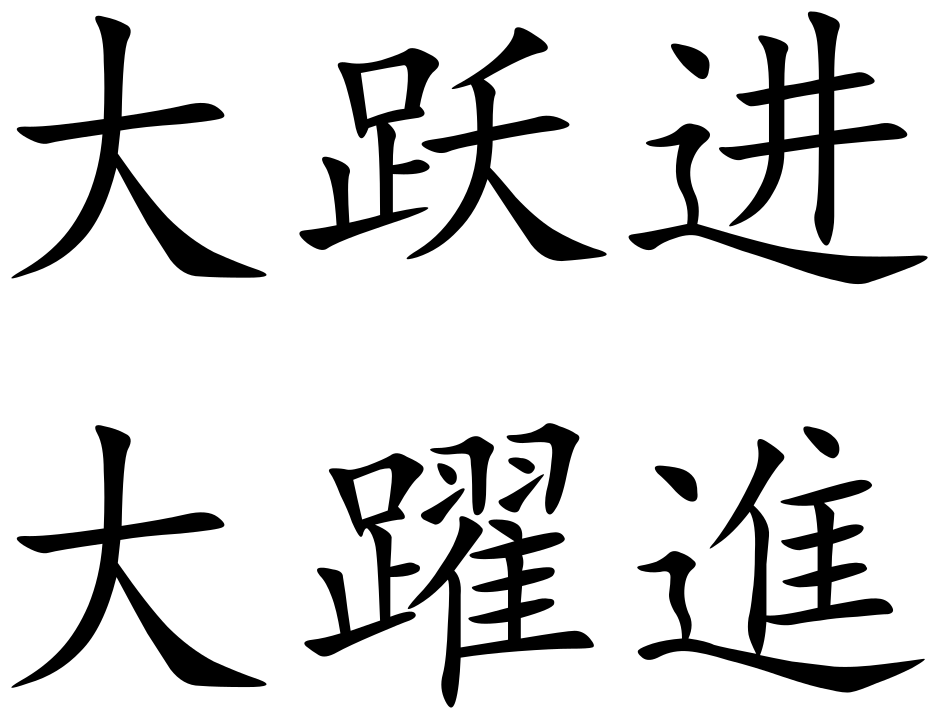
Launch of the Great Leap Forward

The Great Leap Forward was launched by the Chinese Communist Party under the leadership of Mao Zedong. It aimed to rapidly transform China from an agrarian society into a socialist society through rapid industrialization and collectivization. This policy led to widespread famine due to poor planning, lack of resources, and unrealistic production targets.

Sources:

Frequently asked questions about Great Chinese Famine

Discover commonly asked questions regarding Great Chinese Famine. If there are any questions we may have overlooked, please let us know.

How many people died during the Great Chinese Famine?

What caused the Great Chinese Famine?

What is the legacy of the Great Chinese Famine today?

What was the significance of the Great Chinese Famine in Chinese history?

Related Timepaths

More Timepaths connected to Great Chinese Famine