World Event · Other

Emu War

@emuwar

Explore the fascinating timeline of the Emu War, detailing key events and insights into this unique chapter of Australian history.

15Events
84Years
1900
1910
1920
1930
1940
1950
1960
1970
1980
1990
2000
1908
1912
1914
1916
1918
1922
1924
1926
1928
1932
1934
1936
1938
1942
1944
1946
1948
1952
1954
1956
1958
1962
1964
1966
1968
1972
1974
1976
1978
1982
1984
1986
1988
1992
1994
1996
1998
2002
2004
2006
16juli
1999
16 juli 1999

Wild emus gain formal federal protection under Australian environmental law

The long legacy of the Emu War took on a new meaning when wild emus became protected under modern Australian environmental law through the Environment Protection and Biodiversity Conservation Act 1999. This did not erase local pest-management concerns, but it marked a major shift in official attitudes toward native fauna. The bird once treated as an agricultural enemy in one district was now recognized within a national conservation framework. That contrast helps explain the Emu War’s enduring symbolic power: it sits at the intersection of Depression hardship, settler farming, state authority, and changing ideas about wildlife management and environmental responsibility.

01januari
1934
01 januari 1934

Government shifts to bounties and ammunition support for farmers

After the military experiment ended, Australian authorities moved toward more conventional pest-control measures. By 1934, governments were supplying ammunition to farmers and operating bounty arrangements that paid for dead emus. This shift mattered because it acknowledged the limits of direct military intervention and returned responsibility to civilian and local methods. Large numbers of bounty claims were later reported, suggesting that decentralized killing campaigns were considered more practical than the highly publicized army deployment. The policy change also helped recast the Emu War from a failed military episode into part of a broader, longer history of settler wildlife control in agricultural Australia.

10december
1932
10 december 1932

The second phase ends and the military campaign is called off

On 10 December 1932, the army’s participation effectively ended, closing the brief campaign now remembered as the Great Emu War. Officially reported kills were far below the scale needed to eliminate the broader problem, and the operation had become more famous for its ineffectiveness than for any tactical success. The end date is important because it fixed the campaign in public memory as a short, sharp episode rather than a sustained policy. By then, the emus had already been cast in popular storytelling as the improbable victors over a modern military force armed with automatic weapons.

10december
1932
10 december 1932

Roughly 986 emus are reported killed, but the campaign is judged unsuccessful

By the close of operations, official reporting credited the detachment with 986 confirmed emu kills between 12 November and 10 December, with claims that additional wounded birds later died. Even if accepted, those figures were modest compared with estimates of the total flocks affecting the region, and commentators widely regarded the campaign as a failure in strategic terms. This discrepancy between measurable action and practical outcome is why the episode endured: it became a textbook example of a state applying impressive force to the wrong kind of problem, then losing the battle in the court of public opinion.

12november
1932
12 november 1932

Military action resumes after renewed pressure from Western Australian farmers

Despite the embarrassing first phase, pressure from affected districts and supportive politicians in Western Australia led to a resumption of the campaign on 12 November 1932. The renewed operation attempted a more deliberate pattern of engagements, with the gunners working across farming areas where emus were still causing crop damage. This restart showed how acute local economic stress remained: even after failure and ridicule, farmers still preferred armed assistance to being left alone with large flocks. It also underscored the gap between metropolitan mockery and rural desperation during the Depression, when crop losses could threaten livelihoods already near collapse.

08november
1932
08 november 1932

Meredith remarks on the birds’ resilience, fueling the war’s legend

As the first phase faltered, Major Meredith reportedly compared the emus’ ability to withstand and evade machine-gun attacks to the qualities of disciplined troops or armored resistance. Whether repeated exactly or paraphrased through press coverage, such remarks became central to the folklore of the Emu War. They gave journalists a vivid way to portray the birds not simply as pests but as capable adversaries embarrassing the military. The language helped transform a localized culling operation into a national and later international curiosity, ensuring that the event would survive in popular memory far beyond its limited practical impact.

08november
1932
08 november 1932

A gun mounted on a truck proves ineffective over rough terrain

In an effort to improve mobility, the gunners mounted a Lewis gun on a truck and tried pursuing emus across the countryside. The experiment became one of the most memorable failures of the campaign. The truck could not keep stable pace over uneven ground, accurate fire from the moving vehicle was nearly impossible, and the birds often outran or outmaneuvered the pursuit. Rather than demonstrating military adaptability, the episode highlighted how unsuitable battlefield improvisations were for controlling wildlife in rough rural landscapes. It also contributed to the operation’s comic reputation in later retellings.

08november
1932
08 november 1932

First phase of the operation is suspended after poor results and criticism

By early November 1932, the initial deployment had produced disappointing results relative to the ammunition spent and the expectations raised. Public criticism mounted as reports emphasized inefficiency and spectacle, and the first phase of the operation was suspended. The pause was significant because it showed that the campaign had already become politically sensitive: what began as practical assistance for distressed farmers was now a national embarrassment. The suspension also demonstrated that military force alone was not solving the ecological and logistical problem, despite the government’s willingness to commit soldiers and modern weapons.

04november
1932
04 november 1932

An attempted ambush near a dam fails when the birds refuse to mass

One of the best-known early tactics involved setting up guns near a dam where emus were expected to gather in larger numbers. The plan depended on the birds concentrating within effective range, but it failed when the flock approached in smaller groups and quickly scattered after fire began. The incident illustrated a central problem of the campaign: military success required dense targets, while real emu behavior favored dispersion and fast escape. Accounts of this failed ambush circulated widely and fed growing skepticism that the operation could achieve its goals despite the firepower brought into the Wheatbelt.

02november
1932
02 november 1932

The first firing demonstrates how hard emus are to hit in open country

The opening actions on 2 November 1932 quickly exposed the mismatch between military hardware and the target. Early firing on dispersed birds killed only a handful, far below expectations. Emus did not bunch neatly into stationary targets; they scattered rapidly, changed direction unpredictably, and used scrub and distance to frustrate accurate shooting. Reports from the field suggested that the birds’ speed and alertness made them poor targets for machine-gun fire designed for very different battlefield situations. This disappointing beginning shaped the rest of the operation and helped create the later legend that the emus had outmaneuvered the soldiers.

02november
1932
02 november 1932

Army detachment arrives in the Campion district and the campaign begins

On 2 November 1932, a small Royal Australian Artillery detachment under Major G. P. W. Meredith arrived in the Campion district with two Lewis guns and large quantities of ammunition, marking the start of the campaign. The force was tiny, but its presence gave the operation a military character that newspapers immediately found irresistible. Expectations were high among local farmers, who hoped trained gunners would quickly reduce the flocks. Instead, the detachment entered a difficult environment of scattered targets, rough ground, and fast-moving birds, conditions that made conventional firepower unexpectedly ineffective from the outset.

01oktober
1932
01 oktober 1932

Farmers formally press for government assistance against crop destruction

As crop losses mounted in 1932, farmers in the Campion and nearby districts sought direct government help. Their complaints carried special political significance because many were returned soldiers already struggling under Depression-era conditions. While farmers could legally shoot emus themselves, they lacked ammunition, labor, and effective means to stop large mobile flocks. The requests escalated from ordinary pest control to calls for official intervention, transforming a regional farming problem into a national political embarrassment. This pressure persuaded authorities to consider an unusual response involving the Defence portfolio and the army.

01oktober
1932
01 oktober 1932

Defence Minister George Pearce approves military involvement

In October 1932, Defence Minister Sir George Pearce agreed to provide military assistance for the emu problem in Western Australia. The decision reflected more than wildlife management: it also signaled to distressed veteran settlers that the federal government recognized their hardship. Pearce authorized the use of army personnel and Lewis machine guns, an extraordinary step that blurred the line between pest control and military spectacle. The approval later became central to the public memory of the episode, because newspapers and critics quickly framed the operation as a literal ‘war’ against birds rather than an administrative cull.

01januari
1932
01 januari 1932

Drought and migration drive large numbers of emus into farming districts

By 1932, harsh dry conditions inland helped push large emu flocks toward cultivated country in Western Australia. In the Campion district, improved water access, cleared land, and standing crops made farm areas attractive stopping points for birds moving through the region. Contemporary accounts estimated that roughly 20,000 emus entered affected districts. Their trampling and feeding damaged wheat crops and fencing, and farmers feared even greater losses because rabbits could pass through gaps the birds left behind. This ecological and economic pressure set the stage for the campaign later nicknamed the Emu War.

01januari
1915
01 januari 1915

Soldier-settlement policies place war veterans on marginal Wheatbelt farms

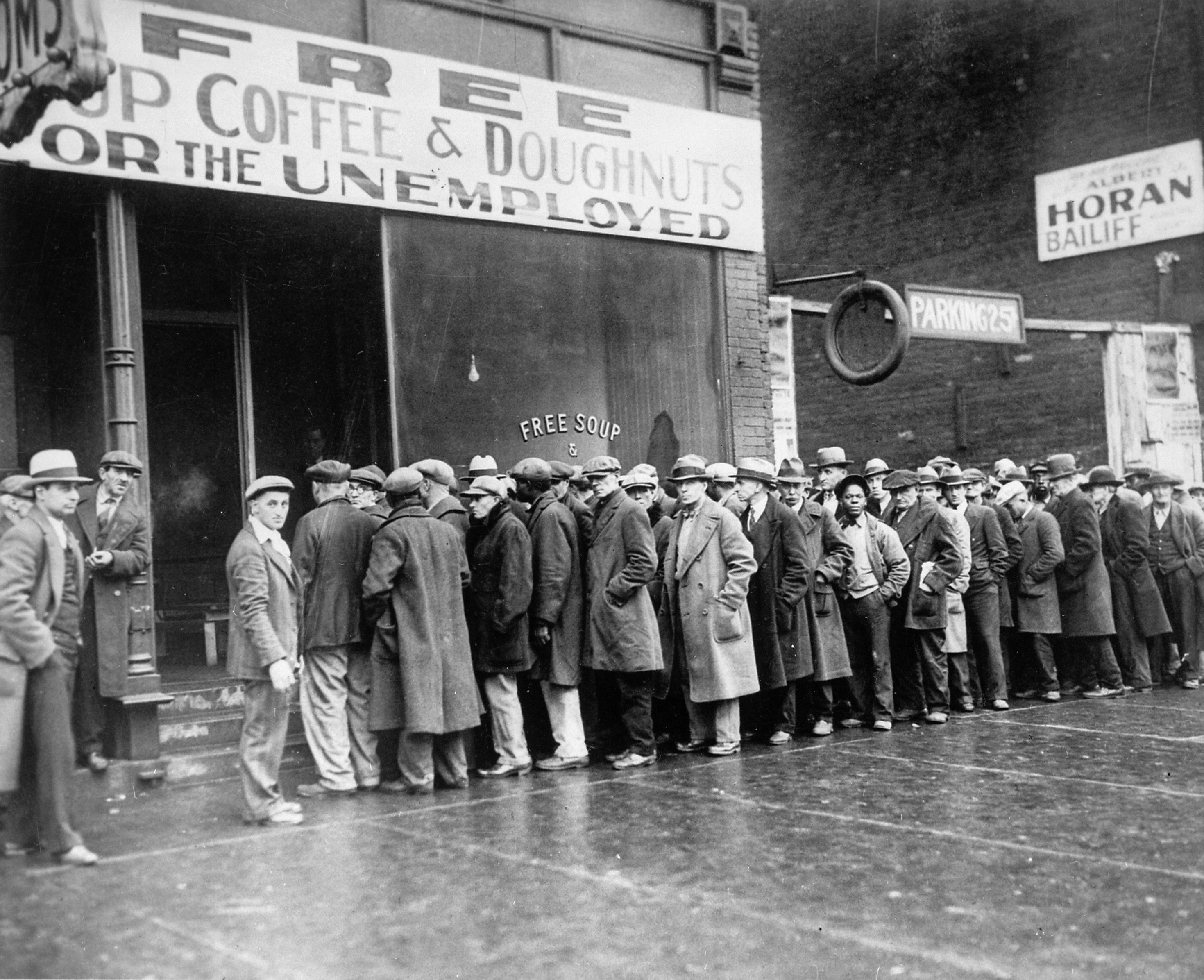
The long background to the Emu War began during and after the First World War, when Australian governments promoted soldier-settlement schemes that placed returned servicemen on farming blocks in Western Australia’s Wheatbelt. Many holdings were remote, dry, and agriculturally marginal, and inexperienced settlers were encouraged to grow wheat under difficult conditions. These structural weaknesses mattered in 1932: when drought, low prices, and wildlife pressure converged during the Great Depression, the grievances of these veteran farmers gave political weight to demands for extraordinary state help, including military intervention against emus.

Frequently asked questions about Emu War

Discover commonly asked questions regarding Emu War. If there are any questions we may have overlooked, please let us know.

What were some key facts about the Emu War?

What is the legacy of the Emu War?

What was the Emu War?

Why is the Emu War considered significant?