World Event · Other

Colombian conflict

@colombianconflict

Explore the key events of the Colombian conflict in our comprehensive timeline. Discover the history and impact of this pivotal struggle.

17Events
69Years
1940
1945
1950
1955
1960
1965
1970
1975
1980
1985
1990
1995
2000
2005
2010
2015
2020
1942
1943
1944
1946
1947
1948
1949
1951
1952
1953
1954
1956
1957
1958
1959
1961
1962
1963
1964
1966
1967
1968
1969
1971
1972
1973
1974
1976
1977
1978
1979
1981
1982
1983
1984
1986
1987
1988
1989
1991
1992
1993
1994
1996
1997
1998
1999
2001
2002
2003
2004
2006
2007
2008
2009
2011
2012
2013
2014
2016
2017
2018
2019
2021
2022
2023
2024
15augustus
2017
15 augustus 2017

Completion of FARC disarmament leads to an official declaration that the conflict with FARC has ended

On 2017-08-15, after the FARC handed over the last of its accessible weapons to the United Nations, the Colombian government declared an official end to its conflict with the group. The disarmament process was one of the clearest measurable outcomes of the peace accord, turning a guerrilla army into a demobilized political actor. This moment was historically important because it marked the closure of the principal armed confrontation that had dominated Colombia’s internal war for decades. At the same time, dissident factions, ELN activity, and violence against social leaders showed that the broader landscape of conflict and insecurity remained unresolved.

24november
2016
24 november 2016

A revised peace agreement is signed and later ratified by Congress

On 2016-11-24, the Colombian government and the FARC signed a revised final peace accord after incorporating changes demanded by opponents of the first text. Congress subsequently ratified the new agreement, allowing implementation to move forward despite the plebiscite defeat. This was a decisive milestone because it preserved the core architecture of peace: cease-fire arrangements, disarmament, reintegration, a transitional justice system, and commitments to rural and political reform. The revised accord did not end all armed violence in Colombia, but it formally closed the war with the FARC as an organized insurgency and became one of Latin America’s most consequential peace settlements.

02oktober
2016
02 oktober 2016

Voters narrowly reject the first peace accord in a national plebiscite

On 2016-10-02, Colombians unexpectedly rejected the initial peace agreement with the FARC in a razor-thin plebiscite result. The vote revealed how deeply divided the country remained over justice, punishment, political guarantees for former rebels, and the meaning of reconciliation after decades of violence. Although the result did not restart full-scale war, it forced negotiators back to the table and showed that ending armed conflict required not only signatures by leaders but also broad political legitimacy. The referendum became a key milestone in the conflict’s history because it underscored the fragility of peace even at the moment of apparent breakthrough.

26september
2016
26 september 2016

Government and FARC sign a historic final peace accord in Cartagena

On 2016-09-26, the Colombian government and the FARC signed a landmark final peace agreement in Cartagena after years of negotiations in Havana. The ceremony represented the most significant attempt in decades to end the country’s largest insurgency, addressing disarmament, rural reform, political participation, victims’ rights, and transitional justice. The accord was historically important because it aimed to close a conflict that had lasted more than half a century and caused mass displacement and civilian deaths. Even though implementation would be difficult and contested, the signing marked a profound break with the logic of endless war.

25juli
2005
25 juli 2005

Justice and Peace Law creates a framework for paramilitary demobilization

On 2005-07-25, Colombia’s Justice and Peace Law came into effect, establishing a legal framework to demobilize paramilitary fighters, especially from the AUC, in exchange for reduced sentences tied to confessions and reparations. The law was important because it tried to balance peace incentives with truth and accountability in a conflict marked by massacres, displacement, and disappearances. It also generated intense controversy, with critics arguing that it offered excessive leniency and failed victims, while supporters saw it as a pragmatic way to dismantle armed structures. The law became a central reference point in Colombia’s later experiments with transitional justice.

16oktober
2002
16 oktober 2002

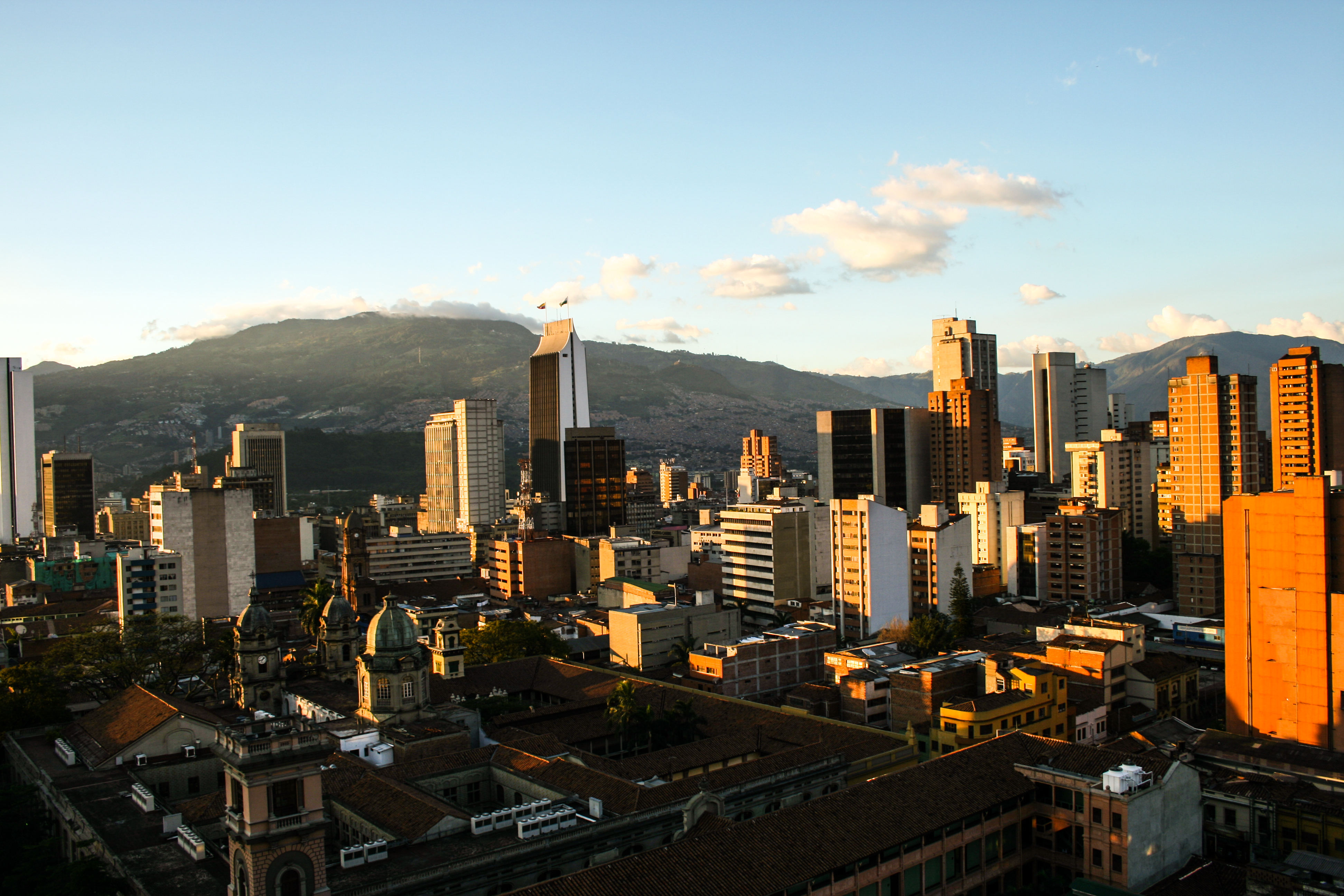
Operation Orion in Medellín brings the war decisively into the city

Beginning on 2002-10-16, Colombian security forces launched Operation Orion in Medellín’s Comuna 13, one of the most controversial urban offensives of the conflict. The operation targeted guerrilla influence and was presented as an effort to restore state control in a strategic neighborhood corridor. While the state reasserted authority, the offensive left deaths, arrests, displacement, and later allegations of collusion with paramilitary structures and enforced disappearances. Orion became a major milestone because it showed the conflict’s urban dimension and highlighted the severe human rights dilemmas surrounding counterinsurgency operations carried out in densely populated civilian areas.

20februari
2002
20 februari 2002

Collapse of the Caguán talks ends a major negotiation attempt

On 2002-02-20, President Andrés Pastrana terminated the peace process with the FARC and ordered the military to retake the demilitarized zone after years of failed talks. The collapse was a defining turning point because it convinced many Colombians that negotiation without coercive leverage had strengthened insurgents rather than ending the war. Public anger over kidnappings and attacks grew, and the failure helped create the political climate for a much more aggressive security doctrine under Álvaro Uribe later that year. The end of the Caguán process closed one chapter of negotiation and opened a new era of intensified military confrontation.

13juli
2000
13 juli 2000

Plan Colombia internationalizes the conflict and strengthens the state’s war effort

In 2000, Colombia and the United States launched Plan Colombia, a far-reaching security and counternarcotics program that reshaped the conflict. By mid-2000 the package was being enacted with major U.S. funding, military assistance, aerial eradication support, and institutional strengthening for the Colombian state. Plan Colombia mattered because it linked the internal war more tightly to the drug economy and to international security policy. Supporters argued that it helped the state recover territory and weaken insurgents; critics said it militarized rural zones and harmed civilians. Either way, it marked a decisive shift in the scale, resources, and external backing of Colombia’s war.

07januari
1999
07 januari 1999

Pastrana and the FARC formally open the Caguán peace process

On 1999-01-07, President Andrés Pastrana formally launched peace talks with the FARC in San Vicente del Caguán after granting a large demilitarized zone intended to facilitate negotiations. The opening of the Caguán process raised hopes that the hemisphere’s longest-running insurgency might be resolved through dialogue. Instead, the talks became increasingly controversial as kidnappings, territorial expansion by armed actors, and public frustration undermined confidence. Even though the process ultimately failed, it was a major milestone because it nationalized debate over negotiation, state legitimacy, and military strategy, and it directly influenced the harder security turn that followed in the 2000s.

18april
1997
18 april 1997

Creation of the AUC consolidates paramilitary power nationally

On 1997-04-18, right-wing paramilitary groups formally united under the banner of the United Self-Defense Forces of Colombia, or AUC. This reorganization gave disparate anti-guerrilla militias a stronger national structure and accelerated one of the conflict’s bloodiest phases. The AUC combined counterinsurgency rhetoric with deep involvement in massacres, forced displacement, political intimidation, and narcotics trafficking. Its expansion intensified civilian suffering, especially in contested rural zones, and made the war more than a contest between state and guerrillas. The emergence of a powerful paramilitary coalition transformed the conflict into a multi-sided struggle with profound humanitarian consequences.

09maart
1990
09 maart 1990

M-19 demobilizes and shows one path out of insurgency

On 1990-03-09, M-19 signed a peace agreement that led to its demobilization and transition into legal political life. This was a crucial milestone because it demonstrated that at least one major armed movement could leave the battlefield and enter electoral politics. The demobilization did not end the broader war, since the FARC, ELN, paramilitaries, and drug trafficking networks remained active, but it helped shape the idea that negotiated exits were possible. The process also influenced constitutional and political reforms in the early 1990s, leaving an important legacy for later peace initiatives with other armed actors.

06november
1985
06 november 1985

Palace of Justice siege becomes one of the conflict’s defining traumas

On 1985-11-06, M-19 guerrillas seized Colombia’s Palace of Justice in Bogotá and took hostages, including Supreme Court justices. The military retook the building by force over the next two days, and the siege and assault left around 100 people dead, among them roughly half the Supreme Court. The episode shocked the country because it fused insurgent violence, state militarized response, and enduring allegations of disappearances and abuses. It destroyed part of Colombia’s highest judicial institution and became a lasting symbol of the conflict’s brutality, the weakness of institutions under pressure, and the human cost of failed peace efforts.

19november
1982
19 november 1982

Belisario Betancur opens a new phase of peace efforts with insurgents

After taking office in 1982, President Belisario Betancur sought negotiations instead of a purely military response to rebellion. On 1982-11-19 he signed an amnesty law for most insurgents, a major political signal that the state was willing to pursue dialogue with guerrilla groups. The move helped produce cease-fire arrangements with organizations including the FARC and M-19 in the following years. Although these efforts ultimately faltered, they marked one of the first serious national attempts to end the conflict through political settlement rather than battlefield victory, and they shaped later peace processes by establishing negotiation as a recurring state strategy.

17januari
1974
17 januari 1974

M-19 publicly emerges after the disputed 1970 election crisis

In 1974, the 19th of April Movement, known as M-19, emerged as a new urban guerrilla organization whose identity was tied to the contested presidential election of 1970. Although its formal development took shape over 1973 and 1974, the movement grounded its legitimacy in the claim that democratic avenues had been stolen. M-19 differed from older rural insurgencies by emphasizing symbolic operations, urban action, and nationalist imagery. Its rise broadened the conflict from rural insurgency into spectacular urban confrontation, helping transform Colombia’s violence into a more complex and nationally visible war.

04juli
1964
04 juli 1964

Founding of the ELN adds a second major guerrilla force

On 1964-07-04, the National Liberation Army, or ELN, was formed in San Vicente de Chucurí. Inspired by the Cuban Revolution, radical Catholic activism, and Marxist politics, the new organization adopted a distinct ideological profile from the FARC while joining the broader armed insurgency against the Colombian state. The ELN’s emergence mattered because it fragmented the insurgent landscape and ensured that the conflict would not revolve around a single rebel actor. Over time, the group became deeply involved in kidnappings, attacks on infrastructure, and territorial struggles, especially in oil-producing and border regions.

27mei
1964
27 mei 1964

Army attack on Marquetalia helps set the stage for the FARC

On 1964-05-27, Colombian armed forces launched an offensive against the peasant enclave of Marquetalia in Tolima, targeting armed self-defense groups that authorities considered communist strongholds. The operation became a decisive turning point because surviving militants reorganized and, after a period of consolidation, transformed themselves into the guerrilla movement later known as the Revolutionary Armed Forces of Colombia, or FARC. In Colombian memory, Marquetalia symbolizes the shift from older bipartisan rural violence toward a prolonged insurgency framed in revolutionary, agrarian, and anti-state terms.

09april
1948
09 april 1948

Assassination of Jorge Eliécer Gaitán and the Bogotazo ignite a national crisis

The modern Colombian conflict is widely traced to the political shock unleashed on 1948-04-09, when Liberal leader Jorge Eliécer Gaitán was assassinated in central Bogotá. The killing triggered the Bogotazo, a massive urban uprising that devastated parts of the capital and rapidly deepened partisan bloodshed across the country. In the years that followed, Liberal and Conservative militias, state forces, and local strongmen fought in what became known as La Violencia. That cycle of repression, revenge, and rural displacement created the conditions from which later insurgent movements emerged, making the Bogotazo a foundational milestone in the conflict’s long history.

Frequently asked questions about Colombian conflict

Discover commonly asked questions regarding Colombian conflict. If there are any questions we may have overlooked, please let us know.

What was the significance of the peace agreement in 2016?

What is the legacy of the Colombian conflict?

What is the Colombian conflict?

What are the main groups involved in the Colombian conflict?