Person · Other

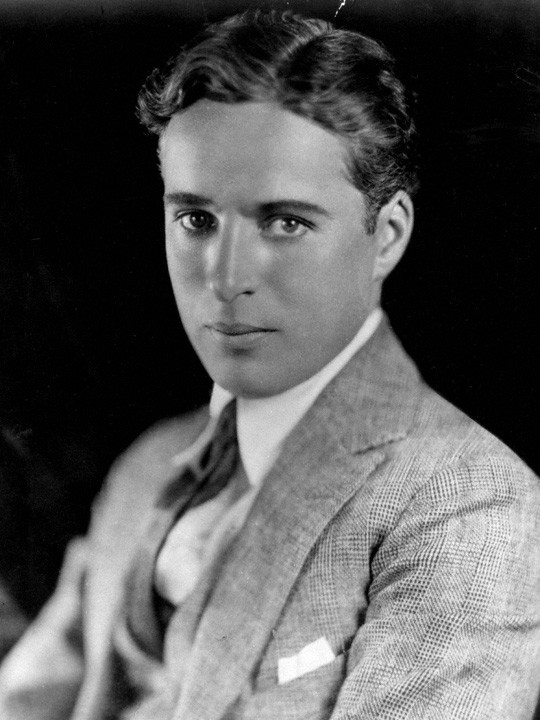
Charlie Chaplin

@charliechaplin

Explore the life and legacy of Charlie Chaplin through an engaging timeline highlighting key events and milestones in his career.

Born April 16, 1889
Known as Actor, Filmmaker, Composer
London, England
15Events
88Years
1880
1890
1900
1910
1920
1930
1940
1950
1960
1970
1980
1882
1884
1886
1888
1892
1894
1896
1898
1902
1904
1906
1908
1912
1914
1916
1918
1922
1924
1926
1928
1932
1934
1936
1938
1942
1944
1946
1948
1952
1954
1956
1958
1962
1964
1966
1968
1972
1974
1976
1978
1982
1984
1986
25december
1977
25 december 1977

Death in Switzerland

Chaplin died on 25 December 1977 at his home in Corsier-sur-Vevey, Switzerland, where he had spent his later years with Oona and their family. His death closed a life that had stretched from the Victorian music hall to the age of modern cinema and television. By then he had become more than a film star: he was a global cultural symbol whose Tramp character spoke across languages and borders. Obituaries around the world emphasized both his comic genius and his emotional depth. His death prompted renewed reflection on how profoundly he had shaped the grammar, ambition, and humanity of film.

01januari
1975
01 januari 1975

Receives a knighthood from Queen Elizabeth II

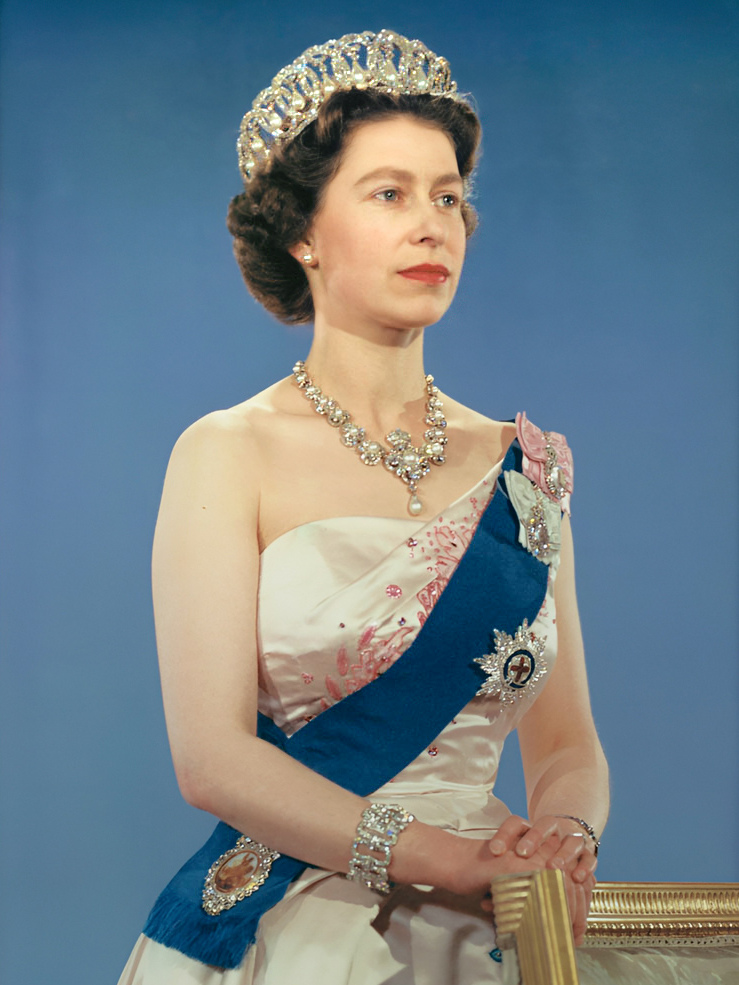
In the 1975 New Year Honours, Chaplin was appointed Knight Commander of the Order of the British Empire, and he received the accolade from Queen Elizabeth II at Buckingham Palace. The recognition was symbolically powerful: a performer once associated with poverty, scandal, and exile was formally honored by the British state as one of the nation’s greatest cultural figures. The knighthood also reflected a broader reassessment of Chaplin’s place in history, emphasizing artistic achievement over earlier controversies. By the mid-1970s, his legacy had become firmly established as both British and global, transcending the political battles of his middle years.

10april
1972
10 april 1972

Returns to America for an Honorary Academy Award

In 1972, after two decades away from the United States, Chaplin returned to receive an Honorary Academy Award recognizing the incalculable effect he had on making motion pictures the art form of the century. The tribute represented a public reversal of the hostility that had accompanied his departure in 1952. His reappearance before the American film establishment was widely understood as an act of cultural reconciliation as well as personal vindication. The honor affirmed his status not merely as a famous comedian but as one of cinema’s foundational artists, whose influence on performance, directing, editing, and film authorship had become undeniable.

17september
1952
17 september 1952

Leaves the United States and begins exile in Europe

In September 1952, Chaplin departed the United States for the London premiere of 'Limelight' and soon found that his permission to return would be challenged amid political hostility, moral scandal, and years of suspicion about his views. Rather than fight for reentry, he settled permanently in Europe. This marked the end of his American chapter after decades of creative dominance in Hollywood. The rupture reflected Cold War intolerance as well as the personal controversies that had damaged his reputation. Chaplin’s effective exile remains one of the most consequential examples of politics, celebrity, and film culture colliding in the mid-20th century.

16juni
1943
16 juni 1943

Marries Oona O'Neill

On 16 June 1943, Chaplin married Oona O’Neill in Santa Barbara, California. The marriage drew intense public attention because O’Neill had just turned eighteen and Chaplin was fifty-four, and because it came during a period of growing scandal in his American life. Yet the relationship proved lasting and stabilizing in a way his earlier marriages had not. The couple eventually had eight children, and Oona remained with him through exile, late-life honors, and old age. This event mattered not simply as a personal milestone but because it shaped the domestic world of Chaplin’s final decades.

15oktober
1940
15 oktober 1940

The Great Dictator marks his first true sound film

Premiering in New York on 15 October 1940, 'The Great Dictator' was Chaplin’s first full talking picture and one of Hollywood’s boldest early attacks on fascism. By parodying Adolf Hitler and authoritarian spectacle before the United States entered the Second World War, Chaplin took a major artistic and political risk. The film fused broad comedy with moral urgency and culminated in an explicit plea for democracy and human solidarity. It expanded Chaplin’s significance beyond comic performance, showing him as a filmmaker willing to intervene publicly in world affairs through satire at a moment of global crisis.

15februari
1936
15 februari 1936

Modern Times brings social satire to industrial America

Released in 1936, 'Modern Times' transformed the Tramp into a figure caught in the machinery of industrial capitalism and Depression-era insecurity. Chaplin used assembly lines, surveillance, unemployment, and prison comedy to satirize modern efficiency while preserving the humanity of his central character. The film was technically a hybrid, incorporating music, sound effects, and brief speech, yet it still relied primarily on visual performance. It became the Little Tramp’s last major outing and a defining statement of Chaplin’s social vision. 'Modern Times' showed that comedy could speak directly to economic anxiety and the dehumanizing pace of modern life.

30januari
1931
30 januari 1931

City Lights proves silent artistry could survive the sound era

When 'City Lights' opened in 1931, Chaplin deliberately resisted the industry’s rapid conversion to all-talking pictures. Rather than abandoning the visual language he had perfected, he released a largely silent film built on pantomime, music, and emotional precision. The gamble succeeded artistically and commercially, confirming that Chaplin’s storytelling power did not depend on spoken dialogue. The film’s romance, class tension, and famous ending demonstrated how mature his cinematic language had become. At a time when many silent-era careers collapsed, 'City Lights' reaffirmed Chaplin’s exceptional status and preserved the artistic legitimacy of silent-screen technique into a new technological age.

21januari
1921
21 januari 1921

Premiere of The Kid establishes him as a feature filmmaker

The premiere of 'The Kid' on 21 January 1921 marked Chaplin’s breakthrough as a master of feature-length storytelling. The film combined comedy with deep emotion through the relationship between the Tramp and an abandoned child, played by Jackie Coogan. It showed that silent comedy could sustain sentiment, social commentary, and narrative complexity without losing popular appeal. The success of the film elevated Chaplin from short-subject comic sensation to major auteur and proved that his work could carry dramatic weight. 'The Kid' remains a pivotal early example of the comedy-drama form that many later filmmakers would emulate.

05februari
1919
05 februari 1919

Co-founds United Artists

On 5 February 1919, Chaplin joined Mary Pickford, Douglas Fairbanks, and D.W. Griffith in founding United Artists. The company was created so major creative figures could control distribution and protect their financial and artistic independence from studio executives. For Chaplin, this was a major turning point: he was no longer merely a performer-for-hire but a powerful filmmaker with unprecedented autonomy. United Artists became a landmark in Hollywood history because it challenged the vertically integrated studio model and demonstrated that star-producers could shape their own careers, a principle that influenced generations of independent filmmakers.

07februari
1914
07 februari 1914

The Little Tramp emerges on screen

In early 1914, during his Keystone period, Chaplin developed the costume and mannerisms of the Little Tramp, the character most associated with his legacy. Britannica notes that by his second film, 'Kid Auto Races at Venice,' Chaplin had assembled the baggy trousers, derby hat, oversized shoes, and cane that made the figure instantly recognizable. The Tramp was more than a comic disguise: he was a poor but dignified outsider whose vulnerability, defiance, and tenderness allowed Chaplin to blend slapstick with social observation. This invention became one of the most famous screen identities in world cinema.

25september
1913
25 september 1913

Signs with Keystone and enters motion pictures

While touring the United States with the Karno company, Chaplin was noticed by Mack Sennett and signed a contract with Keystone on 25 September 1913. The move brought him from British music hall into the fast-growing American film industry at a moment when screen comedy was expanding rapidly. Keystone’s hectic production style forced Chaplin to adapt quickly, but it also gave him a laboratory for experimentation. His transition to film was decisive not only for his own career but for the development of screen comedy, because he soon began pushing beyond rough slapstick toward character-based storytelling and emotional nuance.

01januari
1908
01 januari 1908

Joins Fred Karno's comedy troupe

In 1908, Chaplin joined the celebrated Fred Karno pantomime troupe, one of Britain’s premier training grounds for physical comedy. There he refined timing, mime, drunk routines, and ensemble discipline before live audiences. The company gave him a professional structure and regular stage work after an unstable youth, and it placed him in a tradition of wordless comic storytelling that translated perfectly to silent film. Chaplin’s ascent within Karno’s troupe marked the true beginning of his artistic maturity and laid the foundation for the expressive body language that later made him an international star.

01januari
1896
01 januari 1896

Childhood poverty leads to institutional care

By 1896, Chaplin’s family circumstances had deteriorated so severely that he and his half-brother Sydney were drawn into the Victorian poor-law system, including time connected to the Lambeth workhouse and later schools for destitute children. These experiences exposed him to deprivation, bureaucracy, and social stigma at a formative age. They also gave him firsthand knowledge of the vulnerable people who would later populate his films. The mix of comedy and sadness that distinguished Chaplin’s art was rooted in this childhood confrontation with hardship rather than in theatrical invention alone.

16april
1889
16 april 1889

Birth in South London

Charles Spencer Chaplin was born on 16 April 1889 in Walworth, South London, into a family of music-hall performers. His parents’ unstable careers, poverty, and eventual separation shaped the insecurity of his early life. The uncertain circumstances of his birth later became part of Chaplin lore, but mainstream biographical sources agree on Walworth, London, as the accepted birthplace. That difficult beginning mattered deeply: the hardships of urban poverty, hunger, and family breakdown later informed the pathos, social criticism, and resilience that became central to his screen persona and films.

Frequently asked questions about Charlie Chaplin

Discover commonly asked questions regarding Charlie Chaplin. If there are any questions we may have overlooked, please let us know.

What is Charlie Chaplin best known for?

How did Charlie Chaplin impact the film industry?

What is Charlie Chaplin's legacy?

What was Charlie Chaplin's early life like?