Explore the key events and milestones in the history of the African National Congress. Discover its impact on South Africa's journey to democracy.
In the 2024 general election, the ANC lost its parliamentary majority for the first time since the advent of democracy, winning only about 40 percent of the vote. The result was historically significant because it ended three decades of majority rule by the party that had led the anti-apartheid struggle and governed South Africa since Nelson Mandela’s victory in 1994. The outcome reflected accumulated voter frustration over unemployment, inequality, corruption scandals, failing public services, and electricity shortages. Although the ANC remained the largest party, it now had to negotiate coalition or unity arrangements, marking a new era in South African politics and in the ANC’s own institutional history.
Cyril Ramaphosa’s narrow victory at the ANC’s 54th National Conference in Nasrec came at a moment when the party faced mounting public anger over corruption, weakened institutions, and declining electoral support. His election over Nkosazana Dlamini-Zuma was widely viewed as a contest over whether the ANC would attempt internal renewal or continue along a more compromised path associated with the Zuma era. Because ANC leadership remained closely tied to state leadership, the outcome had immediate national consequences. Ramaphosa’s rise signaled an attempt to restore credibility, reassure investors, and reposition the party ahead of future elections while managing entrenched internal factions.
At the ANC’s national conference in Polokwane, Jacob Zuma defeated incumbent party president Thabo Mbeki in one of the organization’s most consequential internal contests. The result revealed deep factional divisions over leadership style, state power, and the ANC’s post-apartheid direction. Because the ANC still dominated national elections, control of the party leadership strongly shaped control of the state itself. Zuma’s victory soon destabilized Mbeki’s position as national president and signaled a broader turn in party politics toward populist mobilization and patronage battles. The conference is widely seen as a watershed in the ANC’s internal fragmentation during its years in power.
In South Africa’s first national election under universal adult suffrage, the ANC won a decisive victory and became the governing party. The election marked the formal end of apartheid and transformed the ANC from a liberation movement into the central force of democratic government. Nelson Mandela was inaugurated president on 10 May 1994, heading a government of national unity. The result carried immense symbolic power because it converted decades of sacrifice, repression, exile, and negotiation into constitutional authority. It also imposed a new challenge on the ANC: proving that a movement built for liberation could govern a deeply unequal and divided modern state.
At the ANC’s 48th National Conference in 1991, Nelson Mandela was elected president of the organization, succeeding Oliver Tambo. The conference was symbolically and politically important because it was the movement’s first full legal national gathering in South Africa after decades of banning and exile. Mandela’s leadership gave the ANC a unifying figure with unmatched moral authority as negotiations with the apartheid government intensified. The event also marked the reintegration of formerly imprisoned leaders, internal activists, and exiles into a single political organization preparing to contest power through democratic means rather than underground struggle alone.
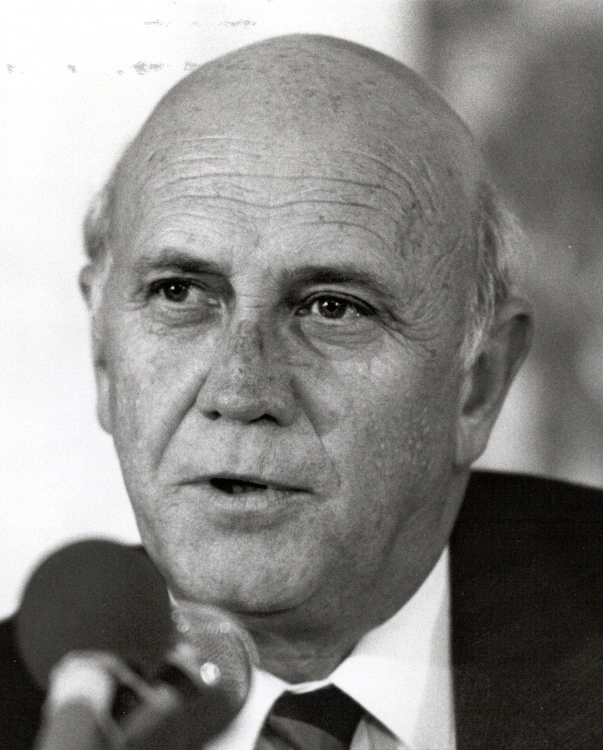
President F.W. de Klerk’s announcement unbanning the ANC on 2 February 1990 ended three decades of formal prohibition and opened the path to negotiations over South Africa’s future. The decision allowed exiled leaders to return and restored the organization’s legal political activity inside the country. For the ANC, this was a historic transition from clandestine resistance to public negotiation, even as violence and mistrust remained widespread. The unbanning signaled that apartheid could no longer be sustained by repression alone and set the stage for the constitutional bargaining that would eventually produce majority rule.
The Soweto uprising began as a student protest against the imposition of Afrikaans in Black schools, but it quickly became a nationwide rebellion against apartheid. For the ANC, which had been weakened inside the country by bannings, imprisonment, and exile, the uprising was a crucial turning point. Large numbers of young people fled South Africa afterward and joined ANC structures or MK camps abroad, replenishing the movement with a new generation of militants and activists. The uprising also intensified international condemnation of apartheid and broadened recognition of the ANC as the leading force channeling resistance to white minority rule.
The Rivonia Trial ended with Nelson Mandela and other key ANC figures receiving life sentences, dealing a severe blow to the organization’s internal leadership. The convictions disrupted the ANC’s domestic command structure and drove more of its activity into exile, where Oliver Tambo and others rebuilt the movement’s international presence. Yet the trial also elevated imprisoned leaders into global symbols of resistance and exposed the political nature of apartheid justice. Rather than destroying the ANC, the crackdown helped turn it into an internationally recognized liberation movement whose cause attracted sustained support from governments, unions, churches, and student groups worldwide.
After the ANC was banned and peaceful protest met escalating violence, ANC leaders helped establish Umkhonto we Sizwe, or MK, in 1961. The new armed wing was initially created to carry out sabotage against state infrastructure rather than attacks on civilians, reflecting the leadership’s belief that nonviolent methods alone could no longer defeat apartheid. MK’s creation marked one of the most consequential strategic shifts in ANC history, embedding armed struggle within a broader program of underground organization, mass mobilization, and international pressure. It also intensified state repression and tied the movement more closely to exile networks and military training abroad.
The Sharpeville massacre, in which police killed 69 unarmed demonstrators during an anti-pass protest, transformed the political landscape confronting the ANC. Although the protest was organized by the PAC, the massacre prompted the apartheid state to ban both the PAC and the ANC, closing off legal avenues for opposition. The ban forced the ANC underground and accelerated its transformation from a lawful protest organization into a clandestine movement operating inside South Africa and in exile. Sharpeville also drew worldwide condemnation, helping internationalize the anti-apartheid struggle in ways that later benefited ANC diplomacy and solidarity campaigns.
In 1959, dissidents who rejected the ANC’s nonracial direction and the politics of the Freedom Charter broke away to form the Pan Africanist Congress. The split exposed serious ideological tensions within the anti-apartheid movement over race, leadership, and the future of South Africa. For the ANC, the breakaway was a major setback because it divided African opposition at a crucial moment of intensifying repression. At the same time, the rupture clarified the ANC’s long-term commitment to a broader multiracial alliance, a principle that would remain central to its identity through exile, armed struggle, and eventual democratic transition.
At the Congress of the People in Kliptown, a multiracial alliance led by the ANC adopted the Freedom Charter, one of the foundational documents of South Africa’s liberation struggle. Drawn from demands gathered across the country, the charter declared that South Africa belonged to all who lived in it and called for equal rights, democratic government, land reform, labor rights, and social justice. Its embrace of a nonracial political future became central to ANC ideology. The document also intensified state hostility, contributing to the Treason Trial and deepening the conflict between the apartheid regime and the liberation movement.
The Defiance Campaign of 1952 was the ANC’s first large-scale national campaign of civil disobedience against apartheid laws. Organized with allies including the South African Indian Congress, it encouraged volunteers to deliberately break discriminatory regulations and accept arrest. The campaign dramatically expanded the ANC’s public profile and membership, proving that the movement could mobilize ordinary people on a national scale. It also provoked harsher state repression, bringing many leaders under surveillance and prosecution. Even so, the campaign established the ANC as the principal vehicle of organized Black resistance in South Africa.
At the end of the 1940s, the ANC adopted its Program of Action, a turning point that committed the movement to strikes, boycotts, civil disobedience, and other forms of mass protest. This strategic shift came as the National Party entrenched apartheid after taking power in 1948. The new program reflected the growing influence of the Youth League and represented a break with earlier methods centered on appeals to authorities. By endorsing organized popular resistance, the ANC created the political framework for the major campaigns of the 1950s and began its transition from a petitioning body into a mass liberation movement.
The creation of the ANC Youth League in 1944 transformed the organization’s internal politics and long-term strategy. Younger activists such as Nelson Mandela, Walter Sisulu, and Oliver Tambo pushed the ANC away from cautious deputations toward mass mobilization, direct action, and more assertive African nationalism. The league became a crucible for a new generation of leadership that would dominate the anti-apartheid struggle for decades. Its influence was especially important in the late 1940s and early 1950s, when the ANC began to redefine itself as a disciplined movement capable of organizing nationwide campaigns against white minority rule.
In 1923, the South African Native National Congress formally changed its name to the African National Congress. The new name reflected a broader political ambition and a more modern national identity at a time when Black South Africans faced expanding segregationist rule. Although the ANC still relied largely on petitions, delegations, and constitutional protest in this period, the renaming was an important symbolic and organizational step. It helped position the movement as a national representative body rather than a narrowly defined elite association, preparing it for the mass politics it would embrace more fully in later decades.
The organization that later became the African National Congress was founded as the South African Native National Congress at a meeting in Bloemfontein. Created in the aftermath of the Union of South Africa, it brought together African political leaders, professionals, and traditional authorities to coordinate resistance to racial exclusion and the erosion of Black political rights. The founding marked a decisive shift from localized protest toward a national political body, laying the institutional foundation for what would become the country’s leading liberation movement and, later, governing party.
Discover commonly asked questions regarding African National Congress. If there are any questions we may have overlooked, please let us know.
What are some key achievements of the ANC since 1994?
What role did the ANC play in the fight against apartheid?
What is the African National Congress (ANC)?
What is the legacy of the ANC in contemporary South Africa?
Timepaths that crossed paths with African National Congress