Explore the key events of the 2016 U.S. presidential election. Discover milestones, candidates, and pivotal moments that shaped the race.
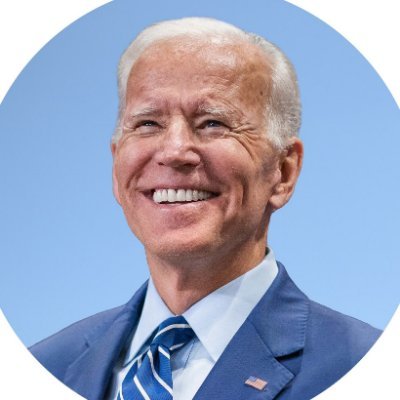
In a joint session of Congress, lawmakers opened, counted, and certified the Electoral College votes, completing the final constitutional step in the 2016 presidential election process before inauguration. Presided over by Vice President Joe Biden, the session formally validated Trump’s election and Pence’s vice presidency. Although this stage is often procedural, it carried special significance in the aftermath of a bitter campaign, foreign-interference concerns, and multiple faithless electors. Certification represented the institutional conclusion of the election itself, confirming that the contest had moved from campaign and voting into the legally recognized transfer of executive authority. It also underscored the resilience of formal electoral mechanisms amid severe political polarization.
Members of the Electoral College met in their respective states and the District of Columbia to cast the official votes for president and vice president, formally confirming Trump’s victory. The meeting drew unusual national attention because opponents had urged Republican electors to defect, and the 2016 vote ultimately featured multiple faithless electors on both sides. Even so, Trump retained a decisive Electoral College majority. This stage mattered because it transformed the projected and state-certified election result into the constitutionally prescribed vote that Congress would later count. In a cycle marked by controversy, litigation, and public distrust, the December meeting served as a crucial institutional checkpoint in the transfer of power.
On Election Day, Donald Trump defeated Hillary Clinton in one of the most surprising outcomes in modern American politics. Although Clinton won the national popular vote by more than 2.8 million ballots, Trump carried key battleground states, especially in the industrial Midwest, and secured the Electoral College majority needed for the presidency. The result overturned most late-campaign expectations and revealed the power of Trump’s appeal among voters who felt alienated from political institutions and economic change. The election marked a sharp break with established assumptions about experience, campaign professionalism, polling, and demographic strategy, and it had immediate consequences for the Supreme Court, executive power, party politics, and international perceptions of the United States.
The final presidential debate at the University of Nevada, Las Vegas focused on the Supreme Court, immigration, foreign policy, and the candidates’ fitness for office, but it became especially notable when Trump declined to say clearly that he would accept the election result. In a political system built on routine transfers of power, that exchange drew intense attention and criticism. The debate therefore mattered not just as a final campaign encounter, but as a flashpoint over democratic norms and the legitimacy of electoral outcomes. It also closed the formal debate season with both candidates deeply unpopular, making the final days of the race unusually tense and uncertain despite extensive polling.
Just two days after the release of the Access Hollywood tape, Clinton and Trump met for the second presidential debate at Washington University in St. Louis. The town-hall format quickly gave way to one of the most hostile exchanges in modern presidential politics. Trump sought to contain the damage from the tape while launching aggressive personal attacks on Clinton, including threats to pursue legal action if elected. Clinton tried to keep the focus on Trump’s temperament and conduct while defending her own record under intense scrutiny. The debate illustrated how deeply the campaign had descended into personal scandal and mutual distrust, reinforcing public perceptions that 2016 was unlike any recent election.
The Washington Post published a 2005 recording in which Trump made vulgar comments about women, creating one of the most damaging crises of the election. Released just a month before voting day, the tape triggered widespread condemnation, including from many Republican officials who had already been uneasy about the nominee. Some withdrew endorsements, while others debated whether replacing him on the ticket was still possible. The moment intensified existing concerns about character and fitness for office, but it also tested the durability of partisan loyalty in a deeply polarized environment. The episode became a defining controversy of the campaign’s final stretch and framed the next debate only two days later.
The first general-election presidential debate took place at Hofstra University and became one of the most watched debates in U.S. history. It was important not only because of its audience size, but because it offered the first sustained side-by-side comparison between two nominees with starkly different political backgrounds and campaign styles. Clinton emphasized experience, policy detail, and preparation, while Trump focused on trade, economic grievance, and anti-establishment themes that had powered his rise. The debate set the rhythm for the race’s closing weeks and shaped media narratives about discipline, temperament, and readiness for office at a moment when many undecided voters were making final judgments.
At the Democratic National Convention in Philadelphia, Hillary Clinton was formally nominated for president, becoming the first woman ever nominated by a major U.S. political party. The roll call and acclamation carried symbolic significance well beyond delegate arithmetic, reflecting decades of struggle for women’s political representation at the highest level. The convention also served an urgent practical purpose: Democrats sought to unify supporters of Clinton and Sanders after a difficult primary campaign and present a contrast with Trump on temperament, experience, and policy continuity. Philadelphia therefore functioned both as a historical breakthrough and as an attempt to consolidate a broad coalition for the general election.
At the Republican National Convention in Cleveland, delegates formally nominated Donald Trump for president and Mike Pence for vice president. The convention completed Trump’s takeover of a party whose elites had often expected, and preferred, a different nominee. It also exposed strains inside the coalition, including disputes over rules, platform priorities, and the degree of enthusiasm among elected Republicans. Yet the nomination made official a profound transformation in the GOP, elevating a candidate whose message centered on border enforcement, trade protectionism, and hostility to political establishments in both parties. Cleveland thus became the moment when Trump’s unconventional candidacy was ratified as the Republican Party’s national standard-bearer.
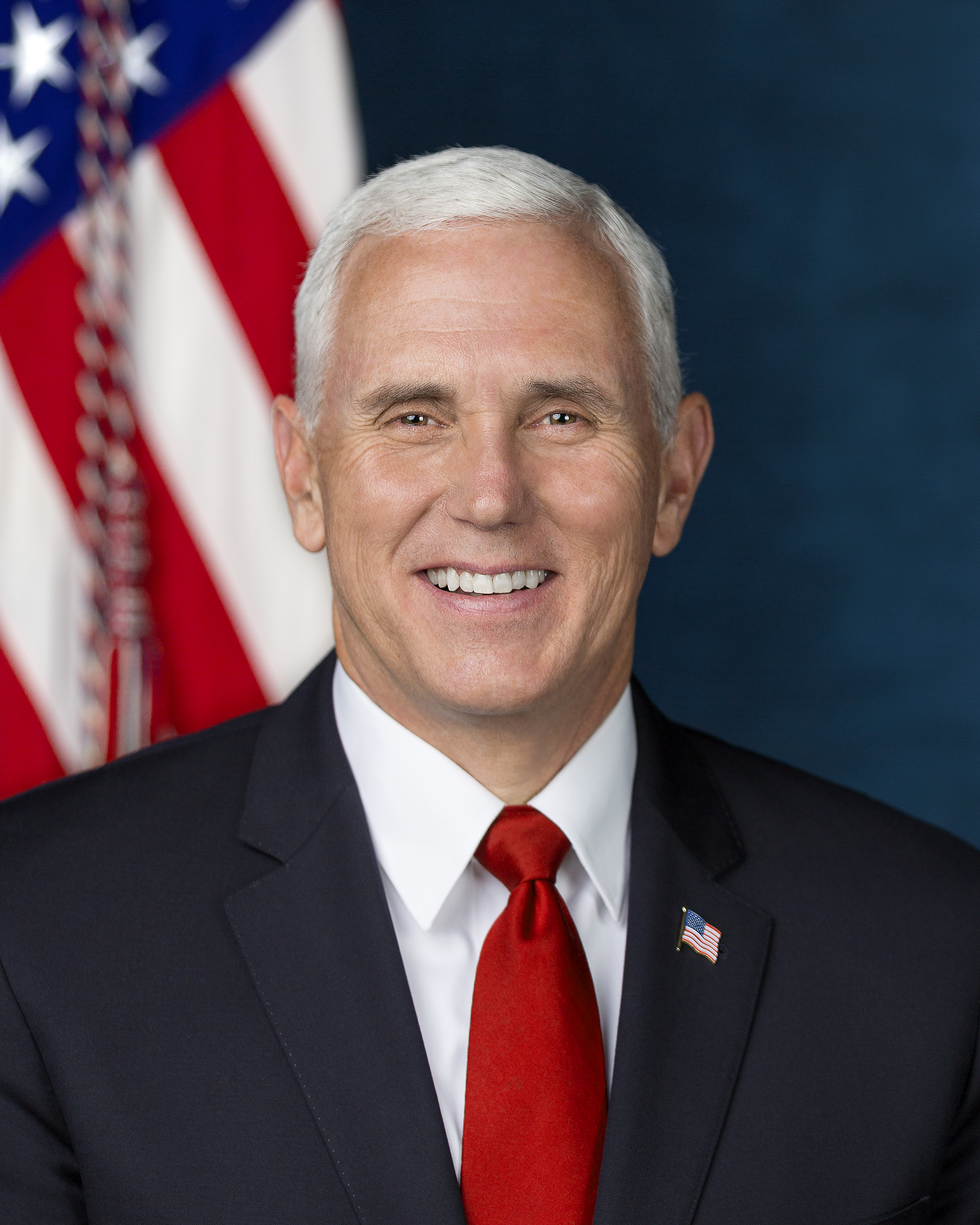
Donald Trump announced Indiana governor Mike Pence as his vice-presidential running mate, adding an experienced conservative officeholder to a ticket led by a political outsider. The selection was widely interpreted as an effort to reassure skeptical Republican leaders and evangelical voters, and to provide governing experience that Trump himself lacked. The choice also helped bridge tensions between Trump and traditional party networks, even if many Republican officials remained wary. In strategic terms, Pence balanced the ticket by offering legislative and executive credentials, Midwestern roots, and strong ties to social conservatives. The announcement therefore marked an important step in turning Trump from primary insurgent into general-election nominee.
After the final major round of Democratic primaries, Hillary Clinton secured a majority of pledged delegates, formalizing her path to the nomination. Media organizations had already identified her as the presumptive nominee through combined delegate counts, but the June 7 results gave her the pledged-delegate milestone that strengthened her claim to the nomination in a more direct electoral sense. The achievement was historically significant because it ensured that a woman would lead a major party presidential ticket in the United States for the first time. At the same time, Sanders’s strong challenge left ideological divisions within the party that Democrats would spend the summer trying to heal before the general election.
Trump’s victory in Indiana proved decisive because Ted Cruz, his strongest remaining rival, suspended his campaign immediately afterward. The result ended months of speculation that Republicans might deny Trump the nomination in a contested convention. Instead, Indiana showed that even coordinated anti-Trump tactics could not stop his momentum once the field had narrowed. The outcome was a watershed for the Republican Party: leaders who had resisted or criticized Trump now had to decide whether to unite behind a nominee with little prior political experience and a style that often clashed with long-standing party norms. Indiana therefore converted Trump from front-runner into presumptive nominee.
A second major turning point came with the March 15 contests, especially the winner-take-all Republican primaries in Florida and Ohio. Trump captured Florida, defeating home-state senator Marco Rubio and effectively ending Rubio’s campaign, while John Kasich held his own state of Ohio. On the Democratic side, Clinton won key states and expanded her delegate advantage over Sanders. The day mattered because it demonstrated Trump’s ability to eliminate establishment rivals even in high-stakes home-state battles, while also showing that resistance to him was fragmenting rather than consolidating. After March 15, the argument that Trump could be stopped through conventional primary strategy looked increasingly unrealistic.
On Super Tuesday, voters in a large cluster of states pushed Donald Trump and Hillary Clinton into commanding positions in their respective races. Trump won multiple states across regions, showing that his candidacy could translate broad media attention into delegates at scale. Clinton, meanwhile, performed strongly in southern states and among African American voters, underscoring the coalition that would eventually secure her the Democratic nomination. Because so many delegates were at stake, the day sharply narrowed the realistic paths for many rivals. Super Tuesday did not mathematically end either contest, but it clarified the structure of the race and made both parties confront the likely shape of the general election.
New Hampshire delivered emphatic victories to Donald Trump and Bernie Sanders, strengthening the standing of both anti-establishment candidacies. Trump’s win gave him his first major electoral breakthrough after Iowa and demonstrated that his appeal extended well beyond media spectacle. Sanders’s landslide over Clinton exposed significant weakness for the Democratic front-runner among independent-minded voters in a neighboring state where he had strong regional support. The results also damaged several establishment Republican candidates and intensified pressure on both parties to adapt to electorates increasingly skeptical of traditional leadership. New Hampshire became an early sign that 2016 would not follow normal campaign expectations.
The first binding contest of the 2016 cycle took place in Iowa, where Republicans awarded a victory to Ted Cruz while Democrats produced an extremely narrow result that left Hillary Clinton only barely ahead of Bernie Sanders. The caucuses mattered far beyond delegate totals because they tested organization, volunteer strength, and turnout enthusiasm after months of campaigning. Trump’s loss in Iowa temporarily checked the idea that his polling dominance guaranteed early victories, while the near tie on the Democratic side showed that Sanders had transformed what many expected to be a largely uncontested march by Clinton into a serious nomination battle. Iowa thus set the tone for a turbulent primary season in both parties.
Donald Trump formally entered the 2016 presidential race with a speech delivered at Trump Tower in Manhattan, immediately reshaping the Republican contest. At a time when a large field of governors, senators, and former officeholders was expected to dominate the nomination fight, Trump presented himself as an outsider who would upend party orthodoxy on immigration, trade, and foreign policy. His candidacy was initially treated by many observers as improbable, but the launch marked the start of a campaign that drew extraordinary media attention, energized anti-establishment voters, and altered the tone and substance of the election from its earliest phase.
Hillary Clinton announced her candidacy for president in April 2015, beginning a campaign aimed at making her the first woman elected president of the United States. Entering the race with strong institutional support, national name recognition, and a network built from her years as first lady, senator, and secretary of state, she quickly became the Democratic front-runner. Her launch established a contest that would combine conventional campaign organization and fundraising strength with unusually intense scrutiny over trust, experience, and continuity after the Obama administration. The announcement also set the stage for a competitive Democratic primary against Bernie Sanders.
Discover commonly asked questions regarding 2016 United States presidential election. If there are any questions we may have overlooked, please let us know.
What was the significance of the 2016 presidential election?
What were the key issues during the 2016 presidential election?
What impact did the 2016 election have on American politics?
What were the main candidates in the 2016 United States presidential election?