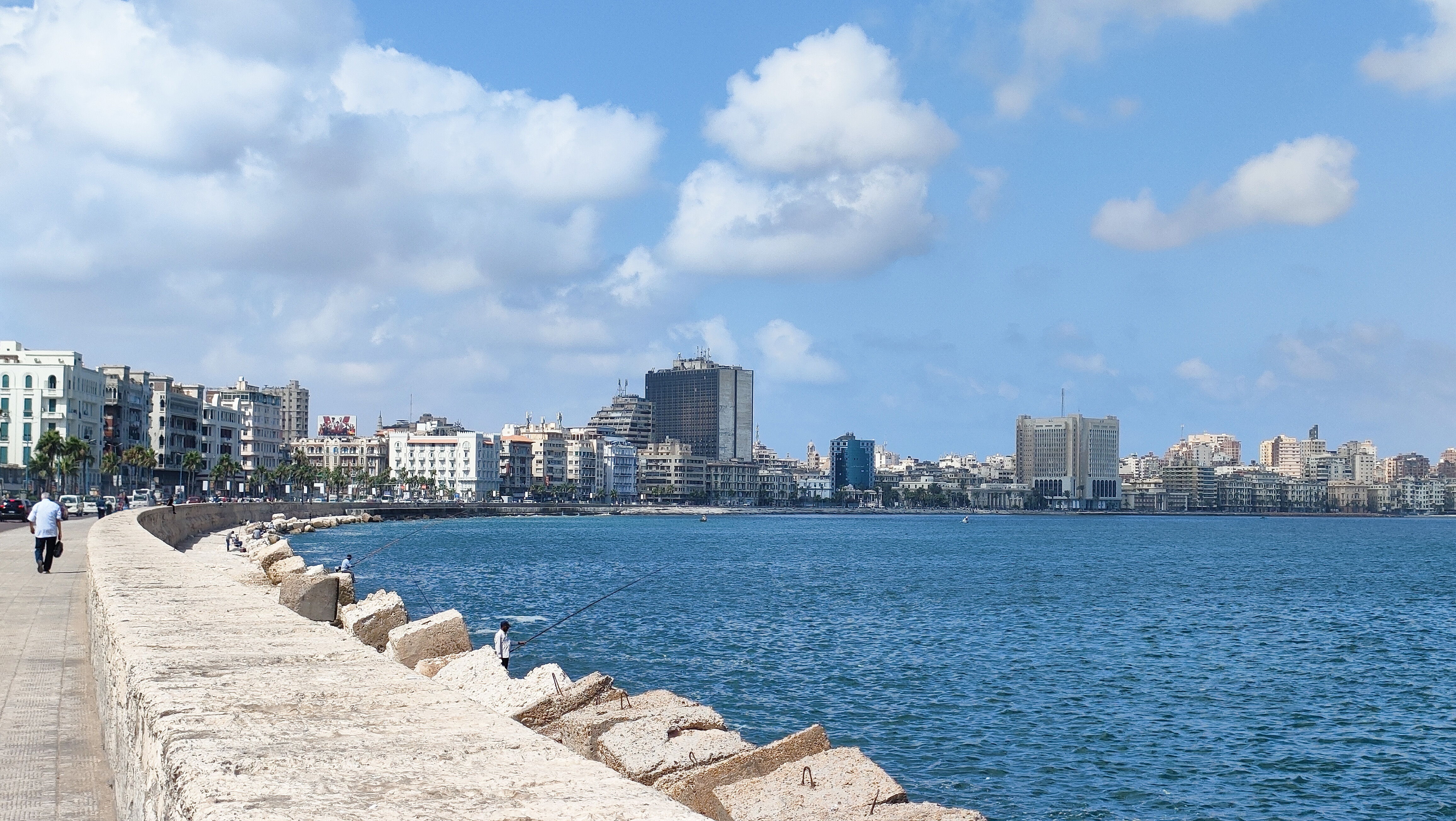
Explore the key events of the 2011 Egyptian Revolution. Discover how the uprising shaped Egypt's future. Click to learn more!
Egyptians voted in a national referendum on constitutional amendments drafted during the military-led transition. The changes, approved by a large majority, included presidential term limits, greater judicial oversight of elections, and revised procedures intended to open presidential candidacy. Supporters saw the vote as an important first step toward restoring electoral politics after the revolution. Critics argued that the amendments were too limited and that rushing to elections favored the best organized political forces while leaving deeper structural questions unresolved. The referendum therefore marked both a milestone in the transition and the beginning of major debates over the revolution’s direction.
The interior ministry announced the dissolution of the State Security Investigations agency, promising that a replacement body would not interfere in political life or commit the same abuses associated with its predecessor. The move was one of the revolution’s most concrete institutional consequences in the security sphere, because SSI had long been linked to surveillance, arbitrary detention, and torture. Although many activists remained skeptical about whether the culture of repression would truly change, the decision nonetheless marked an acknowledgment by the post-Mubarak authorities that the old security apparatus had become politically toxic and publicly indefensible.
Hundreds of Egyptians entered premises of the State Security Investigations service in Cairo and other cities amid reports that officials were destroying documents. The raids exposed the depth of public anger toward one of the most feared pillars of Mubarak’s internal security state. Seized files and images circulating online appeared to document surveillance and repression directed at dissidents and ordinary citizens alike. This moment became a powerful symbol of revolutionary reckoning: citizens were no longer merely demanding reform from the security apparatus, but physically confronting the institutions that had underpinned authoritarian control for decades.
As demonstrators returned to the streets to demand deeper purges of Mubarak-era officials, Prime Minister Ahmed Shafiq resigned after becoming a symbol of continuity with the old regime. His departure reflected the fact that Mubarak’s fall had not ended revolutionary mobilization; protesters were now pressing for changes in personnel, institutions, and security practices. Shafiq was replaced by Essam Sharaf, who was seen as more sympathetic to the revolution. The event highlighted how post-Mubarak legitimacy remained contested and how the square continued to shape political outcomes even after the president’s removal.
Two days after Mubarak’s resignation, the Supreme Council of the Armed Forces suspended the constitution and dissolved both houses of parliament, announcing that it would govern during a transitional period while preparing constitutional amendments and future elections. Many Egyptians welcomed the move as recognition that the old institutional order lacked legitimacy after the uprising. Others worried that military rule might preserve core features of the previous system under new management. This was a milestone because it formally ended Mubarak-era constitutional structures while also revealing that the revolution’s next struggle would concern civilian authority, accountability, and the pace of democratic change.
On the eighteenth day of the uprising, Vice President Omar Suleiman announced that Hosni Mubarak had resigned and transferred authority to the Supreme Council of the Armed Forces. Jubilant celebrations erupted in Tahrir Square and across Egypt, as many people saw the resignation as the historic victory of a mass popular movement over entrenched authoritarian rule. At the same time, Mubarak’s fall did not settle the question of what political order would replace him. The military now held executive power, meaning the revolution had achieved a dramatic breakthrough but had entered a new and uncertain phase.
After widespread rumors that he would step down, Mubarak delivered a televised speech in which he refused to resign and instead said he would delegate some presidential powers to Vice President Omar Suleiman. The speech provoked anger and disbelief among protesters who had gathered expecting the end of his rule. The announcement triggered a fresh escalation, including marches toward state institutions and the presidential palace. Politically, the moment was crucial because it showed that partial concessions were no longer enough and that the revolutionary movement had reached a point where Mubarak’s continued presence itself was the central obstacle.
On February 8, enormous crowds again poured into Tahrir Square in what many reports described as the biggest demonstration of the uprising up to that point. The turnout showed that repeated violence, regime concessions, and talk of negotiation had not broken the revolutionary coalition. By this stage, strikes, neighborhood committees, volunteer medical stations, and public political debate had turned the square into a semi-permanent civic encampment. The event mattered not only for its size, but because it demonstrated the revolution’s staying power and its ability to sustain pressure over weeks rather than days.
Vice President Omar Suleiman held talks with opposition figures, including representatives linked to the Muslim Brotherhood, in an effort to negotiate a way out of the crisis. The discussions reflected recognition inside the state that the old political order could not simply resume unchanged. Yet the talks produced no immediate breakthrough, because many demonstrators in Tahrir Square rejected negotiations while Mubarak remained in office. The same period also saw renewed public attention to detained activists and organizers, underscoring how street mobilization and elite bargaining were unfolding simultaneously but not always in alignment.
Hundreds of thousands of Egyptians joined another major wave of demonstrations under the slogan “Day of Departure,” demanding Mubarak’s immediate resignation. Despite the deadly clashes earlier in the week, protesters continued to fill Tahrir Square and march in other cities, showing that the movement retained momentum and broad legitimacy. The day was significant because it transformed the uprising from a volatile revolt into a sustained occupation movement with clear political aims. It also signaled to domestic elites and foreign governments that Mubarak’s position was becoming increasingly untenable.
On the day after Mubarak’s speech, pro-government supporters attacked anti-government demonstrators in and around Tahrir Square, including some assailants who charged into the crowds on horses and camels. The confrontation evolved into prolonged street fighting that left multiple people dead and many hundreds injured. The violence became one of the revolution’s defining images and deepened public outrage against the regime. Rather than dispersing the sit-in, the assault hardened protester resolve, strengthened barricades around the square, and widened suspicions that the state was using organized loyalists and plainclothes forces to crush the movement.
Huge crowds converged on central Cairo and other Egyptian cities in what became known as the “March of Millions,” one of the largest mobilizations of the revolution. The scale of participation demonstrated that the protest movement had not been broken by violence, curfews, or communication blackouts. That night Mubarak addressed the nation and said he would not seek re-election in the September 2011 presidential vote, but he refused to resign immediately. For many demonstrators, the speech confirmed that only sustained pressure in the streets would force a real transfer of power.
Facing the most serious challenge of his presidency, Hosni Mubarak appointed intelligence chief Omar Suleiman as vice president, filling a post that had remained vacant throughout his rule since 1981. The move was widely interpreted as an attempt to reassure the military establishment, calm foreign allies, and signal a managed transition without immediately yielding power. Mubarak also reshuffled the cabinet, but these concessions failed to satisfy protesters, who had already moved beyond demands for reform and were now calling explicitly for his departure.
After Friday prayers, protests surged dramatically in scale and intensity. Security forces used tear gas, water cannons, rubber bullets, and beatings in efforts to disperse demonstrators, while the government imposed a curfew and cut internet and phone services in many areas. Police stations and ruling-party buildings were attacked or burned in several cities, and the National Democratic Party headquarters in Cairo was set ablaze. As the police response faltered, army units were deployed to key sites in the capital, marking a decisive turning point in which the state lost control of the streets and the uprising moved beyond ordinary protest.
On Egypt’s National Police Day, protest networks that had been mobilizing against police brutality, corruption, unemployment, and authoritarian rule called for demonstrations across the country. Large crowds gathered in Cairo’s Tahrir Square, while parallel protests broke out in Alexandria, Suez, and other cities. What began as a planned day of protest rapidly became a nationwide revolutionary challenge to President Hosni Mubarak’s nearly three-decade rule. The events of January 25 gave the movement its enduring name, the “25 January Revolution,” and established Tahrir Square as its main symbolic center.
Discover commonly asked questions regarding 2011 Egyptian revolution. If there are any questions we may have overlooked, please let us know.
What has been the legacy of the 2011 Egyptian revolution?
What was the significance of the 2011 Egyptian revolution?
What were the main causes of the 2011 Egyptian revolution?
What were the key events during the 2011 Egyptian revolution?