Person · Other

14th Dalai Lama

@14thdalailama

Explore the significant events in the life of the 14th Dalai Lama, from his early years to his impact on peace and spirituality.

Born July 6, 1935
Known as Spiritual Leader of Tibetan Buddhism
Taktser, Amdo, Tibet
Education
D
Drepung Monastic University
15Events
76Years
1920
1930
1940
1950
1960
1970
1980
1990
2000
2010
1928
1932
1934
1936
1938
1942
1944
1946
1948
1952
1954
1956
1958
1962
1964
1966
1968
1972
1974
1976
1978
1982
1984
1986
1988
1992
1994
1996
1998
2002
2004
2006
2008
2012
2014
2016
2018
10maart
2011
10 maart 2011

Announced retirement from formal political leadership

On March 10, 2011, the Dalai Lama announced that he would relinquish his formal political role in the Tibetan exile system, arguing that rule by religious figures and hereditary authority belonged to the past. This was one of the most significant constitutional turns in the history of the Dalai Lama institution. By stepping aside from temporal power, he sought to strengthen democratic legitimacy within the exile community and ensure continuity beyond his own lifetime. The decision narrowed his role to spiritual leadership while ending centuries in which Dalai Lamas had also served as political rulers.

10december
1989
10 december 1989

Received the Nobel Peace Prize

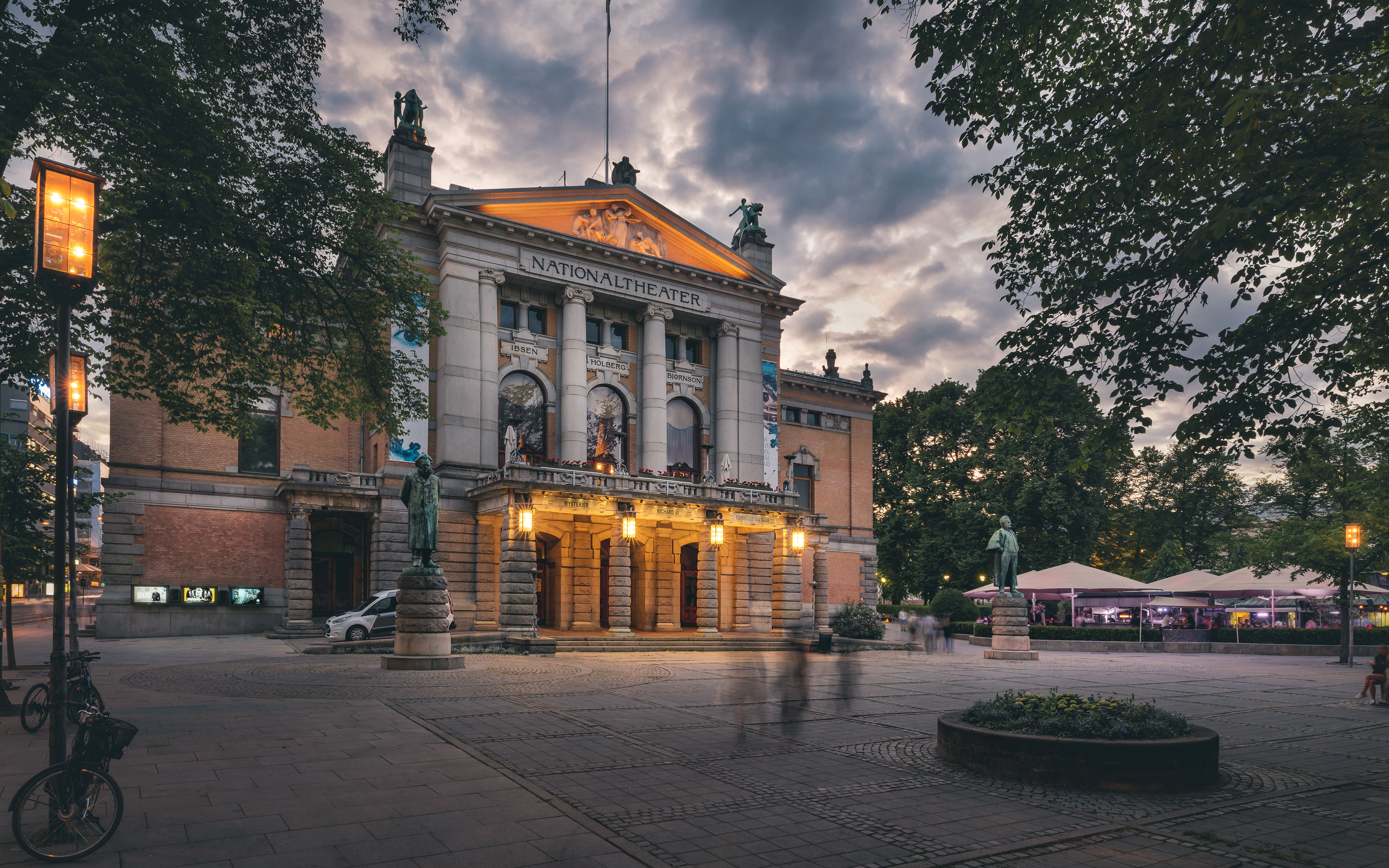
On December 10, 1989, the Dalai Lama received the Nobel Peace Prize in Oslo for advocating nonviolent solutions, tolerance, and respect for human rights while defending the cultural heritage of the Tibetan people. The award elevated his international standing dramatically and confirmed his transformation into one of the world’s best-known moral and religious figures. It also brought Tibet unprecedented global visibility at the close of the Cold War. The Nobel Committee’s recognition reinforced the contrast between his public commitment to nonviolence and the harsh repression reported inside Tibet.

15juni
1988
15 juni 1988

Expanded his peace proposal in the Strasbourg Proposal

On June 15, 1988, addressing the European Parliament in Strasbourg, the Dalai Lama elaborated his earlier peace initiative into what became known as the Strasbourg Proposal. He suggested a self-governing democratic Tibet in association with the People’s Republic of China, presenting what he described as a realistic middle path between full independence and unconditional acceptance of Chinese rule. This speech was historically important because it formalized a compromise-oriented strategy that would define much of his later diplomacy. It also showed his preference for negotiation, coexistence, and institutional guarantees over armed or absolutist solutions.

21september
1987
21 september 1987

Announced the Five-Point Peace Plan in Washington

On September 21, 1987, the Dalai Lama unveiled his Five-Point Peace Plan for Tibet before the Congressional Human Rights Caucus in Washington, D.C. The proposal called for nonviolence, protection of human rights, environmental safeguards, and earnest negotiations with China. This was a major milestone because it framed the Tibetan cause in universal political and ethical language rather than only religious or nationalist terms. The speech strengthened his image as an advocate of peaceful resolution and helped shift international discussion of Tibet toward human rights, ecology, and dialogue.

01januari
1963
01 januari 1963

Promulgated a draft democratic constitution for Tibetans in exile

In 1963, the Dalai Lama presented a draft democratic constitution for Tibetans in exile, an important step in reshaping Tibetan governance beyond hereditary and theocratic precedent. Rather than merely recreating old institutions abroad, he used exile as an opportunity to encourage representative government, legal reform, and broader civic participation. This initiative mattered historically because it showed his willingness to limit traditional concentration of authority and adapt Tibetan political thought to modern democratic norms. It also foreshadowed his later decision to relinquish formal political power altogether.

30april
1960
30 april 1960

Established residence in Dharamshala

On April 30, 1960, the Dalai Lama arrived in Dharamshala, India, where he established the center of the Tibetan exile community. From this Himalayan town, often called “Little Lhasa,” he organized the rebuilding of religious, educational, and political institutions shattered by the upheaval in Tibet. Dharamshala became far more than a refuge: it emerged as the symbolic and administrative heart of Tibetan life in exile. This move laid the foundation for preserving Tibetan culture abroad while also creating a platform from which the Dalai Lama could address the international community.

18april
1959
18 april 1959

Repudiated the Seventeen-Point Agreement in India

On April 18, 1959, after reaching safety in India, the Dalai Lama publicly repudiated the Seventeen-Point Agreement, declaring that it had been imposed under coercion. This statement was politically momentous because it articulated the exile position that Tibetan consent to Chinese rule had not been freely given. It also clarified that his struggle would continue from abroad rather than end with his departure from Tibet. The announcement helped define the legal and moral framework of the Tibetan exile movement for decades to come, linking national claims to the language of force, rights, and legitimacy.

17maart
1959
17 maart 1959

Fled Lhasa during the Tibetan uprising

On March 17, 1959, amid the Lhasa uprising and fears that Chinese authorities might detain him, the Dalai Lama escaped from Lhasa and began the dangerous journey into exile. His departure followed mounting unrest and a collapse of trust between Tibetans and Chinese officials. The escape was one of the most dramatic episodes in twentieth-century Asian history, because it preserved the person and office around which Tibetan resistance and identity in exile would later cohere. It also transformed him from a regional ruler into a global symbol of a stateless people and nonviolent struggle.

01juli
1954
01 juli 1954

Visited Beijing and met Mao Zedong

Beginning in July 1954, the Dalai Lama traveled to Beijing for extended talks with Chinese leaders, including Mao Zedong, Zhou Enlai, Zhu De, and Deng Xiaoping. The visit represented his most serious attempt to find a workable coexistence between Tibetan aspirations and Chinese rule. Although he was received with ceremony, the underlying disputes over religion, autonomy, reform, and military control remained unresolved. The journey was therefore both a diplomatic milestone and a revealing lesson in the limits of negotiation as Chinese authority in Tibet deepened.

23mei
1951
23 mei 1951

Seventeen-Point Agreement signed under Chinese pressure

On May 23, 1951, a Tibetan delegation in Beijing signed the Seventeen-Point Agreement with the government of the People’s Republic of China. The Dalai Lama later maintained that the agreement had been accepted under duress. The document became a defining fault line in modern Tibetan history because Beijing treated it as legal confirmation of sovereignty, while many Tibetans saw it as coerced submission. For the young Dalai Lama, the agreement framed the difficult years that followed, in which he tried to preserve Tibetan autonomy while avoiding immediate large-scale bloodshed.

17november
1950
17 november 1950

Assumed full temporal power as Tibet's leader

On November 17, 1950, at age fifteen, the Dalai Lama assumed full temporal authority as Tibet’s head of state. This acceleration of his political role came in response to the crisis created by the advance of the People’s Liberation Army into Tibetan territory and the Battle of Chamdo. What might otherwise have been a gradual transition became an emergency transfer of power. The moment marked the start of his direct engagement with diplomacy, statecraft, and the existential question of Tibet’s political survival in the face of pressure from the newly established People’s Republic of China.

22februari
1940
22 februari 1940

Enthroned in Lhasa

On February 22, 1940, he was enthroned in Lhasa as the 14th Dalai Lama. The ceremony formally installed him within Tibet’s highest religious office and placed him at the center of a tradition that was both sacred and governmental. Although still a child and not yet exercising full political authority, he now began the rigorous education expected of a Dalai Lama, including Buddhist philosophy, logic, and monastic discipline. His enthronement came during a volatile era in Asia, with regional power struggles already shaping Tibet’s future.

01januari
1939
01 januari 1939

Official recognition publicly declared near Bumchen

In 1939, the official public declaration recognizing him as the 14th Dalai Lama was made near the town of Bumchen, marking the formal acceptance of his status by Tibetan authorities. This step moved the process from religious investigation to public legitimacy. It also prepared the way for his transfer to Lhasa, where he would be enthroned and educated for the dual demands of monastic scholarship and national leadership. The declaration carried symbolic weight for Tibetans because it affirmed continuity after the death of the 13th Dalai Lama in 1933.

01januari
1937
01 januari 1937

Identified as the reincarnation of the 13th Dalai Lama

In 1937, search parties sent by Tibetan authorities identified the young Lhamo Thondup as the reincarnation of the 13th Dalai Lama. The recognition process drew on traditional signs, visions, and tests involving objects associated with his predecessor. This was a decisive turning point that transformed a farmer’s son into the future spiritual leader of Tibetan Buddhism’s Geluk tradition. The recognition also had major political implications, because the Dalai Lama institution historically combined spiritual authority with leadership in Tibetan public life.

06juli
1935
06 juli 1935

Birth in Taktser, Amdo

The 14th Dalai Lama was born as Lhamo Thondup on July 6, 1935, in the small farming village of Taktser in the Amdo region of northeastern Tibet, today in Qinghai, China. Born into a peasant family, his early life was materially modest, but his birthplace later became central to one of the most consequential recognition processes in Tibetan Buddhism. His birth came at a time when Tibet faced growing uncertainty on its frontiers and when the search for the reincarnation of the 13th Dalai Lama carried immense religious and political significance for Tibetans.

Frequently asked questions about 14th Dalai Lama

Discover commonly asked questions regarding 14th Dalai Lama. If there are any questions we may have overlooked, please let us know.

What is the significance of the 14th Dalai Lama?

What is the legacy of the 14th Dalai Lama?

Who is the 14th Dalai Lama?

What are some key facts about the 14th Dalai Lama?